Noora Räty cannot quite remember the first time she met Mira Jalosuo. Jalosuo, however, recalls it was at a Finnish national team camp in December of 2003.
The duo would go on to become best friends, play over a decade of hockey together and now coach alongside each other for a Western Collegiate Hockey Association program at St. Cloud State University.
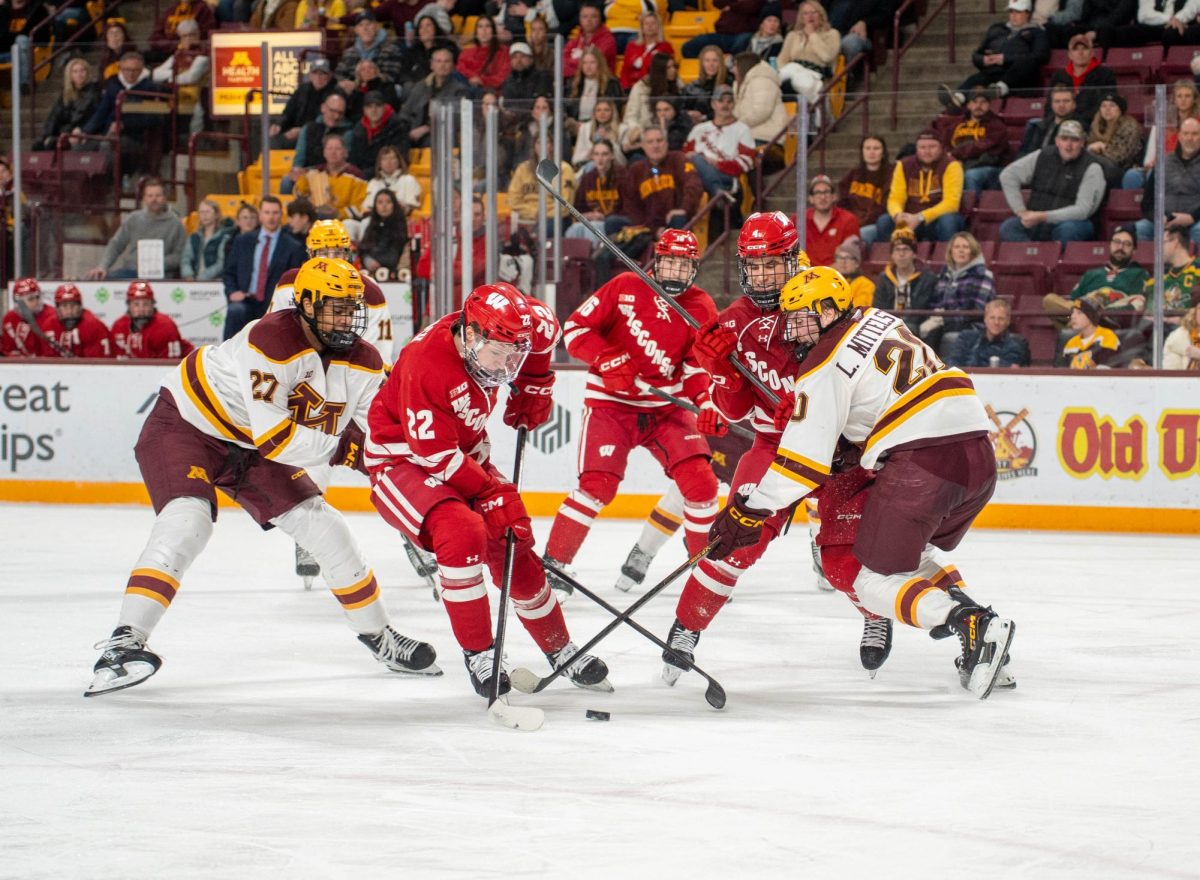
This weekend, their bond will bring them back to a familiar building — Ridder Arena.
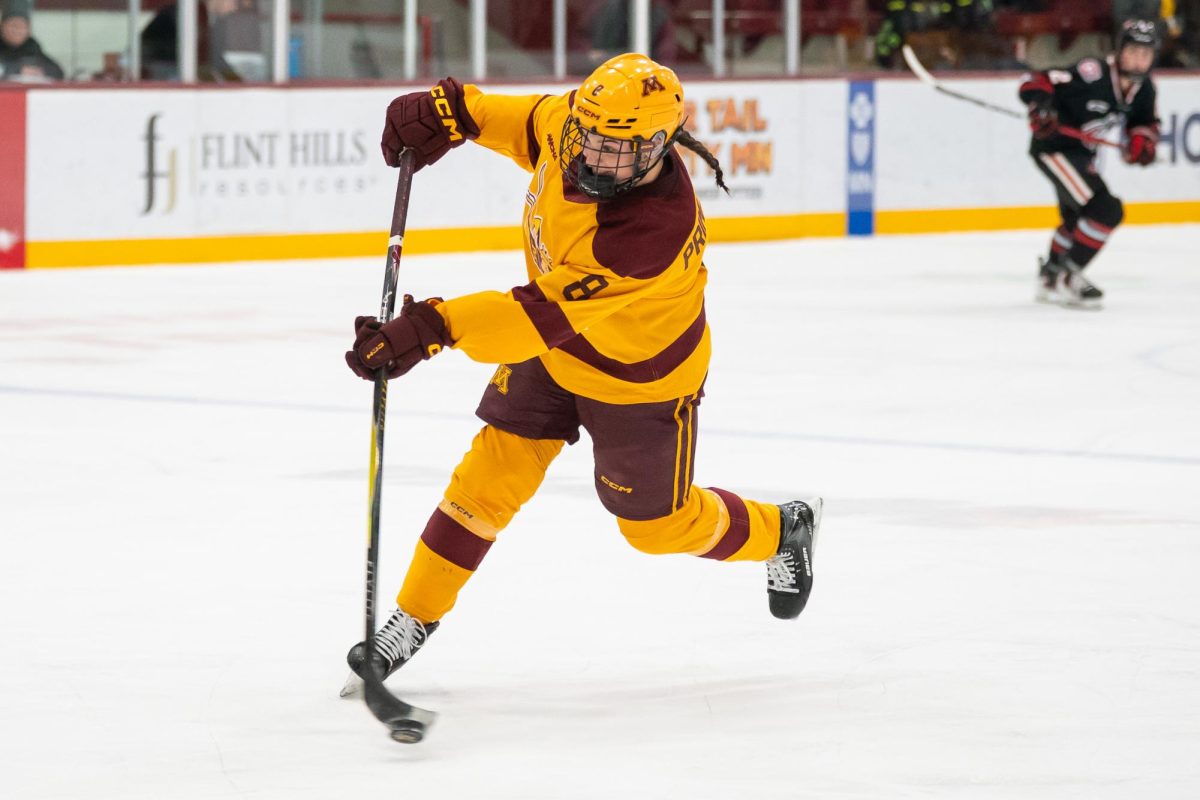
It is the building they skated on during their own legendary collegiate careers. This time, they will find themselves on the opposite bench from a familiar face, longtime Gopher women’s hockey head coach, Brad Frost, who coached them to two national titles at Minnesota.
Räty and Jalosuo do not plan to get too nostalgic, though. When the puck drops, their focus will be on St. Cloud, not taking a trip down memory lane.
“It’s just another weekend of coaching for me,” Jalosuo said. “I’m so game-focused. It doesn’t matter who we play.”
Räty agrees, though she admits coaching at Ridder feels like a home game in a sense.
“The thing that feels a little bit special is being at Ridder, because there’s so many good memories that we had at Ridder,” Räty said.
Despite growing up in Finland, Minnesota has become a home for them both. During their playing careers, they always came back to the state each summer for more ice time. Eventually, they decided to stay long term, drawn by the opportunities to remain in hockey as coaches.
“It’s great to see how they’ve progressed in their career,” Frost said. “Obviously, they won some national championships, had great careers here. It’s really special when you get players from different countries, and they want Minnesota to be their home because this is where they had such a great experience.”
Looking back, the first time Räty and Jalosuo stepped into Ridder together, they made history as the first European players to join the Gopher women’s hockey program.
The transition was not easy. The two leaned heavily on each other as they adjusted to the new culture, language and life overseas. For Räty, it was also her first time living away from her parents. Jalosuo helped her learn how to cook, do laundry and live independently.
“I don’t know if we would’ve survived without each other, because there was no Google Translate and no smartphones,” Räty said. “Back then, it was so much easier when you had a friend to lean on, to try to figure out the language and the culture.”
While many things changed for them during that transition, one thing stayed the same — hockey.
“There was nothing different with hockey,” Räty said. “That was the constant, consistent thing.”
Räty’s impact was immediate as a freshman. She was a top-three finalist for the Patty Kazmaier Memorial Award and then led Team Finland to a bronze medal in the 2010 Winter Olympics.
Together, Jalosuo and Räty ended their college careers with two national championships. The first came in their junior year, with the second happening as seniors. Both wins were special moments, but the first stands out.
“Winning our first national title together was always special,” Jalosuo said. “Seeing Noora make a big save, and then everybody hugging her after the game, was special.”
Their success extended way beyond the state of Minnesota. Jalosuo and Räty competed together in two Olympic Games, winning bronze at the 2018 Winter Olympics.
While medaling on the world’s biggest stage was an honor of its own, sharing the experience carried a deeper meaning. Few people understand the work it took for them to get there, except each other.
Their generation of women’s hockey players did not have access to true professional women’s hockey leagues with livable salaries. Summers were spent coaching long hours just so they could afford another season.
“No one else saw the 5 a.m. workouts before work, what we had to do to get to that point,” Räty said. “We saw each other’s work, what we did leading up to that tournament.”
Those shared experiences now shape how they coach. Trust remains at the core of their dynamic, the same trust they built as players.
“As a defenseman, I had to trust Noora that she’s gonna make saves in certain situations, and Noora had to trust me that I can make a right read,” Jalosuo said. “It’s the same thing with the coaching. I’m not micromanaging Noora, and I trust her completely.”
That extends to how they support their players, especially during an Olympic season.
St. Cloud will send players of their own to the upcoming Winter Olympics, adding another layer of pressure to an already demanding season.
“It’s trying to understand what they’re going through and not being super hard on them, because you already know how much stress is going on in their life with playing in the Olympics, the biggest honor you can have in women’s hockey,” Jalosuo said.
“And I think when there’s a lot of pressure on you, you kind of forget to have fun,” Räty said.
Räty sees a younger version of herself in one of those Olympians, sophomore goaltender Emilia Kyrkkö. Kyrkkö will represent Team Finland at the Olympics, and she carries a serious demeanor similar to Räty.
“Every day I coach her, I feel like I’m looking at myself,” Räty said.
That same understanding extends to players who do not make Olympic rosters. Junior forward Sofianna Sundelin missed out on this year’s Games after winning Bronze with Finland in 2022. She said Jalosuo and Räty have been a source of support for her during this time.
Their support is especially meaningful to her. She grew up watching the two coaches compete internationally. Now, she gets the opportunity to learn from them.
“It’s very cool that they are now my coaches,” Sundelin said. “I get to know them more than just watching from TV.”
Beyond their international experience, Sundelin said Jalosuo and Räty stand out for how much they care about their players as people. That mirrors what they experienced playing under Frost at Minnesota.
“He was probably the first head coach that I had that was people-centered. It was the human side first versus the player side first,” Räty said.
That approach shows up in the culture that Jalosuo and Räty are creating at St. Cloud.
“They care about us as a person and not only about the wins,” Sundelin said.
As the two coaches return to Ridder this weekend, Frost sees their journey as a reflection of what the program has always hoped to be.
“My hope is that because they had such a great experience here, that they take that to wherever they are and kind of do the same thing for those athletes there,” Frost said.