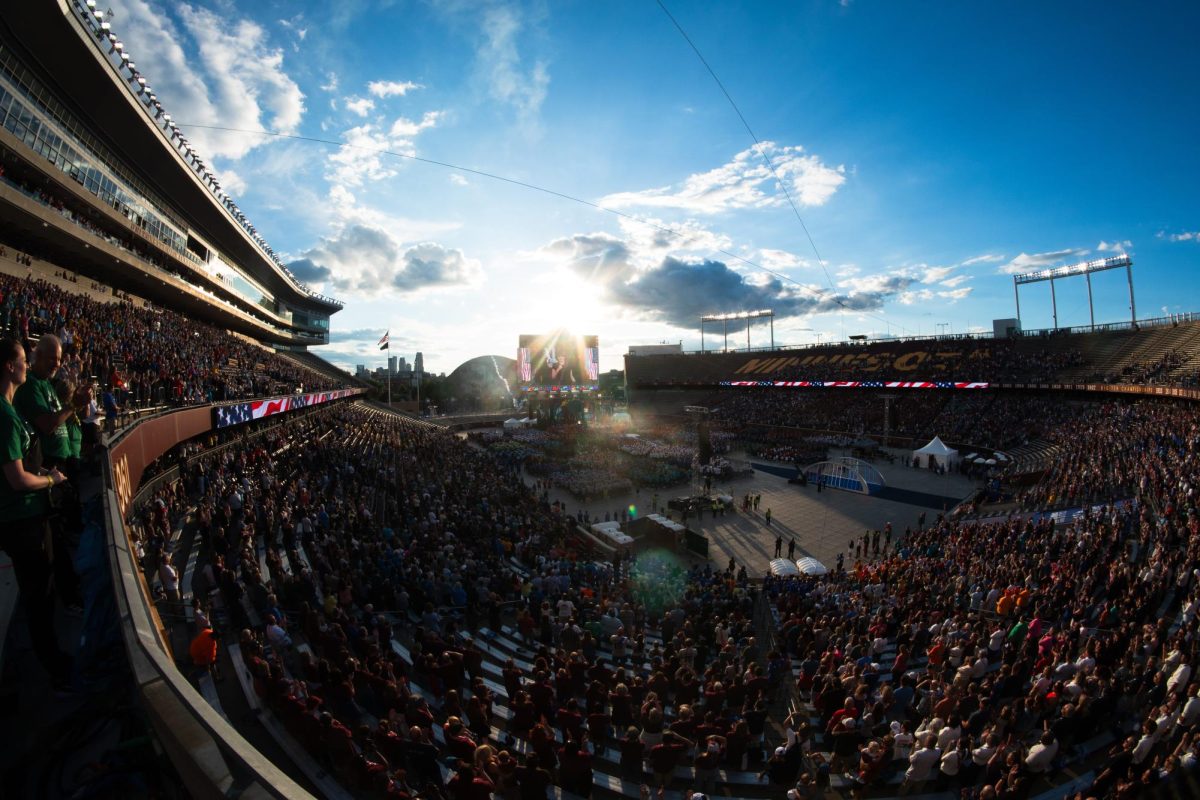
On Saturday evening, thousands of athletes and supporters alike gathered in Huntington Bank Stadium for the 2026 Special Olympics USA Games Opening Ceremony.
Taking place from June 20-26, the Games are estimated to bring together around 10,000 volunteers, 3,000 athletes, 1,500 coaches and 75,000 fans, according to the Special Olympics USA Games’ website.
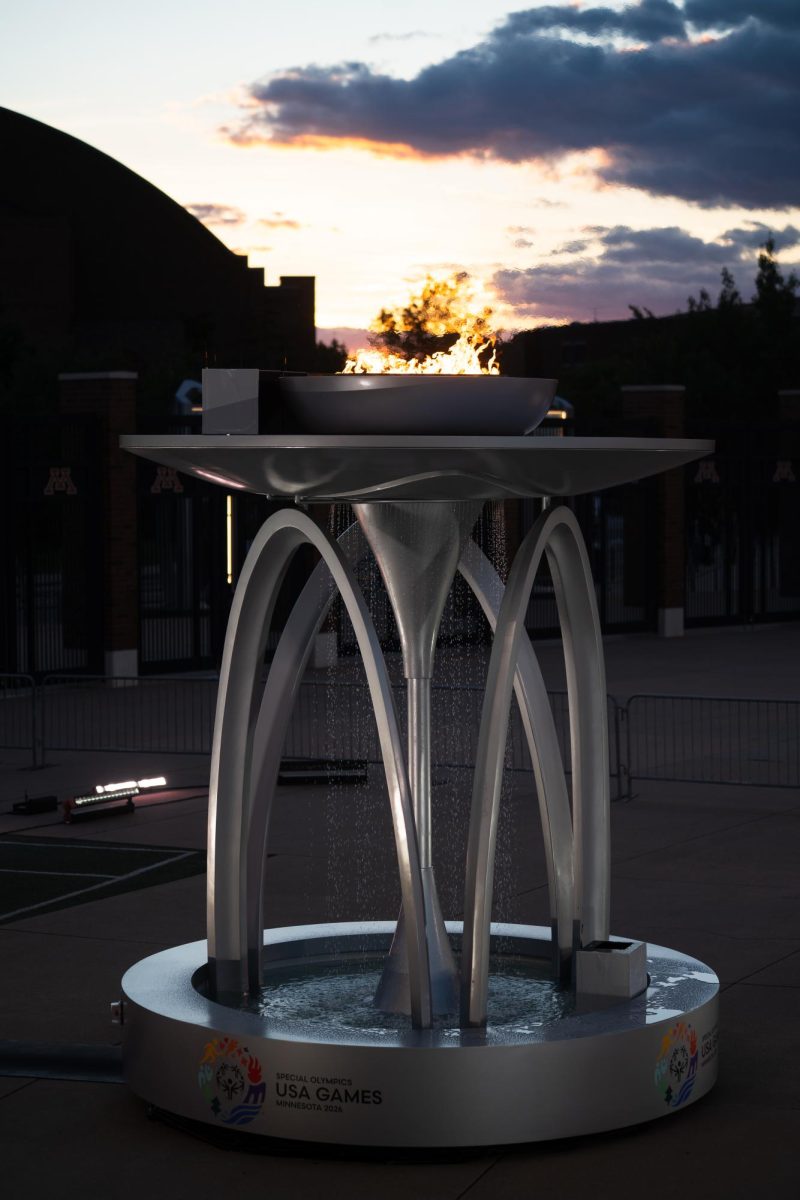
The opening ceremony featured a variety of events, including a parade of athletes; motivational speeches; the traditional lighting of the Games’ Cauldron, which signifies the start of the competitions and musical performances from Demi Lovato and Jon Batiste.
2026 Special Olympics USA Game chief marketing officer Mary Horwath said the event is about expanding conversations around inclusion in the Special Olympics movement.
“Ultimately, the goal is to bring more people into the movement,” Horwath said. “To champion inclusivity, and learn what that means to celebrate abilities.”
Horwath said the organization selected Minnesota, in part, because of its strong Special Olympics program and facilities available at both the University of Minnesota and the National Sports Center in Blaine.
New Jersey coaches Jodi Lippman and Pamela Richards primarily coach soccer, bowling and track at the games. After attending the opening ceremony on Saturday, they expressed their excitement.
“It’s so energizing, so exciting and we can’t wait for tomorrow,” Lippman said. “I liked the speech by Tim Shriver. I think he did an awesome job with his inclusion [speech], that was great.” Richards said.
Shriver, a chairman on the Board of Special Olympics International, gave a motivational speech not only to the athletes set to compete, but to Americans as well.
Shriver discussed how the Special Olympics is the largest sports movement that fights for inclusion, as well as standing as the biggest public health and early childhood organization in the world for people with intellectual differences.
“We will not apologize to anyone for talking about inclusion,” Shriver said. “As people are looking for heroes, I say look to the athletes of the Special Olympics.”
Along with sharing excitement, Richards complimented Minnesota and all that the state has to offer as the host state of the Game
“Minnesota has been great so far, we’ve loved every second of it — all 36 hours of it,” Richards said. “I love hearing from Tim Walz, too. That was awesome, he gave a great speech.”
The two coaches wished the best of luck to all the athletes in the days to come.
Shriver discussed the Fourth of July and how the Special Olympics are setting the tone for the upcoming celebration.
“This is a celebration of the best of the American Spirit at 250,” Shriver said. “People ask how we should celebrate the Declaration of Independence — right here. That’s how we celebrate the Declaration of Independence.”
The USA Special Olympics started back in the early 1960s when Shriver’s mother, Eunice Kennedy Shriver, created a summer camp for people with intellectual disabilities. She created the camp in her backyard after seeing how terribly people with intellectual disabilities were treated, especially in the sporting world.
Eunice Kennedy Shriver was a driving force behind John F. Kennedy’s White House panel on people with intellectual disabilities. Her vision and work grew into what would eventually become the USA Special Olympics.
By the mid-1980s, the Special Olympics spread to more than 50 countries on every major continent. In 1983, around 4,000 athletes attended the International Special Olympics Summer Games in Louisiana.
In 2012, the Special Olympics had more than four million athletes participating in programs around the world. Now, in 2026, the USA Special Olympics is taking place on the University of Minnesota’s own campus.
Victoria Barone-Lopez, a medical delegate for the New York State team, said that the biggest factor for people with the Special Olympics is inclusion.
“As a fan or even an athlete, you can see the inclusivity and the support that everyone gives one another,” Barone-Lopez said.
Barone-Lopez said that Minnesota is organized in its USA games, especially when it came to the opening ceremony and the organization, which assisted both athletes and team leaders.
“It helps not only the athletes, but also the leaders who are here to support the athletes keep a calm, relaxed and organized process,” Barone-Lopez said.
Barone-Lopez said the medical side of the Special Olympics is great at figuring out what works best for each athlete, such as sensory rooms for athletes in need. While athletes remain at the center of the Games, Horwath believes their stories are what help spread the message of inclusion to a wider audience.
“At the heart of the USA Games are the athletes,” Horwath said. “They all have their own personal story to tell about their journey and their experience.”
Horwath said conversations surrounding inclusion, leadership and accessibility can help strengthen communities both locally and globally.
“We really hope that the community continues to carry that spirit of inclusion forward,” Horwath said.