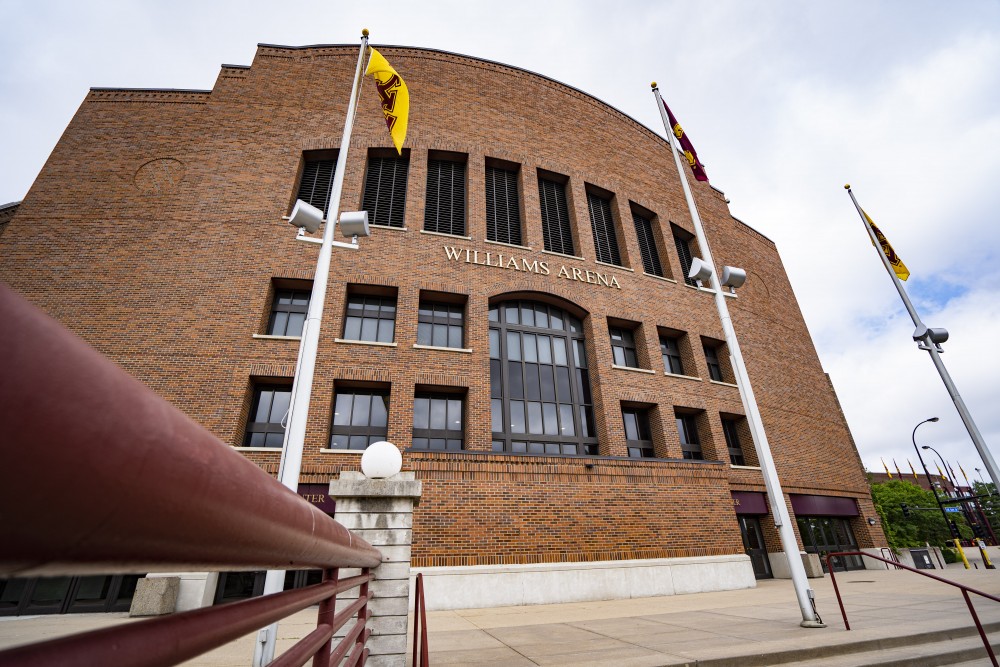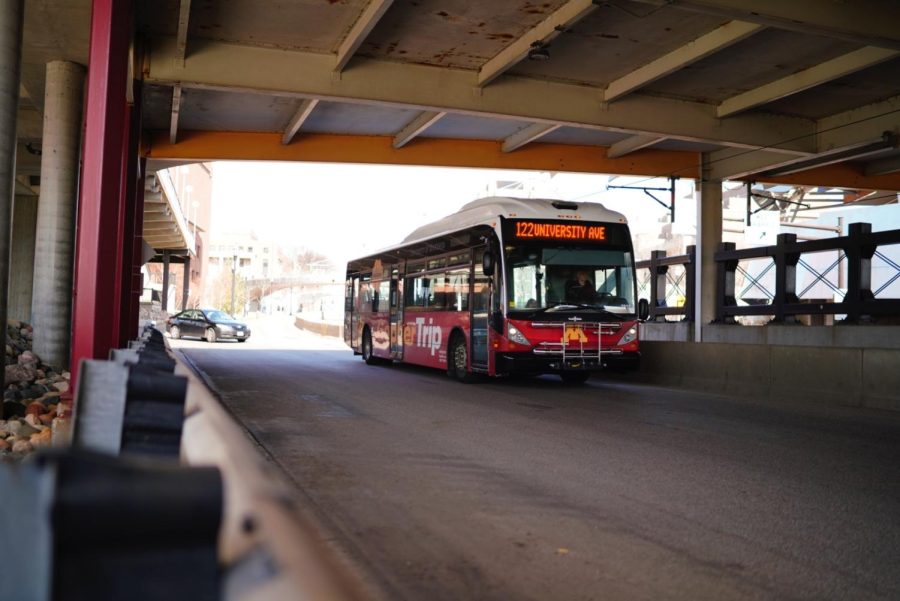
Students at the University of Minnesota think highly of the University’s busing system, GopherTrip, though transport managers say there is much work behind the scenes to keep operations running.
Amid troubles with overcrowding, the University’s Parking and Transportation Services, which manages GopherTrip buses, believes these issues, in part, are a result of external factors that threaten to dismantle their tightly-run bus schedule.
GopherTrip is the University’s fixed transit bus system, in which buses are maintained and provided by Transdev, but managed on a day-to-day basis by the University’s Parking and Transportation Services.
When first-year Ava Shirley has to take the bus, such as in the winter, she takes the 122 line from her apartment to Carlson. She finds the commute convenient and comfortable, as it saves her from walking 25 minutes in the cold.
“I would say I love it, I’m really happy that we have it,” Shirley said. “My dad went to the U, and he said that there was nothing like this here, so I think it’s really nice that we have it.”
Freshman Emerson Russell is ecstatic about her experiences with GopherTrip. She uses it every day, taking either the 121 or 122 to commute across campus.
Russell has rarely had an issue with campus buses, aside from one time in which the driver nearly missed a turn. But, Russell said, he still made it.
“I love GopherTrip, I use it for everything,” Russell said.
Seth Brezinski is a second-year student studying computer science who makes a similar commute to Carlson from his residence in Dinkytown, using both the 122 and 123 lines multiple times a week. Despite Dinkytown falling outside of the University Clery boundary lines, GopherTrip lines stop at convenient locations inside Dinkytown for residents living there.
Brezinski benefits from these stops, as his location only necessitates a 5-minute walk to the bus stop. Like Shirley, Brezinski usually only takes the bus when it is too cold to walk.
“At the start of the semester, I’d use it to get home from West Bank when it was cold out,” Brezinski said. “But once it’s nicer out, I didn’t have a problem walking.”
Minnesota’s consistent sub-zero temperatures demanded that the bus be punctual, or else Brezinski would face a half-hour walk across the Mississippi River. Brezinski found himself doing the latter too many times.
“When it was cold, [the bus would] be completely full, so they wouldn’t even stop at the stop I’d be waiting at, the bus would just drive by,” Brezinski said. “So, after that happened a couple of times, I just didn’t use it this semester.”
Even when the bus did stop, Brezinski found, there were often too many people for Brezinski to board. Shirley often has a similar experience when she gets out of class late in the afternoon, a time she says is very busy.
“Everybody’s kind of cramming on this bus and at one point, there were literally three people stacked on top of each other for seats,” Shirley said. “There’s so many people on the bus. I felt like it wasn’t going to move, but it did.”
Larry Stromberg is the transit manager for Parking and Transportation Services. He manages GopherTrip, as well as Paratransit and the Charter Service.
Although Stromberg’s job requires his mind to be in many places at once, he sees the complaints and experiences from students like Brezinski and Shirley from the information the drivers gather regarding bus patronage.
Stromberg has seen extreme cases of overcrowded buses, but actively monitors and works to manage them.
“I saw one bus left St. Paul. By the time they got to the T-Way [a street connecting East Bank and St. Paul campuses] to go to Minneapolis, they already had 100 people on the bus,” Stromberg said.
To address issues like these, Stromberg either adjusts the bus routes, adds buses or moves buses around. Although not every issue can be solved by moving current resources around, he said. Some issues happen on the fly and cannot be accommodated immediately.
Weather, at Minnesota’s worst, is an event that can severely alter GopherTrip operations.
“Normally, we won’t get stopped by snow,… we’ll keep going,” Stromberg said. “It takes a lot to stop a bus. You get ice, and that’s it. That’s when you’ve got to stop.”
Stromberg and other members of his team are on call 24/7 to respond to issues related to the transit system. He added that other issues often arise, from students’ normal hustle and bustle around campus, as well as other inconsistencies in events along bus routes.
“When you have a route where you have buses that are running five to seven minutes apart from each other,” Stromberg said. “A bus gets stuck at Scholar’s Walk during class break because people are crossing. It doesn’t take long until that bus behind them catches up.”
Despite the daily stresses of running a bus system, Stromberg finds joy.
“I really enjoy all of the logistics that go into making transit happen,” Stromberg said. “It’s just basically planning your routes well and then monitoring them and making sure that they run according to plan.”
Alongside the appreciation Stromberg has for his job and students have for GopherTrip, Nick Mabee, strategic communications and marketing manager, finds himself a fan of public transportation in and of itself.
“It’s actually not nearly as daunting as I think a lot of people think it is, myself included. I used to drive to work every day and I got tired of paying for parking like many people do,” Mabee said. “So I tried to take the bus and I found three different bus routes that get me to campus in a reasonable amount of time.”