Editor’s Note: This story was edited to more accurately represent GLU’s role in the Morrill Hall demonstration.
The University has yet to meet more than half of the Graduate Labor Union and the American Federation of State, County and Municipal Employees Union’s joint demands, even after multiple student demonstrations — including one where University police arrested 4 student demonstrators.
Relations between the University of Minnesota and labor unions on campus remain tenuous after a lack of response following a Feb. 6 protest aimed at pressuring administrators to enact more protections for students from federal immigration enforcement led to no policy change.
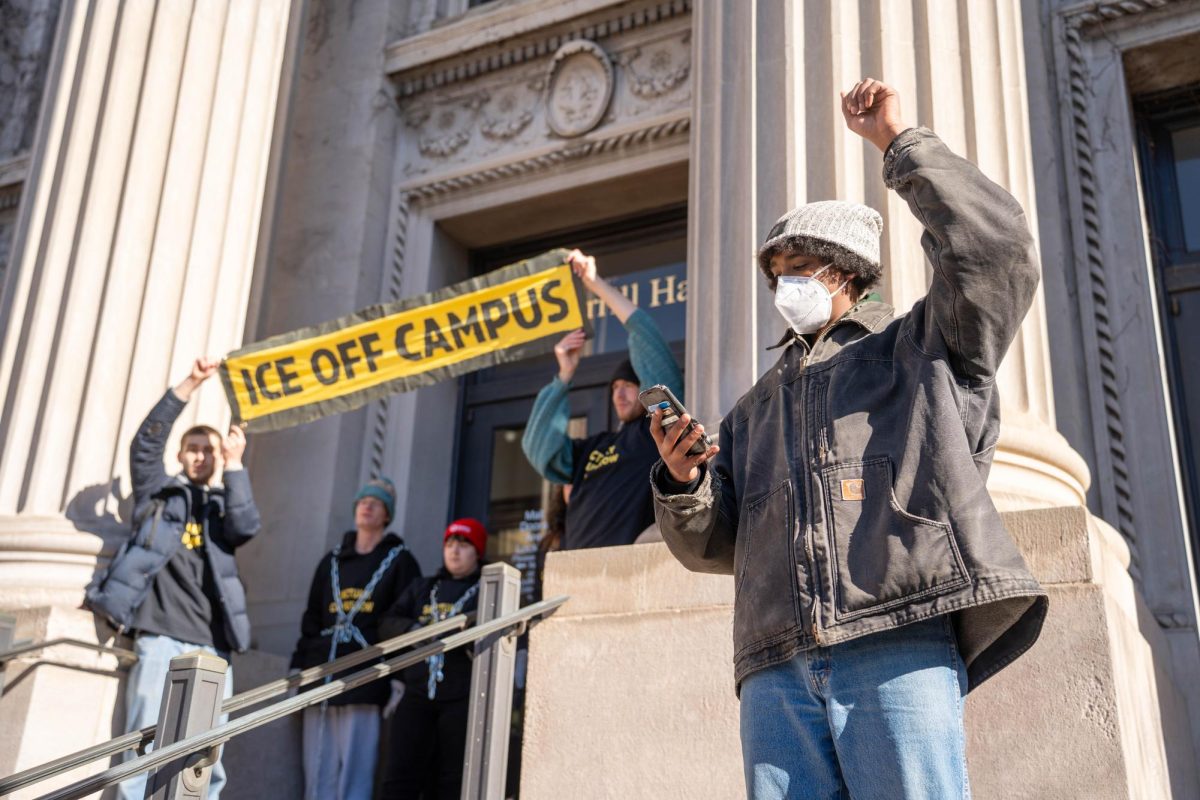
Students flooded the area shoulder-to-shoulder to confront President Cunningham head-on.
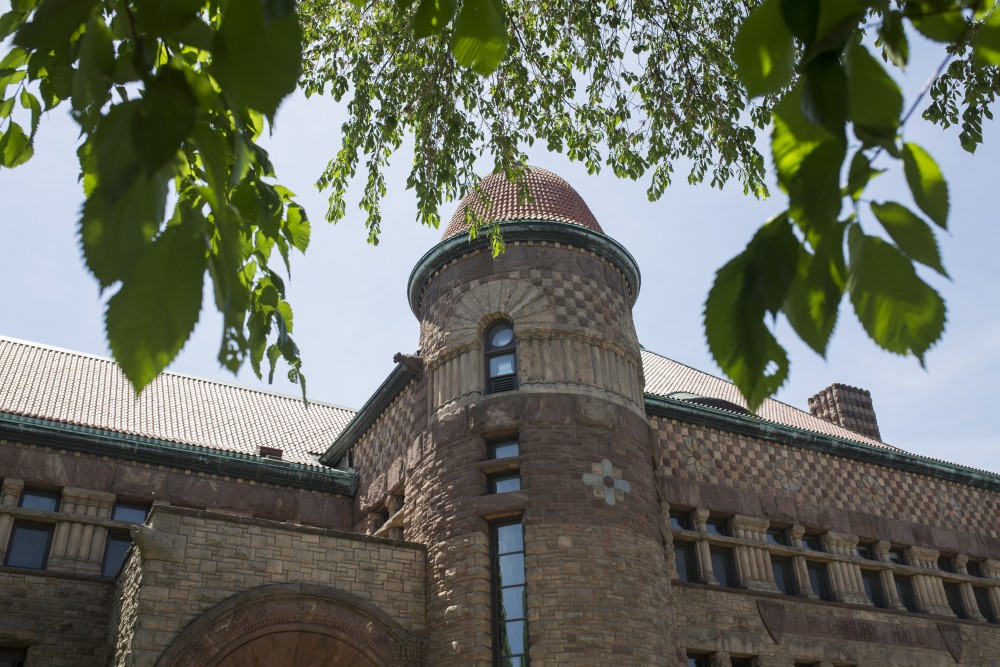
Protests at Morrill Hall are not a new development. Hundreds gathered around Morrill Hall to protest ICE activity last spring, and the building has been an activist hotspot for decades.
According to student activists, the University administration has ignored upwards of 3,000 letters written to them, collectively about campus U.S. Immigration and Customs Enforcement issues.
Constrained by thick metal chains, student protester Robbie Logan said the demonstrators collectively chose Morrill Hall, as it is a historic site of meaningful demonstrations on campus.
“When students cannot safely access their classes and their coursework, it impedes on their ability to learn,” Logan said. “You cannot focus on education or on research or on all of the important things that the university does when people are scared of this occupation.”
Two of the University’s employment unions, GLU and AFSCME, have been fighting together against the University’s noncompliance. On Feb. 2, GLU and AFSCME released a joint statement declaring the University needs to take more action to protect students amid growing federal pressure.
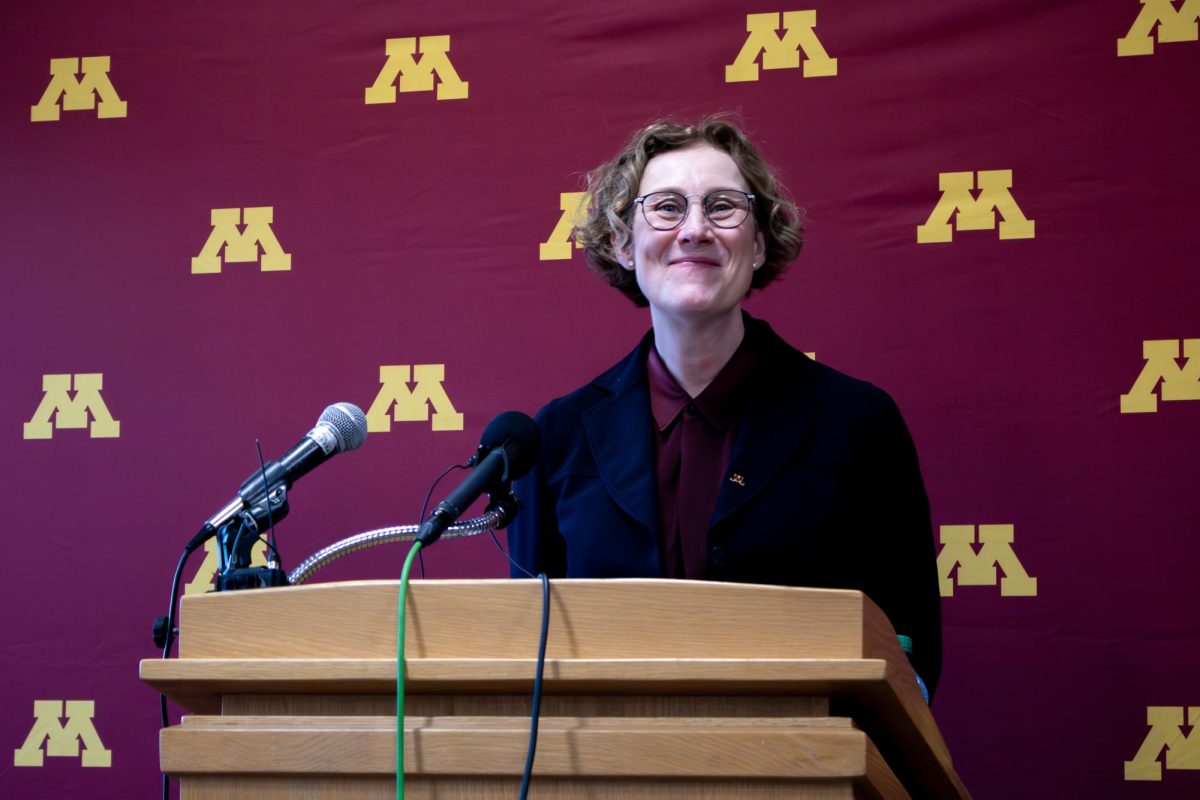
In an open letter addressed to President Rebecca Cunningham, the two unions demanded written commitments to defending immigrant workers, Know Your Rights trainings and explicit, verbal solidarity with the student body.
“The University of Minnesota has a particularly profound responsibility to be transparent given its past collaboration with ICE, including its history as the only university in the country to contract directly with the agency,” the statement read. “Trust has already been broken. Rebuilding it requires action, accountability, and honesty, not empty and vague statements.”
Since the statement was issued, GLU President Ben Lewis said the University has met none of GLU’s current demands, which he says are not complicated. According to Lewis, the old list of demands was only addressed when Renée Good died.
Among the problems left unaddressed by the University are building card access and proper signage, Lewis said. Some buildings are now U card-access only, but the doors of Coffman Union, one of the most high-traffic buildings on the Twin Cities campus, are unlocked for anyone to enter.
The University has not spoken on ICE’s right to step foot on campus, nor reaffirmed the fact that ICE needs warrants to enter a private University, preventing authorities from using University property for civil immigration enforcement operations, Lewis said.
What do unions want most of all? For the University to say something, Lewis says.
The biggest demand left untouched is the demand for explicitly stated and documented solidarity on behalf of the University with its students and faculty. This is something that unions have asked for months.
“We also have not seen an official statement explicitly declaring that ICE is not welcome,” Lewis said. “If you put this into the context of the full tapestry of the University’s response, you’ll see an administration that is terrified of, uh, like terrified of taking a side here.”
Lewis said this fight with the administration is nowhere near over.
GLU meets with administrators on a monthly basis to resolve issues, but according to GLU Communications Secretary Amy Harbourne, the University’s spokespeople have a way of weaponizing their incompetence.
“Kicking it down the road is really what they love doing. We come prepared with a shared agenda with them so they know what we’re going to be talking about,” Harbourne said. “However, they very often say, ‘that’s not something that we can do, we’ll talk about it later.’”