St. Paul Mayor-elect Kaohly Her is making strides in the Hmong community. She won the St. Paul’s mayoral election with an upset victory, becoming the first female and Hmong mayor of St. Paul.
Her is the daughter of Hmong refugees from Laos. She came to America when she was three years old, according to her campaign website.
Before she was elected mayor, Her was one of the first Hmong women to be elected to a state representative role along with State Rep. Samantha Vang (DFL-Minneapolis) in 2018, according to Sahan Journal.
Her marks the second-ever Hmong person in a major local government office. Former Sen. Mee Moua (DFL-Minneapolis) was the first Hmong person in an official government office in 2002, according to the Minnesota Historical Society.
After Moua, more Hmong people were elected into official positions. Right now, people who are Hmong make up 2% of the population, and Hmong legislators represent 4.5% of the legislature, according to AAPI Data.
Mai Na Lee, a University associate professor of history and Asian American studies, said that Hmong women making strides in America is important because women in the past usually did not have the opportunity to have representation in government.
“Hmong society is a very patriarchal society, and Hmong women have never played political roles until they came to America, so if you think about the ways in which Hmong women have emerged politically, it is just so powerful,” Na Lee said.
Txongpao Lee, the executive director of the Hmong Cultural Center, sees it as a win for the community.
“It’s not just only girls, but men and women across the Hmong community are very proud that it’s not just that men can vote, but Hmong ladies are also able to run for any sector or any seat,” Txongpao Lee said.
The first Hmong refugees moved to Minnesota in 1975 after the communists took over Laos during the Second Indochina War.
The Second Indochina War was a civil war between the communists, led by Pathet Lao, and the Royal Lao Government. During the war, the CIA supported the royal government and neutral militias in Laos, according to Win Without War.
The first family to come to Minnesota was Dang Her and his wife, Shoua Moua, according to MPR News.
Hmong society was mainly a farming culture. Lee said the transition for Hmong people was difficult due to the language barrier.
“We just recently came to the United States, and we wanted to survive, so we just went straight to work,” Txongpao Lee said. “Just a few men and women are able to go to higher education, so that is why the first thought of the Hmong [community] when they first came to the United States was how we can survive and live in the United States only.”
According to the Minnesota Historical Society, 14.5% of Hmong Americans held college degrees or above in the U.S. In Minnesota, 13.7% had a college degree.
Hmong families joined together in 1975 and created the Association of Hmong in Minnesota to address the disparities faced by the community.
Minnesota has the second-largest population of Hmong people in the U.S., according to a recent poll by Pew Research.
Yupheng Lee, the internal vice president of the Hmong Minnesota Student Association, said the win might inspire people his age to take positions in government.
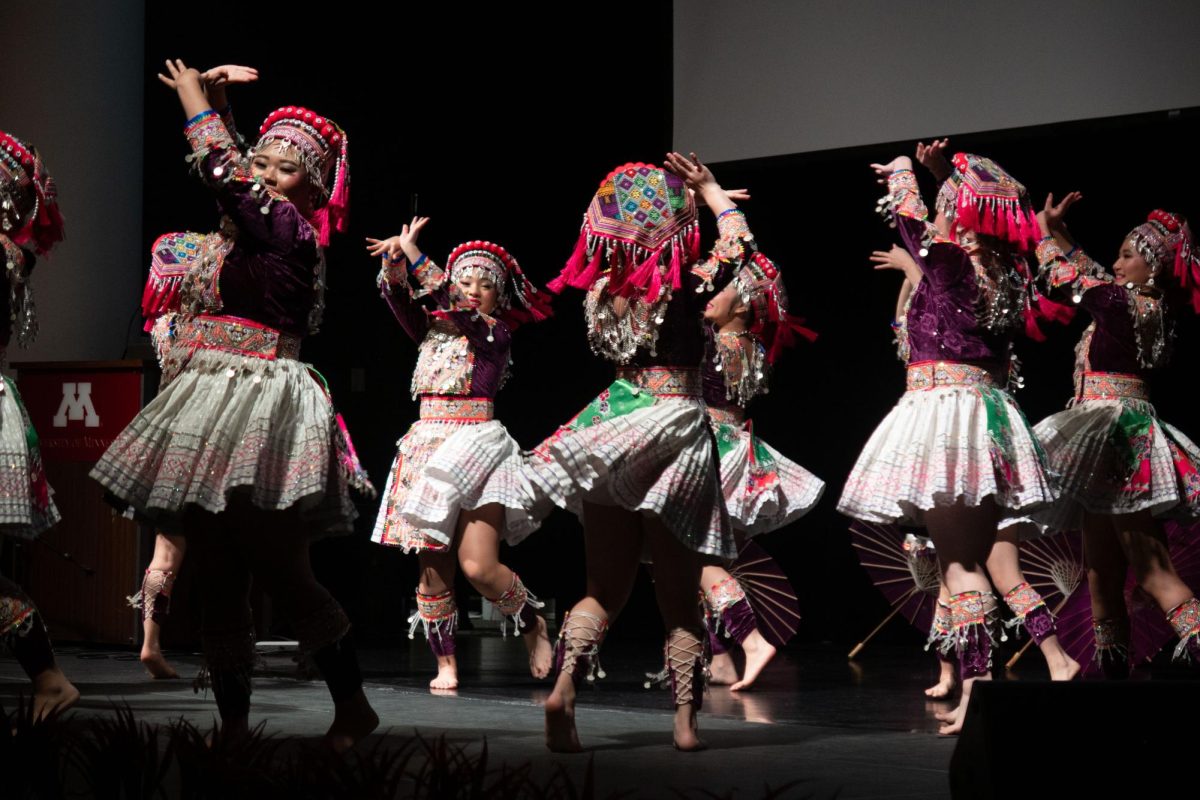
The HMSA is planning Heritage Day, a celebration of Hmong culture, this Saturday.
This year’s Heritage Day will also focus on the 50th anniversary of when the Hmong community first immigrated to the U.S.
Yupheng Lee said this year might have even more significance.
“I think it’s very important because we don’t have a home country we came from, so being able to participate in these government positions, I think, is very empowering, and it tells us that, like, we do have a place where we belong,” Yupheng Lee said.