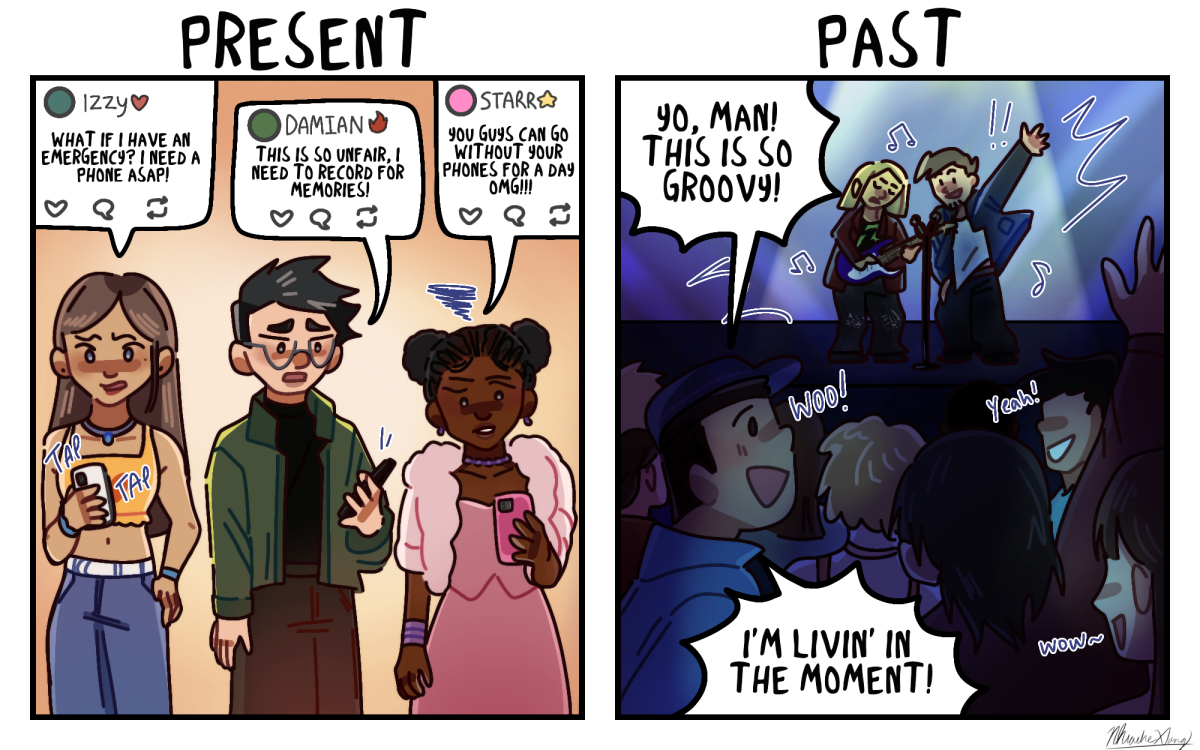
If you’re as chronically online as I am, you may have noticed a recent personality shift among Generation Z. Non-caring and effortlessly dull are in. Openness and exuberance are out.
This online shift inevitably leads us to appraise our own social lives. We use social media platforms to microanalyze our projections of ourselves towards others, as well as every possible social situation we may encounter.
Worries fostered online, about appearing too excited to get to know other people and coming off too strong, have led to the need for many young people to adopt an uncaring attitude toward their peers.
Ever-evolving social media platforms like Instagram and TikTok make it easier than ever to view your own social life with intense scrutiny. We’re constantly worried if we’re making the right impression. We have created our own internal panopticons.
The result of this is a sense of anxiety and shame around interacting with others and ultimately the loss of our ability to form lasting friendships.
Nonchalance acts as a social Xanax that guarantees every interaction you have won’t be met with scrutiny, but you lose the ability to form deeper and more sincere connections with other people.
Like with most trends, the uptick in discussions around nonchalance can be attributed largely to TikTok.
The tenants of nonchalance are in opposition to the qualities you need to make friends. To be nonchalant is to not share too much of yourself with others, to never enthusiastically inquire about the lives of people around you and to maintain a constant air of callousness and effortlessness.
University of Minnesota communications professor Susanne Jones emphasized the physical benefits and importance of college students being able to be vulnerable around each other.
“We’ve known for a long time that emotional support is the number one interpersonal function that we seek to fulfill when we go into relationships,” Jones said. “Students who receive regular support and who report having a really strong support network of friends and family go to the doctor fewer times.”
Not only is physical health improved, but so is mental health, according to Jones.
“These folks also report having strong mental health, as opposed to struggling with depression and loneliness and all of these things,” Jones said. “This emotional support function is really our salve that keeps us healthy on all kinds of different levels.”
The attitudes fostered by the uncaring mindset make us insecure when it comes to presenting ourselves online. The way the internet is set up makes overanalysis of ourselves too easy.
University fourth-year and former Minnesota Daily reporter Katrina Bailey said she worries about how people will perceive her based on what she posts online.
“I’m definitely kind of worried about what I post on social media too,” Bailey said. “Not just, like, career-based, but just like me posting concert videos or something I enjoy. Or I will post pictures of nature just because I want people to see the photos I’ve taken, but then I’m worried that people are gonna be like ‘Why is she posting this?’”
For Bailey, this fear also extends to her self-image.
“I don’t want there to be any fear of like, ridicule or, like, people judging the way I look in some photo that I like of myself,” Bailey said.
With the speed and quantity of content the internet provides comes the ability to analyze others, and internalize their content and opinions and take them at more than face value.
People online curating images of themselves and projecting idealized versions of their personalities make it easier for you, as the consumer, to consider what you may lack in interpersonal relationships and social situations.
The nonchalance epidemic and the continual rise of social media scrutiny have frozen our ability to be authentic with one another, and with it our willingness to form intimate, long-term connections.
However, despite challenges, the human need for connection finds ways to prevail.
Jones believes social media is a vital tool for connection and that students will always find common ground, whether social media plays a role or not.
“I do think that the one dynamic that really will always play a huge role in how college students connect is their similarities,” Jones said. “You are all very similar in age and goals, you all come here for a purpose, and that is the best reason to connect with one another.”
Jones said people tend to associate or bond with others similar to them, a concept known as homophily.
“College students, like everyone, have wonderfully adapted to integrating social media into their relational lives, in every aspect,” Jones said. “It provides a platform. From maintaining relationships, building communities, sharing intimate self-disclosures, social media plays a vital role in how you guys maintain relationships.”
With Americans now experiencing loneliness at increasing rates, it’s crucial we destroy the need to self-police our every social interaction, or we will inevitably end up alone.
That being said, I enthusiastically encourage you to talk to a classmate you don’t know, be unflinchingly excited about your passions and celebrate your friendships as loudly as possible.