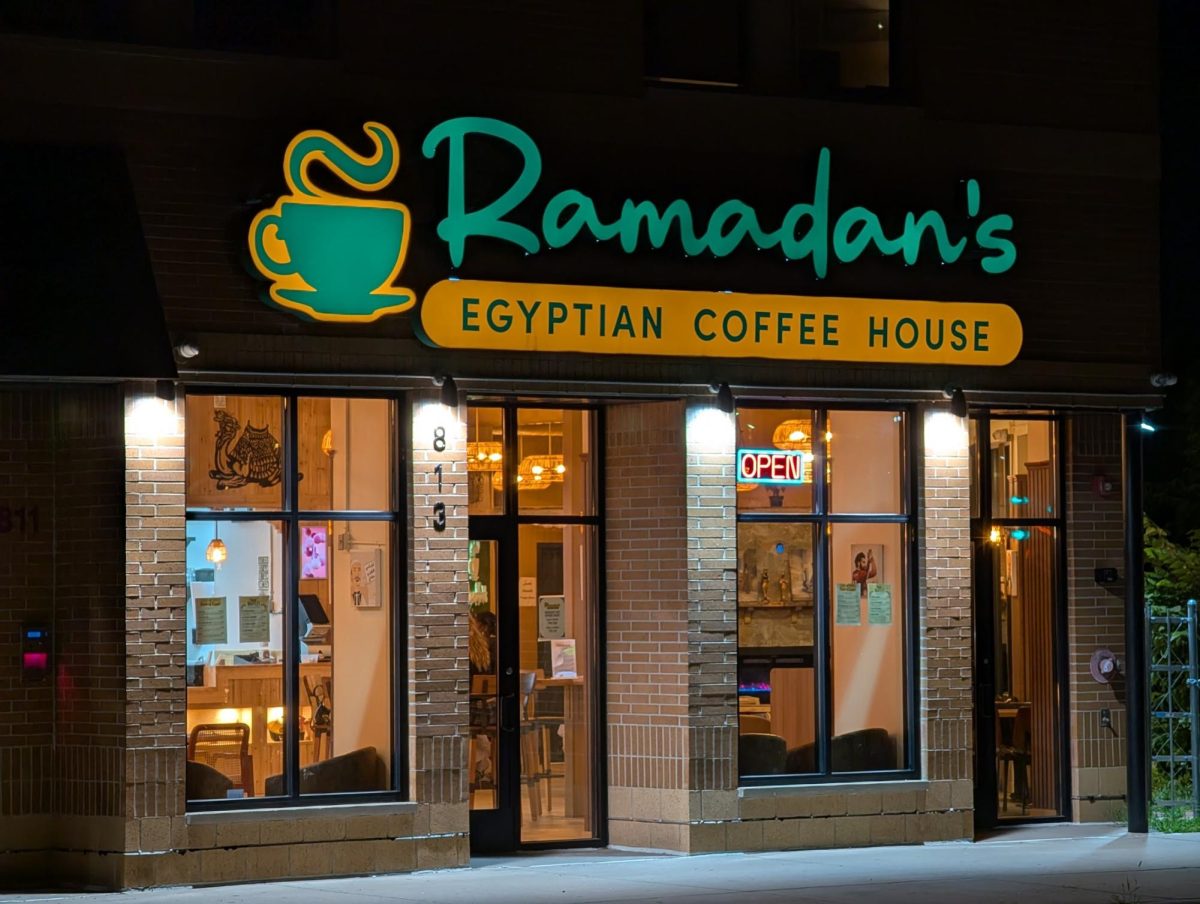
Ramadan’s Egyptian Coffee House celebrated its soft opening on June 4 in Marcy-Holmes near the University of Minnesota.
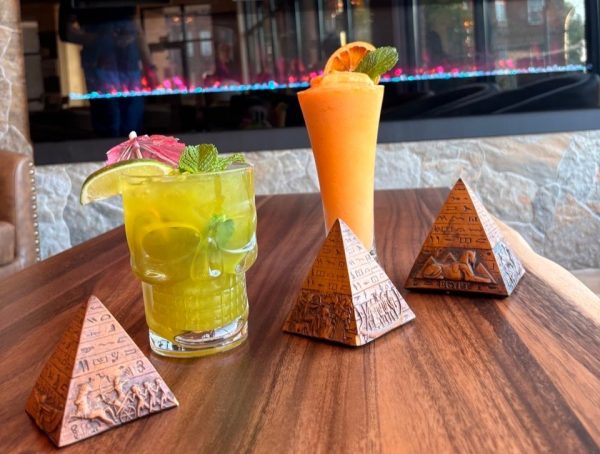
The cafe specializes in authentic Middle Eastern flavors, handcrafted espresso drinks and specialty desserts. Inside, visitors can order Egyptian coffee and freshly pressed sugarcane juice as well as Dubai chocolate.
The establishment offers a cozy and relaxing escape, illuminated by the golden glow of hanging woven lights and the rich aroma of coffee. Canvas artwork of camels, pyramids and Cairo landscapes lines the walls, while detailed and decorative replicas of pharaohs, mummies and pyramids fill the shelves. These elements showcase an inviting, heritage-rich atmosphere, creating a distinct cultural space that offers a strong glimpse of Egypt.
Ali Mohamed, a cafe volunteer and Asian and Middle Eastern Studies lecturer at the College of Liberal Arts, said the establishment opened to provide a haven for the Twin Cities Arab community.
“We have a small Egyptian community here, but there’s nothing that connects them, so we want a place that connects them, Arabs, and also us to the broader American society,” Mohamed said. “We want to bring a taste of Egypt, things that we enjoy back home.”
Mohamed said Ramadan’s was named after his relative and owner, Ramadan, and the 9th month of the Islamic calendar.
One of the best-selling drinks, according to Mohamed, is the honey cardamom latte, which blends cardamom, espresso, steamed milk and honey. The drink can be served hot or cold.
“We are the only cafe here that offers cardamom lattes, so that’s our special drink,” Mohamed said. “I think the honey cardamom will continue to be our best seller because it gets asked a lot.”

Mohamed noted the sugarcane juice and Dubai mocha are also top sellers.
The cultural immersion goes beyond the menu and decor of Ramadan’s Egyptian Coffee House. As Mohamed teaches Arabic language and Middle Eastern Studies courses at the University, he said he envisions the cafe as a space where his students can practice speaking Arabic in a real-world setting, blending the business with cultural education.
Fourth-year student Razan Shahin said the cafe makes her feel more seen.
“As someone who comes from Arab heritage, I feel like I see my representation here,” Shahin said. “I really want to bring my friends who are not Arab here, so they can see the glimpse of Egyptian culture and how it kind of works around here.”
Lovi Aubeelauck is a regular customer and pre-nursing major at Normandale Community College. He said the cafe helps him experience another culture through its pastries, food and coffee.
“I wasn’t really familiar with Egyptian coffees and such, but coming here has been really cool to try something authentic,” Aubeelauck said. “It definitely feels different than a typical coffee shop because this place feels like it has its own identity.”
The commitment to authenticity at Ramadan’s clearly manifests in its menu, where it balances local partnership with international roots. Mohamed said while the cafe works with local Minnesota vendors for its coffee blends and baked goods, any specialty ingredients that aren’t in the Twin Cities are imported directly from Egypt to preserve traditional flavors.
How those flavors reach visitors also blends convenience with hospitality. Mohamed said while to-go options are offered with plans to add pickup and delivery, it offers a communal Arab approach to the Twin Cities.
For example, people can order tea or Arabic coffee poured from a traditional copper-brown dallah pot that’s meant to be shared among a group. It’s a traditional ritual in Arab culture to serve as an icebreaker, encouraging people to slow down and share a conversation over a single brew.
Mari Koeller is a barista and senior graphic design major at the College of Design. She said she enjoys introducing the cafe’s culture to the Marcy-Holmes and University community.
“As I learned more, I realized I really enjoy spreading that knowledge I’ve gained to other people,” Koeller said. “It’s a really cool experience to me, especially because as a student, I haven’t seen any other Egyptian places specifically around campus this close.”
Outside the ambiance, authentic drinks and late hours, 1 p.m. to midnight, and sometimes extending to 1 a.m., Mohamed uses music in the shop to fuse cultures. He said he uses a diverse soundtrack of Arabic and American genres to fully immerse his guests. By pairing these sounds with international sports games on television, the space creates cultural commonalities that foster a familiar environment for everyone.
Mohamed said he uses his cultural background to bring a slice of traditional Egyptian nightlife for his students and neighborhood residents, with plans to extend opening hours to 7 a.m. come fall.
“I’m from Cairo, Egypt, and it is a city that never sleeps,” Mohamed said. “If you want coffee, you can grab it late at night; that’s normal. If you want to stay up late and study, there’s a space for you.”