Sigmund Freud once said, “Unexpressed emotions will never die. They are buried alive and will come forth later in uglier ways.”
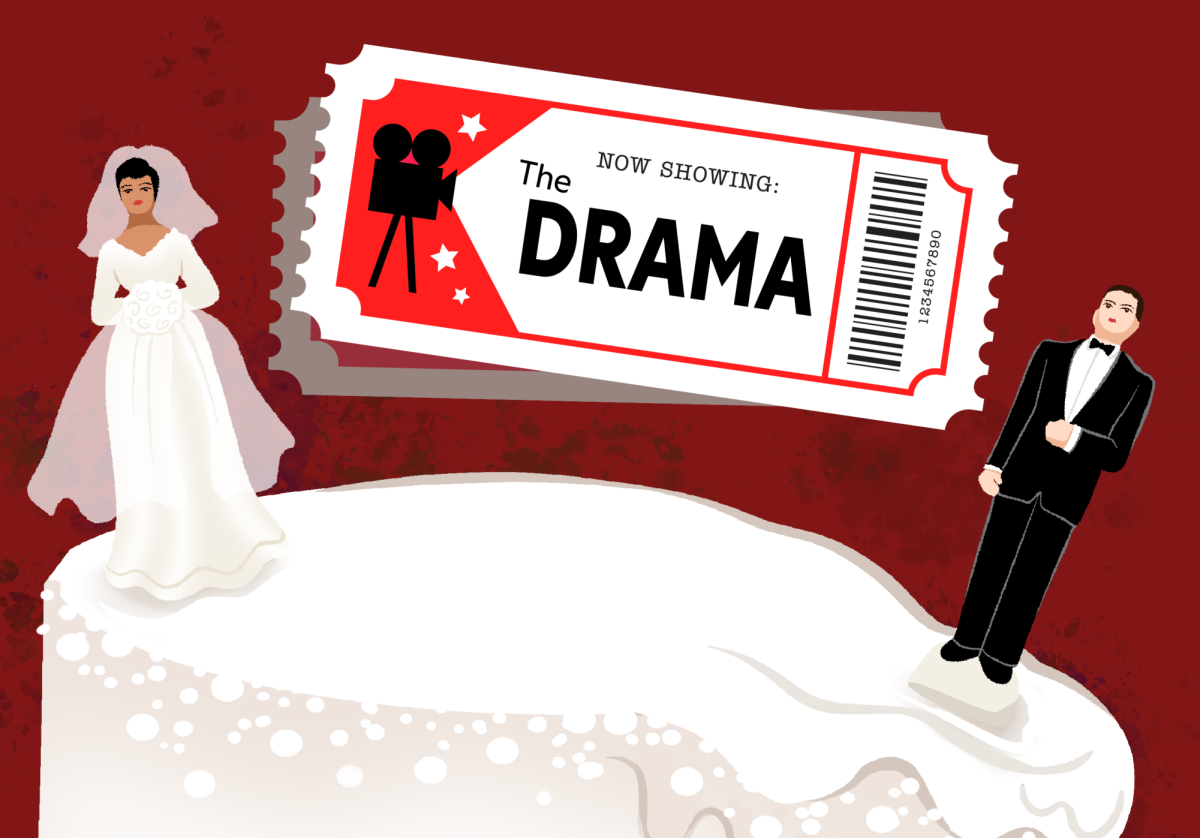
This foundational psychoanalytic principle powers the narrative of writer and director Kristoffer Borgli’s 2026 film, “The Drama.”
The central question Emma and Charlie — played by Zendaya and Robert Pattinson — must answer is whether they can look past the ugliest parts of one another, or if their harrowing repressions are simply too much for even love to conquer.
We meet Emma and Charlie a week before their wedding, both deeply in love and excited to tie the knot after two years of dating. Things start to fall apart when, as they’re walking home one evening, the couple spot their wedding DJ allegedly smoking heroin on the street.
They later discuss their discovery with the best man, Mike, and the maid of honor, Rachel, played by Mamoudou Athie and Alana Haim. Emma argues they shouldn’t fire her, reasoning that everyone does bad things at some point. To test her point, the four of them take turns confessing the worst things they’ve ever done.
However, Emma’s secret is violent and disturbing, sending shockwaves through the group. The dynamics immediately shift between each of them, creating a tense, suspicious energy that clouds their thinking until the wedding.
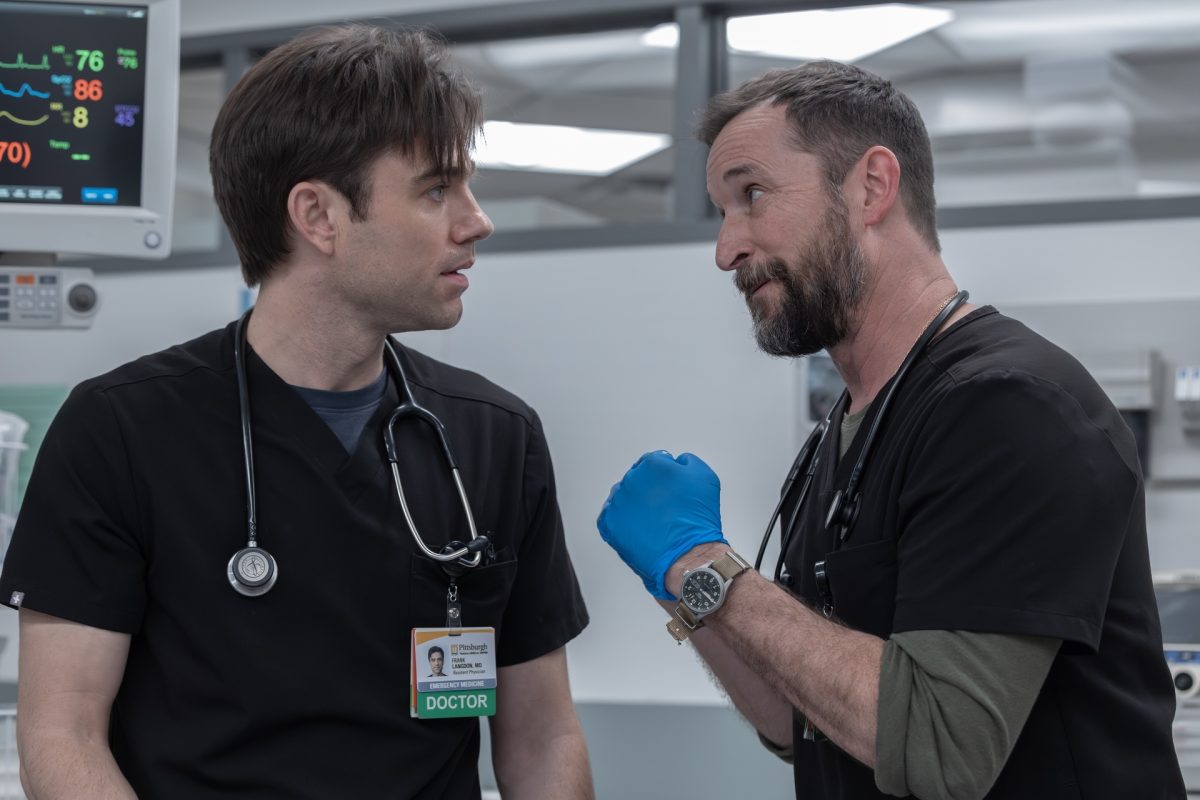
Each actor skillfully brings their character’s neuroses to life.
The longer her secret lingers, the jumpier Emma becomes, interpreting every camera flash as a threat and each of Charlie’s absences as a rejection.
Charlie, on the other hand, compulsively conjures scenes of a younger, violent Emma. Pattinson’s Charlie is unable to see Emma the same as before, but he can’t quite bring himself to leave her behind.
Together, Zendaya and Pattinson deftly capture the full range of their characters’ deterioration. What begins as a sickeningly sweet relationship full of shared laughter and domestic comfort morphs into a partnership haunted by betrayal and paranoia, shifting the film from romantic comedy into a suspenseful dark humor flick.
The supporting actors help escalate the tense energy.
Rachel is jarringly cold compared to hesitant Charlie, inviting viewers to take a critical stance on not just Emma, but also Charlie’s tolerance of her past.
It’s a refreshing burst of certainty in a movie that asks big questions about forgiveness, betrayal and growth.
While the relationships crumble, the settings remain breathtaking.
Charlie and Emma live in an apartment befitting an Architectural Digest home tour, complete with floor-to-ceiling windows framing the living room, a spiral staircase reaching to their bedroom and soft teal walls. Their East Coast manor wedding venue is a dream, with a cozy wood-paneled dining room and draping chandeliers.
I don’t envy the moral battle Charlie and Emma wage, but I do wish my interpersonal crises could happen in such chic locations.
Throughout the film, fleshy pink and sallow yellow-green lighting are utilized to highlight the underlying tension and opposition between Emma and Charlie, both in moments of conflict and when masking their fractured trust from the world.
While feigning an unrelenting partnership to one another, the cracks in their relationship only deepen as the story progresses.
Often sitting within the same shot, the lighting cast on their faces shifts between sickly hues of pink and yellow-green. These colors grow more vivid during moments of confrontation, yet remain present — though more subdued — in scenes where they attempt to mask the strain of their relationship from others.
These lighting choices paired with Zendaya and Pattinson’s expressive acting perfectly translated the horror, disgust, guilt and disbelief each character struggles with as their stories are told.
When imagining a worst-case scenario of a partner’s past, the mind often goes to infidelity — an act understandably considered the ultimate betrayal. But “The Drama” asks what happens when that ultimate betrayal toes the line of transgression against human life itself.
Even if a violent impulse is never acted on, can we truly forgive the person?
Emma never intended to share the truth of her past with Charlie.
Not only is the nature of her history disturbing, but her desire to repress it — even from the man she hopes to spend her life with — places an immense weight on the strength of Charlie’s trust and his capacity for acceptance.
Borgli pushes the audience to ask: At what point are you willing to defend, forgive and accept your partner for their past? Does truly loving someone always necessitate total acceptance?
Charlie and Emma found their way to an answer, and all it took was a disastrous wedding and one week filled with the drama.