

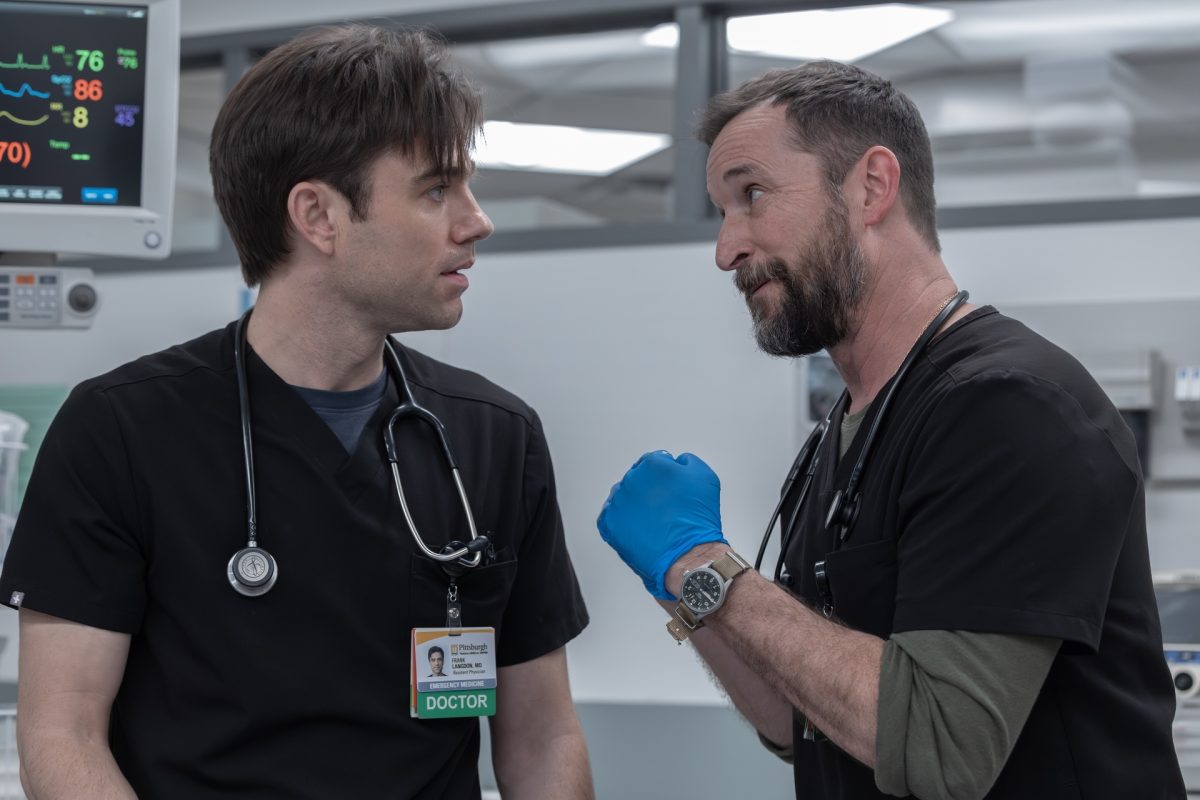
When it comes to pulse-quickening, blood-gushing TV, Season two of HBO Max’s “The Pitt” might be one of the best shows out there.
In the same vein as the first season, most of Season two takes place at the Pittsburgh Trauma Medical Center, dubbed “The Pitt” by doctors and nurses.
15 real-time episodes take us through a Fourth of July shift in the emergency room, where Dr. Michael “Robby” Robinavitch, the tortured-yet-driven attending physician played by Noah Wyle, tries to keep things running smoothly on his final day before embarking on a three-month sabbatical.
The cast is made up of a medley of medical students, residents, nurses and attending physicians, each tasked with helping as many people as possible. When the hospital’s online charting system goes down, and firework-related injuries start rolling in, the stress levels multiply, pushing everyone to their limits.
This season, however, felt more like a character study than the last. We are helpless as we watch Robby’s emotional barricades crumble as the day crawls by; hastened by tough cases, the return of Dr. Frank Langdon, played by Patrick Ball, and decades worth of unaddressed trauma bubbling over.
Wyle expertly brings out the intricacies of his character, especially in the final few episodes, where audiences finally get a peek into the man behind the stethoscope. Small snippets about his troubled childhood and dashed dreams of adulthood slip out in conversation.
That being said, even as a Robby defender, I found him increasingly irritable. This is most notable in his treatment of Dr. Samira Mohan, played by Supriya Ganesh, whom he snaps at throughout the season for being too emotional on the job, suggesting she look into geriatrics for its slower pace.
Fiona Long, a third-year genetics student at the University of Minnesota, said Robby’s short fuse has been hard to endure, especially in his treatment of Mohan.
“Robby is killing me this season,” Long said. “I know that it’s the point, but I don’t appreciate condescending men.”
Katherine LaNasa’s charge nurse, Dana Evans, is more fierce than ever, going the extra mile to personally protect her nurses from assault and ensure the police properly handle the hospital’s rape kits. Her determined presence is a good balance to Robby’s chaotic, snappy spiral.
Halfway through the season, Dana performs a sexual assault forensic exam on a woman who was assaulted at a barbecue by a male friend. Dana walks the patient through every step of the exam, giving her the space to take breaks and leave when she wants.
This was Long’s favorite scene in the series. She said she appreciated how the show preserved the patient’s autonomy throughout the process.
“I thought it was really well-done,” Long said. “It felt kind of independent from everything else going on, and it was very touching.”
Because of this character-driven narrative, the first few episodes feel slow. Luckily, there’s a litany of fun cases that pick the action back up, including a nun who comes in with gonorrhea in her eye, ironically labeled an immaculate infection by Isa Briones’ Dr. Trinity Santos.
Not all cases are as humorous. The season uses its revolving door of patients to address current issues in cities and hospitals across America.
In Episode 11, United States Immigration and Customs Enforcement agents bring a woman they injured during a raid into the emergency room. A nurse intervenes when they get too pushy, and the agents quickly detain him, too.
Wyle told Variety in an interview that HBO had discussions with executive producer John Wells about how to represent the issue in the episode.
“The negotiation was being driven by political reasons, creative reasons, fear, uncertainty, all sorts of legitimate reasons,” Wyle said. “I’ll be honest and say that I was concerned about the edits we were making initially.”
The final product, Wyle said, ended up being a good decision for the show’s storyline. As a viewer, the scene feels tense and all too familiar — nurses and patients fleeing the hospital out of fear, younger staff pulling out their phones to record and an air of uncertainty floating over everything.
The rest of the season is similarly artful. The Pitt uses almost no music, forcing audiences to sit through beeping machines and the doctors’ panicked shouts that it’s time to intubate. Prolonged, musicless shots of Robby as he walks through the ER show his involuntary flinching at the noises around him, speaking to the trauma he’s resistant to confronting.
Despite there being so much Robby this season, the other characters have moments of their own.
The internet’s beloved night shift returns for the last few episodes, bringing with them their refreshing jokes and clear heads. We also get to see how months of living together have changed the relationship between Santos and Dr. Dennis Whitaker, played by Gerran Howell.
“The Pitt” isn’t an easy show to sum up. Between the never-ending cases and doctors constantly on the edge of a breakdown, it can be tough to know what things deserve highlighting. But I think that’s reflective of the hospital experience the show attempts to replicate: Chaotic and exhaustive, but worth it for the lives saved and bonds made.





Timur
May 5, 2026 at 6:03 pm
Wow! This show sounds great and stress-free. Just what the doctor ordered 🙂