As I prepare to move into the professional world, I’ve found myself imagining what my ideal job would look like.
After all, there is an entire world of jobs out there with different descriptions, responsibilities and pay scales. Even daydreaming about the different benefits these jobs could offer is a fun exercise: hybrid work, flexible hours, paid sick leave…
That last one may seem like just an extra benefit to those in the United States, but to many of my friends abroad, the idea of not having any national guarantee of paid time off for sick days is inconceivable.
For years, the U.S. has lagged in many workers’ rights areas, including paid sick leave. Analysis from the World Policy Center shows that as of 2022, paid sick leave laws are commonplace across Europe, Asia, Africa and South America, with many countries guaranteeing six weeks or more of paid sick leave.
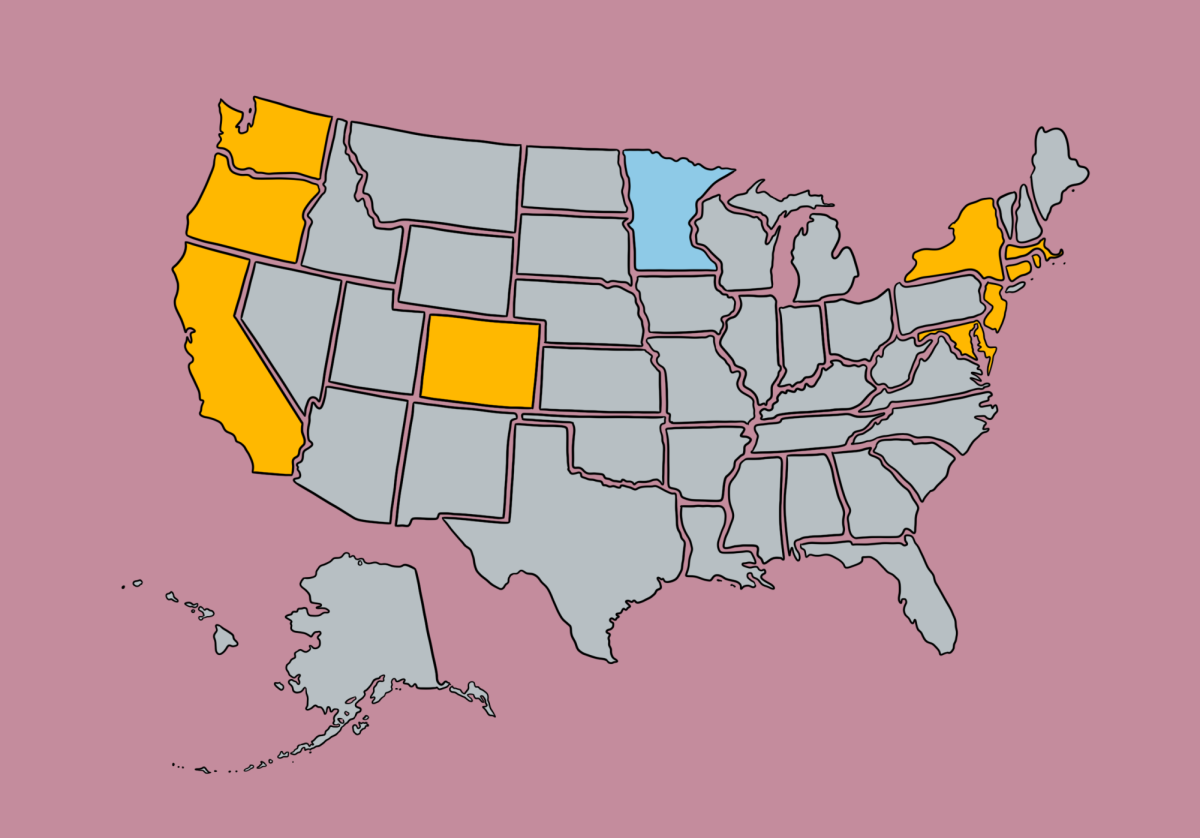
Fortunately for us, Minnesota’s Earned Sick and Safe Time went into effect in 2024, providing Minnesotans with a bit of breathing room between their finances and well-being.
University of Minnesota public health professor Ezra Golberstein said that while having a paid sick leave law can increase the use of healthcare services, patients often switch to types of healthcare services they did not have time for before paid leave took effect.
“We do find some evidence that people are sort of trading off,” Golberstein said. “Once you have a paid sick leave law in place, they seem to be opting towards the more time-consuming forms of care, which I think is an interesting finding.”
While this policy may be great for Minnesotans, it’s little consolation to workers in the 29 states that have no paid sick or general leave mandate.
University work and organizations professor John Budd said, given how far the U.S. is behind on this issue and the risks involved with having people work while sick, a national paid sick leave law is a pressing need.
“It really puts employees at a disadvantage,” Budd said. “You can’t control when you’re sick, and a lot of workers lose income when they’re sick, or they might be potentially putting coworkers or customers at risk by feeling that they really need to go to work when they’re sick because they can’t afford not to if they don’t have paid sick leave.”
Golberstein said there is evidence suggesting workers in states without mandatory paid sick leave laws are sometimes forced to forgo important healthcare services, especially among lower-income populations.
“There are probably people who are having to make really tough decisions about, ‘Do I take the afternoon off of work to go and see my mental health provider for my psychotherapy visit?’” Golberstein said. “When you take into account all the time involved in that, that’s like a full half day of work, and that’s a lot of lost wages for somebody potentially.”
Having a national paid sick leave law in place isn’t unheard of, as the Healthy Families Act — a bill that would allow workers to earn up to a week of protected paid sick leave time — has been introduced in Congress, co-sponsored by both of Minnesota’s senators.
“To build an economy that works for everyone, we need federal paid sick leave to support working families,” said Sen. Tina Smith in an email statement with the Daily. “Parents should be able to stay home and care for a sick family member without worrying about missing a paycheck and being late on rent or the mortgage. Caring for your child or an aging parent shouldn’t be something only the ultra-wealthy can afford, it’s basic humanity.”
Everyone gets sick across all fifty states. Our sick leave laws should not differ state by state.
Sharita Gruberg, vice president for economic justice for the non-profit National Partnership for Women and Families, said in a statement to the Daily that sick leave is a universal need.
“Whether it’s to care for a child, an elderly parent or a loved one going through a medical challenge – having paid time off without worrying about losing your job is a must,” Gruberg said. “Minnesota – and 14 other states like it, including DC – have set the bar. So we will continue working with leaders who want to ensure that every worker across the country has paid family and medical leave.”
While the Healthy Families Act was introduced to Congress months ago, there is no guarantee that it will pass.
According to Golberstein, many of the arguments brought against paid sick leave mandates revolve around the additional costs and burdens for businesses.
“I don’t believe the research has supported the worst fears of the opponents of sick leave mandates,” Golberstein said. “At the same time, some of those concerns are legitimate and real, and you do have to engage with some of the negative consequences of these laws.”
Budd said there may be some benefits for companies if a uniform or generously paid sick leave law were implemented nationally.
“Target has to keep track of all of these different exceptions and administer them differently in all of these different locations, plus places that don’t have it at all,” Budd said. “Whereas, if it was uniform, there would just be one system to administer, and a company like Target wouldn’t have to worry about the administrative burdens of lots of different jurisdictions.”
It’s important to remember that most government programs have some sort of cost or drawback attached, but given the importance of preserving the health of both workers and customers alike, the tradeoff is a no-brainer so long as the program is well designed.
Life has a way of throwing us curveballs. Given how much stress we deal with daily, knowing that we have a buffer for any health-related surprises would go a long way.