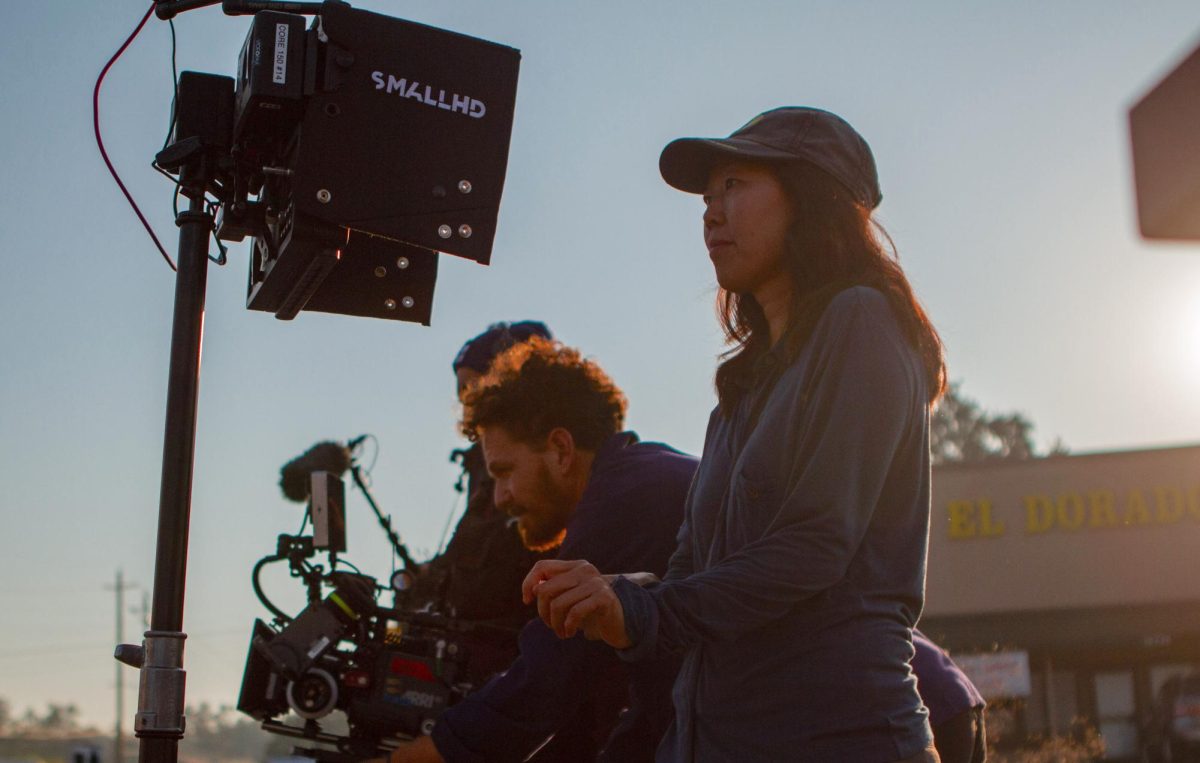
The Cedar Cultural Center debuted the world premiere of the documentary film, “Dinkytown: A Tale of a Legendary Village,” this past weekend.
From St. Paul director Ossian Or, the documentary chronicles over 150 years of history, showing how Dinkytown served as a small downtown for the University of Minnesota community. It captures the neighborhood’s historical roots through figures such as Bob Dylan and vice presidents Hubert Humphrey and Walter Mondale.
Or was inspired to make the film, as he believes the cultural history would never have been documented otherwise.
“No one was doing it, so I said I’ve got to do it. If not me, then who?” Or said, who has been directing since 1978.
After high school, Or took a job working for Great Northern Railroad, which was often stationed in Dinkytown’s Union Yard. He later spent a year in Europe before returning to Minnesota to work at a motion picture studio in Minneapolis.
To Or, Dinkytown is a memory of a time of rapid social, political and cultural change. He believes society is experiencing the beginning of another era that resembles the 1960s, with current Trump administration policies reminding him of the Nixon years.
The film spans from the 1950s to the 1970s, which he defines as Dinkytown’s golden era. It encompasses the counterculture movement, the Vietnam War and the Civil Rights Movement.
“If you go through Dinkytown today, it doesn’t have that same spirit, it isn’t the intellectual center it used to be,” Or said. “I felt like Dinkytown was not as important as it had been, and I didn’t want to make the film any longer than it was.”

By taking the viewer through the rise of counterculture, the 1970 Red Barn protest, the origins of Al’s Breakfast and more, the film offers a strong taste of Twin Cities history. It explores the activism of the Minnesota community and shows how protective locals are over its history and the character of student neighborhoods like Dinkytown.
For example, the documentary traces Dinkytown’s early days as a major rail center with the Union Yard on the edge of Dinkytown. Or notes that the neighborhood most likely derived its name from the fact that the small engines that shuttled rail cars from the grain mills were called “dinkies.” Dinkytown was primarily a working-class community until the University of Minnesota cemented its status as a major university in the 1930s to 1940s.
Kristen Eide-Tollefson, the co-founder of Preserve Historic Dinkytown and Or’s production partner, said the film accomplishes preserving local history while protecting the small businesses of Dinkytown.
“Dinkytown continues to be a critical space in which people form identities, friendships and things that influenced their decisions through the years,” Eide-Tollefson said. “We hope to inspire new generations because every generation of Dinkytowners have their story.”
Eide-Tollefson said releasing the film is critical in giving Dinkytown’s community a source of inspiration.
“People tend to think about the feeling that many have about Dinkytown is sheer nostalgia,” Eide-Tollefson said. “I think we want to provide a point of inspiration for people to act in the interest of the future, and we want to support that by showing how that worked.”
Or believes the film is more important than ever for its milestones, including the Voting Rights Act of 1965, which sought to dismantle voter discrimination. He notes that while the film acknowledges this victory, many current political movements, such as many states imposing voting restrictions, make history repeat itself.
“I think that just from a historical standpoint, it’s important for the younger generation to know what happened in Dinkytown, because what we’re seeing right now politically is beginning to resemble that [1960s] era that this video is about,” Or said. “If kids today see this and want to change something, they have a sense of what’s been done and as a starting point.”
Eide-Tollefson said Preserve Historic Dinkytown worked with a team of University students through community partnerships to give Or feedback on the film through the filmmaking process. He was surprised that students didn’t know the contextual history of the 1950s to 1970s.
“That really increased Ossian’s determination to make sure that he incorporated the zeitgeist, the history, and how Dinkytown was part of that,” Eide-Tollefson said.
Or said the 1960s were important for the area, as many cultural institutions highlighted in the film, such as the Minnesota Dance Theatre and the Children’s Theatre of Minneapolis, had their origins in Dinkytown.
“The history of Dinkytown lives on in those institutions, and that era formed much of what’s going on. It’s almost like all the gains of the 60s through the civil rights movement have been torn apart by ICE, by the policies of the current administration,” Or said. “I think that Dinkytown becomes a primer to study that history and figure out how to counter it once again.”
“Dinkytown: A Tale of a Legendary Village” will have another screening at The Cedar Cultural Center on July 18, and it will become available on Vimeo afterward, Or said. Admission is free, but an RSVP on the center’s website is required.