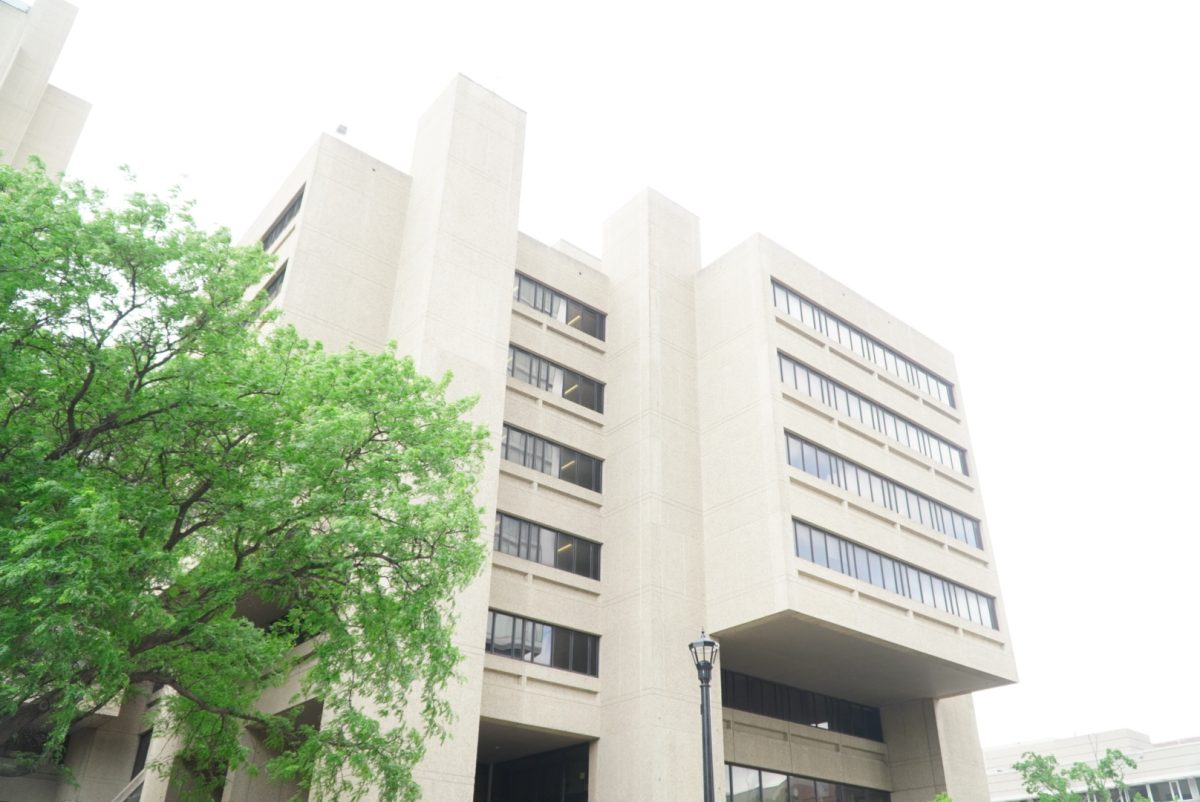
The Elmer L. Andersen Library on the University of Minnesota’s West Bank opened an art exhibit for Media Mike and the Center for International Education on June 30. From community-focused documentaries to handcrafted books, the exhibit highlights a 50-year multimedia archive defined by passion and radical empathy.
The exhibit will run from June 30 to Aug. 28 and is located in the library’s Bell Gallery Wallin Center.
Mike Hazard, also known as Media Mike, is a Twin Cities-based documentary filmmaker, photographer, poet and teaching artist. In 1975, Hazard founded the CIE, a micro-nonprofit creative studio to help shine a light on other local nonprofits, artists and Minnesota residents.
Hazard is well-known for his deeply empathetic and community-focused approach to storytelling, guided by his philosophy: “Everything I make is a love story.”
“If you take the time to listen, to hear, you encourage someone to share their story,” Hazard said. “I’ve never failed to find intriguing aspects of an individual’s life if you take the time to sit, talk, whatever it takes to let them speak from their own heart.”
Hazard said his life as an artist began at the University in 1974 when he learned to produce television with a class from University Community Video, a pioneering alternative media center.
For more than 50 years, Hazard produced nine national telecasts on PBS and 225 videos on YouTube through his micro-nonprofit. His documentaries, videos and art document local writers, filmmakers, farmers, politicians, community activists and visual artists. His works include coverage of poets Robert Bly and Thomas McGrath, political figure Eugene McCarthy, and even a film produced with local elementary students on Paul Wellstone.
One of Hazard’s documentary projects, “Seeds of Change,” sometimes called “We Come from the Flower,” profiles the Hmong American Farmers Association farm using photography, writing and video. The collection debuted at the Minnesota Museum of American Art before traveling to five locations, and its materials are now preserved at the Andersen Library exhibition.

Farm co-founder Pakou Hang praised the project’s documentation, noting that it ensured her nephew would pass down the farm’s story to his own grandchildren.
The work of the CIE came to an end in 2026, and its 50-year archive was donated to the University of Minnesota libraries.
Marguerite Ragnow, a curator of the James Ford Bell Library and Special Collections and Rare Books, said having Hazard’s work preserved in the University’s libraries enriches its resources for studying Twin Cities art history.
“Archives and Special Collections has a long history of preserving local visual and literary arts,” Ragnow said. “The more inclusive and diverse our collections are, the more accurately they reflect the amazing mosaic of the Twin Cities arts scene. The CIE embodies that diversity.”
The June 30 exhibition premiere captured the vibe of a tight-knit communal milestone, as an energetic crowd of longtime supporters, directors, alumni and more mingled while observing glass display cases packed with Hazard’s handcrafted books, physical artifacts and archival photography.
With a camera operator capturing every moment from the gallery to the presentation, the attendees filled the room with a great appreciation for Hazard’s 50-year legacy. The evening became less of a rigid museum retrospective and more a celebration of a lifetime of independent art and the definitive final chapter of the CIE.
Kao Choua Vue, a documentary filmmaker, University alumnus and friend of Hazard, said his decades of capturing local history significantly shaped the Twin Cities art community.
“It’s this richness in the way that he has collected people in making them seen,” Vue said. “It really brings the Twin Cities to life in ways that they are part of the fabric of the Twin Cities and their art, and how we see ourselves as Minnesotans.”
Vue said Hazard’s work shows that passion and heart are what it takes to sustain a lifelong art career.
“What it says to me is as long as I believe in myself, there’s a collection of history that is going to be celebrated and coveted by so many people for the rest of the history for the Twin Cities for Minnesota and beyond,” Vue said.
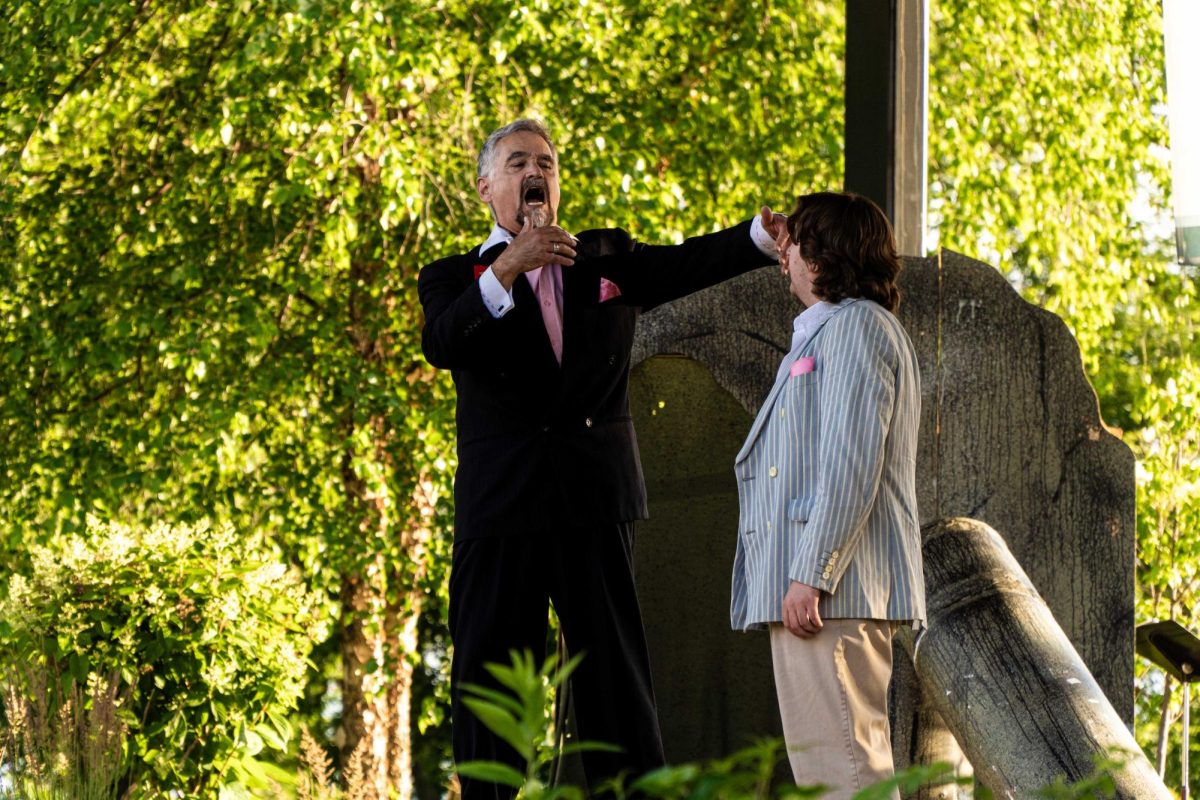
The retrospective presentation captured the visual abundance of Hazard’s legacy by pairing a musical poetry performance with a showcase of his multimedia career. He screened a handful of short films, including a satirical poem video about a chef forced to cook pork chops instead of fish, alongside his collection of photos and “paper movies.”
After Hazard revealed his next endeavor of moving to California this fall to build a new studio, he closed the night by reciting his poem “Hailing Mary,” to which the room broke into a roaring ovation.
Hazard said because his career was driven by an appreciation for the people he documented, his stories remaining permanently accessible by the University libraries brings his mission full circle.
“Every subject, every story that was taken on was because there was a passion for it,” Hazard said. “Knowing and seeing that the material is now to be shared in new ways and preserved is levitating. I could not be happier.”