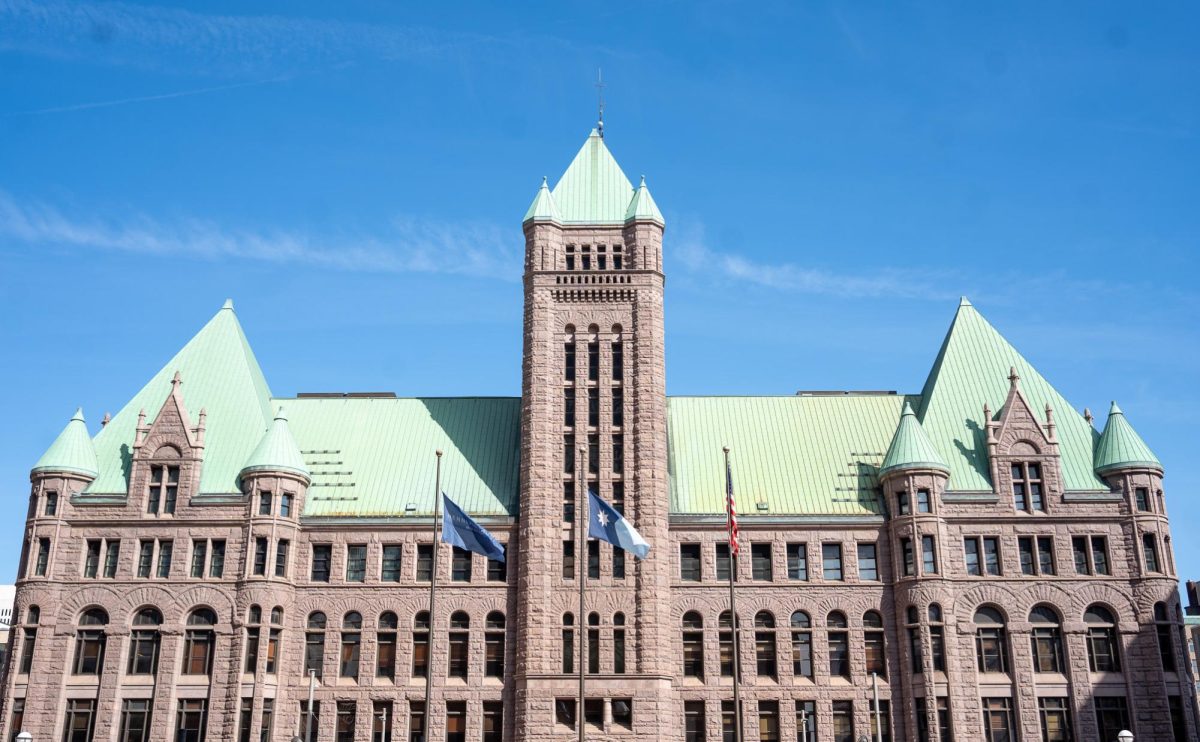
In an 8-5 decision on Feb. 19, the Minneapolis City Council decided to renew the liquor licenses of two hotels, Renaissance Minneapolis Hotel, The Depot and Canopy by Hilton Mill District, which housed U.S. Immigration and Customs Enforcement agents, raising the question if hotels should face retribution.
The decision came after two weeks of debate and public testimony, which split the public, 10 were in favor of the renewal, while 10 were not. The decision to renew the license came from the city council not having legal precedent to revoke it.
The debate raised questions about the types of retribution businesses should face, if any, for supporting ICE agents. The decision came at a time when Operation Metro Surge was supposed to be winding down.
Joan Soholt, a banquet server uncomfortable with sharing where she works, said using a liquor license as leverage without a valid legal complaint sends a chilling message.
She added pulling the liquor licenses could have a detrimental impact on staff members and urged for the renewal of the licenses.
“This is about economic stability,” Soholt said. “It is about protecting workers, and we should be doing everything we legally can to support the hotel restaurants and industries that employ so many members of our community.”
Soholt is a member of Unite Here Local 17, the Minnesota hospitality union. United 17’s goal is to “negotiate great contracts for our members, empower workers to have a voice on the job, and organize non-union workers,” according to their website.
They represent more than 6,000 workers in Minnesota. Many of these workers are from immigrant communities, speaking more than 17 languages.
While Soholt urged the council to renew the licenses, other members of Local 17 were not in favor of the renewal.
“We believe that a liquor license is a privilege and that privilege should be reserved for businesses who keep the public safety in mind,” United 17 Recording Secretary Wade Lüneburg said.
At the committee of the whole meeting on Feb. 17, United 17 Lead Internal Organizer Geof Paquette read an anonymous worker’s testimony aloud. The worker was employed by The Depot and was not originally notified ICE would be staying at the hotel. The response from management was that they were trying not to cause a panic.
Cardboard was placed over a window in the kitchen that looked into the breakfast buffet area, where customers sat. This was supposed to be for the safety of the workers. The worker, who was allowed to stay at the hotel, was told not to do their laundry because the laundry room was on the side of the hotel where ICE agents were staying.
“They were concerned with my safety,” the worker said.
Lüneburg said the presence of ICE agents should not be mixed with the selling of liquor, pointing out the unsecured firearms that were laid out in ICE agents’ hotel rooms.
Minneapolis City Council debates regarded the legality of the action and whether there was precedent to revoke the license. Attorney Jon Erik Haines, who worked with Local 17, said the hotels did not have a right to a renewal.
“It is not unreasonable, it is not arbitrary, it is not capricious, it is not fraudulent for the city council to determine that if a hotel is housing a violent and armed paramilitary, that it should not be permitted to sell liquor in the city,” Haines said.
City Council member LaTrisha Vetaw (Ward 4) said revoking the license would be similar to what President Donald Trump did to Jimmy Kimmel, referencing the suspension of Jimmy Kimmel Live! by ABC when Kimmel made controversial statements about Charlie Kirk, after pressure from the Trump administration.
Vetaw argued suspending the hotels’ liquor licenses would be impeding on the hotels for controversially housing ICE agents.
“I would love to explore legitimate reasons for these things,” Vetaw said. “This came up after the fact. This renewal was going to happen like it did last year, and then this came up.”
The discussion raised questions of due process, which is meant to ensure fairness in legal matters.
Hilton corporate policy states guests are not allowed to have firearms, unless they are authorized law enforcement officers like ICE agents. There were no incidents of ICE officers using their firearms in public spaces at the hotel. Council members argued the liquor license had nothing to do with ICE’s presence in the hotels, meaning it should be renewed.
“We have to have some level of evidence that the stay of or the presence of ICE is particularly connected to liquor licenses,” Council member Jamison Whiting (Ward 11) said.
Council member Robin Wonsley (Ward 2) argued this was the time to take action for the community and show there is retribution for housing ICE agents.
“We don’t want to rubber-stamp,” Wonsley said. “We don’t want to proceed with business as usual. We want to use our authority and figure out the ways in which we can make sure accountability is held in this moment.”