

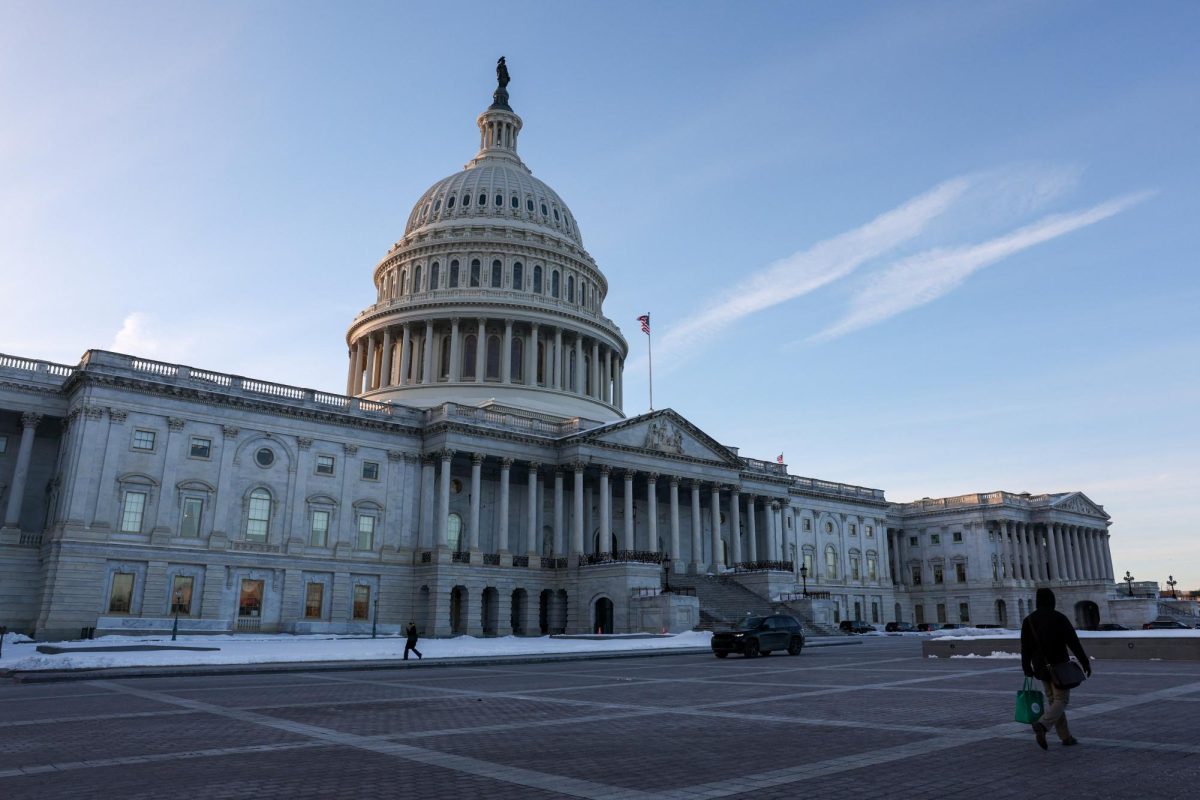
A March 4 U.S. House committee hearing examined fraud in several Minnesota public programs, featuring criticism of public officials’ alleged lack of oversight and response to warning signs.
The hearings focused on the “Feeding Our Future” scandal and allegations of major misuse of Medicaid funds within Minnesota.
Gov. Tim Walz and Minnesota Attorney General Keith Ellison testified about their knowledge of the fraud and responded to accusations that state officials ignored warning signs and retaliated against whistleblowers.
The full scale of losses remains unclear. In a press release released after the hearing, the House Committee on Oversight and Government Reform cited estimates from federal prosecutors of up to $9 billion in suspected fraud. Walz has disputed the $9 billion figure, but acknowledged that the total defrauded could be in the billions.
During the hearing, House Majority Whip Tom Emmer (R-Minn.) sharply criticized Ellison, alleging that he obstructed the investigation and ignored warning signs. Ellison’s office rejected the accusation.
“The criticisms of Attorney General Ellison during the hearing were baseless,” Brian Evans, Press Secretary of Ellison, said in a statement.
Evans said Ellison has a strong record on Medicaid fraud enforcement.
“Since his election, Attorney General Ellison’s Medicaid fraud unit has ranked fifth in prosecutions across the entire county on average,” Evans said.
Evans added that the unit has convicted more than 300 fraudsters and won more than $80 million in recoveries and restoration for Minnesotans.
Ellison introduced the bipartisan MAP Act in late February of this year. Evans said the legislation was meant to give his Medicaid-fraud-fighting team new tools and more resources to continue protecting the tax dollars of Minnesotans.
“Any unbiased reading of the situation will demonstrate that the Attorney General has been taking the issue of fraud seriously from the start and has one of the best fraud-fighting teams in the entire country,” Evans said.
Some DFL lawmakers criticized the hearing’s focus.
“Any amount of fraud is infuriating, and a dollar stolen by a bad actor is a dollar that can’t be used to help someone live a better life,” Rep. Dave Pinto (DFL-St. Paul) said in a statement. “But the recent congressional hearings have largely been a political sideshow.”
Evans said the attorney general’s authority to prosecute fraud cases is limited since the office’s jurisdiction under Minnesota law is almost exclusively civil.
“The only exceptions to this are investigating and prosecuting Medicaid fraud, where we have criminal and civil authority, and when a county attorney asks the AG for help in the criminal prosecution of a felony,” Evans said.
Evans added that the AG can investigate and prosecute Medicaid fraud, but does not have the legal authority to initiate investigations and prosecute criminal fraud in other government programs, like childcare assistance, unless the office is asked to assist.
The Minnesota Department of Human Services added that Medicaid oversight is a shared responsibility among multiple agencies and levels of government.
“It’s going to require a coordinated ongoing effort from the Department of Human Services, federal government, private health plans, lawmakers, counties, law enforcement and providers to ensure that Minnesota is doing everything it can to minimize fraud,” a DHS spokesperson said in a statement.
Lawmakers are expected to continue debating whether to implement oversight reforms and other anti-fraud measures.










Ben
May 1, 2026 at 10:40 am
Minnesota is in a transformative time. Great to have balanced coverage on these topics!