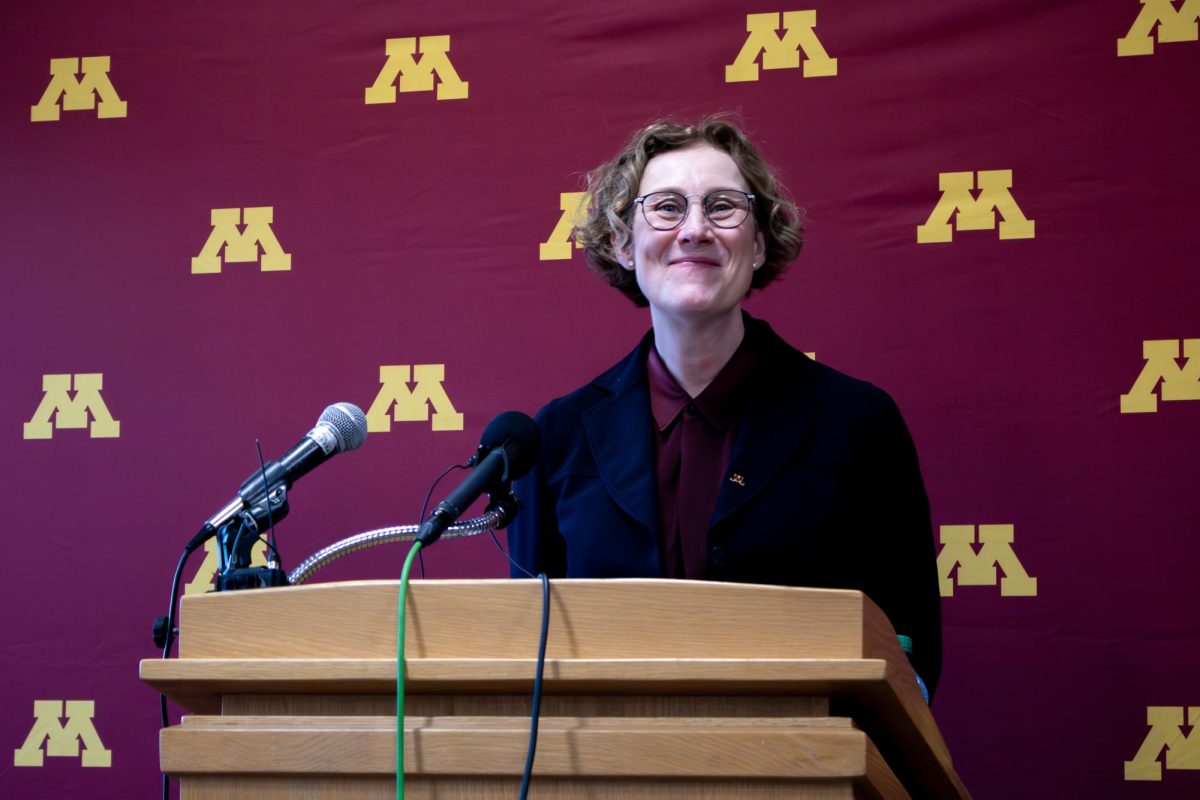
At a meeting with the University of Minnesota College Democrats, Lt. Gov. Peggy Flanagan answered questions on affordable housing to immigration reform. During the meeting, she said University of Minnesota students would not be left out if she won the Senate race.
Flanagan announced her U.S. Senate campaign in March 2025 after current Sen. Tina Smith said she would not be running for reelection, reported CBS News. According to her website, Flanagan wants to focus on issues such as affordability, housing, immigration reform and healthcare.
Flanagan served on the Minneapolis Board of Education from 2005 to 2009. She was elected to the Minnesota House from 2015 to 2019. In 2018, Gov. Tim Walz chose her as the Lieutenant Governor, making her the first Native American woman elected to a statewide office in Minnesota.
Minnesota Daily: Gov. Tim Walz stated that holding ICE accountable for Operation Metro Surge is a major priority. How is the administration working to hold ICE accountable?
Flanagan: “Part of it is suing the federal government in partnership with the Attorney General to make sure the evidence that’s been collected with regards to the shooting of Renee Good and Alex Pretti has been available to us. I think it’s also the Governor who introduced the Truth Council just this past week, which will be collecting testimony and documenting just the chaos and violence and terror that ICE perpetrated on the people of Minnesota and documenting that.”
Daily: Operation Metro Surge has caused $203 million dollars in damage to Minneapolis. How is the administration working toward relief efforts in housing and small businesses?
Flanagan: “I think in the role of a candidate for the U.S. Senate and as someone who would like to serve in the Senate, we have to claw back that $75 billion that ICE was given. We have to prevent these detention camps that are being built all across the country for mass deportations and detention. There needs to be financial relief through, again, small businesses, rental assistance, but also, I think, for mental health support for our young people, many of whom now have an Adverse Childhood Experience score or an ACE score simply because federal agents are in their communities. Minnesota is owed reconciliation, and that will need to come in the form of financial investments here to repair and restore what they’ve broken.”
Daily: Why was it important that you made the stance that you would not be accepting PAC money?
Flanagan: “I’m not taking corporate PAC money because I think it is the root of all of our problems that we are experiencing in this country. I wish I could tell you that it was only one side of the aisle where corporate PAC money influences our politics, but that’s simply not true. I see that there are people in leadership who are unwilling to take courageous stances because of the campaign checks that they received from these corporations, instead of working on behalf of the people. I think it’s the root of corruption in our politics. Ultimately, I think we should have campaign finance reform that leads to publicly financed campaigns. But until we get there, I’m going to run a campaign that is based on people power, regular folks making contributions.”
Daily: According to your Senate page, you would like to focus on healthcare, which has been a difficult issue to address in the past. How would you help?
Flanagan: “I think Medicare for all is overwhelmingly popular in Minnesota and also all across the country. We have watched because of the high price of health care in this country, and as I’ve traveled across the state and I’m hearing from people that their deductibles are $15,000, $16,000 or families who are simply going without health insurance and just praying that they don’t get sick. I think the time for Medicare for all, it’s time has come. So part of it is making sure that we elect more leaders who care about passing that policy and then working in partnership with folks in the Fight Club and this group of progressive senators in Washington, D.C. and in Congress, leaders like Pramila Jayapal to put together a campaign that increases support for us across the country. I think momentum is building for Medicare for all.”
Daily: Fraud has been a major issue for people in Minnesota. What ways is the administration working to prevent fraud in the future? Do you think there was something you could have done better?
Flanagan: “If the federal administration actually cared about tackling fraud, they would have sent 3,000 forensic accountants instead of 3,000 ICE agents to Minnesota.”
“Fraud is serious and I think it’s incredibly important that we acknowledge just how upset people are in Minnesota about fraud. I’m angry about it too. And the governor and the legislature have taken action this last legislative session to pass additional policies to prevent fraud, to stop fraud, that allowed to stop payments from going out. The governor has brought on board a fraud czar whose entire job it is to determine additional ways to prevent fraud from happening in state agencies.”
“I have hope that this legislative session, Republicans and Democrats can come together to pass additional measures to stop and prevent fraud in Minnesota. I think they’re not that far apart from one another. We’ve got six weeks until the end of the legislative session. But I have hope that that’s possible.”
Daily: If you won the Senate race, how would you help students in the University of Minnesota?
Flanagan: “I think it’s Medicare for all. It is raising the minimum wage. It is pushing to make sure that you can’t buy an entire neighborhood and price people out of homeownership or the rent being too high. Congress has completely thrown up their hands and said, ‘We’re going to let the guy in the White House do whatever he wants with regards to tariffs.”
“Those costs are being passed on to everybody and, in particular, around the high cost of food. I know that university students don’t come in pieces. Our approach to making people’s lives more affordable can’t happen that way either. I would love to see the North Star promise that has been enacted in Minnesota pass at the federal level. Then, more people have access to affordability and don’t graduate with a tremendous amount of debt, which prevents them from being able to afford their lives once they graduate.”