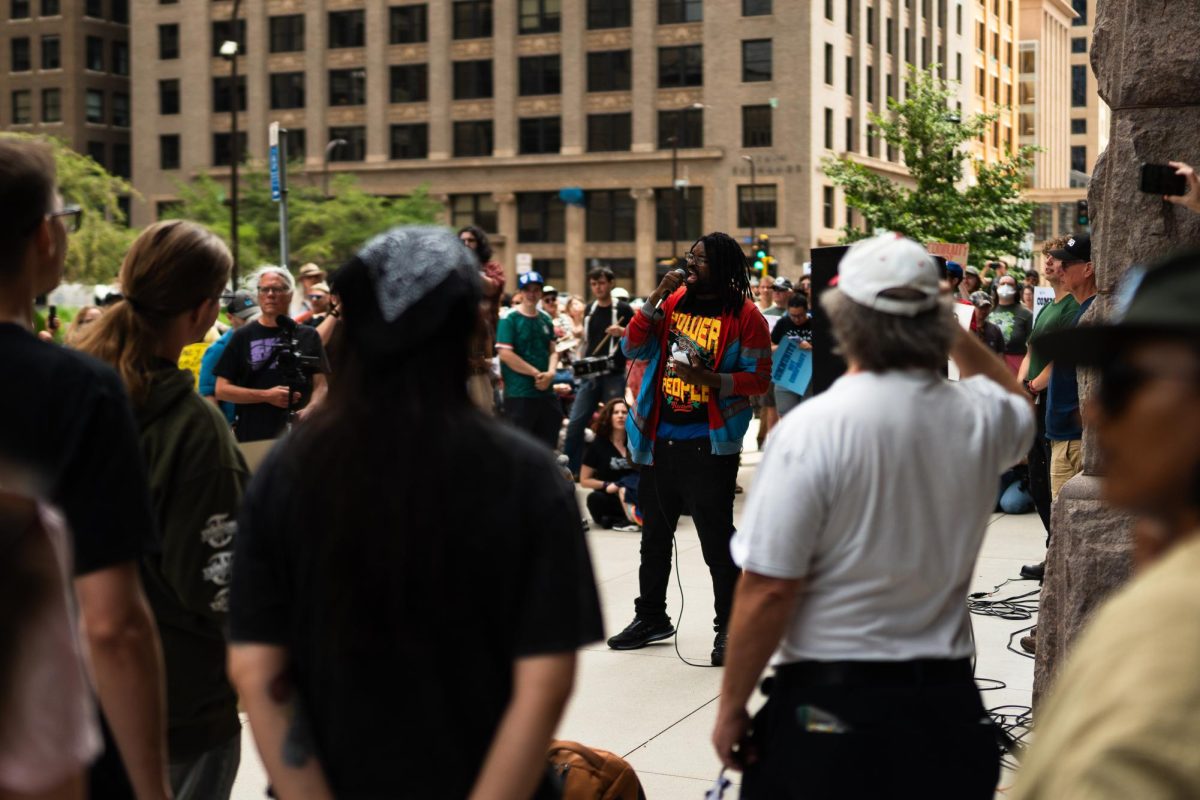
On a windy Saturday near Mercado Central, Aztec dancers walked in front of thousands of people marching in shirts sporting different union logos, chanting, “The people united will never be divided.”
Other signs read “money for education, not deportation.”
At the intersection of Lake Street and Chicago Avenue, about 3,000 union workers and activists celebrated the 20th annual May Day or International Immigrant Workers’ Day.
Alvin Sheng, a member of the Minnesota Immigrants Rights Action Committee, said this year’s march is meant to highlight the success of the immigrant community.
“We’re trying to celebrate the wins of the labor movement within the United States and around the world,” Sheng said. “But in particular, we want to drive home that immigrants are also workers, and we also want to protect immigrant rights as well.”
Some MIRAC members called for Minnesota to stop all collaboration between Immigration and Customs Enforcement and to provide protection for immigrant workers.
May Day is an international holiday celebrated by union and immigrant workers. The day started in the U.S. in 1886 after the American Federation of Labor went on strike for an 8-hour workday, NPR reported.
Mira Altobell-Resendez, a St. Paul resident and a member of AFSCME 3800, a union for clerical workers, said she wanted to celebrate the history of the movement.
“We wouldn’t have any of the rights that we currently have in the U.S. as workers if it weren’t for the strikes that people went on and the protests that people had in the streets,” Altobell-Resendez said.
Operation Metro Surge caused many immigrant workers to stay at home, unable to make a living or pay for groceries, due to fears of ICE agents in the Twin Cities earlier this year.
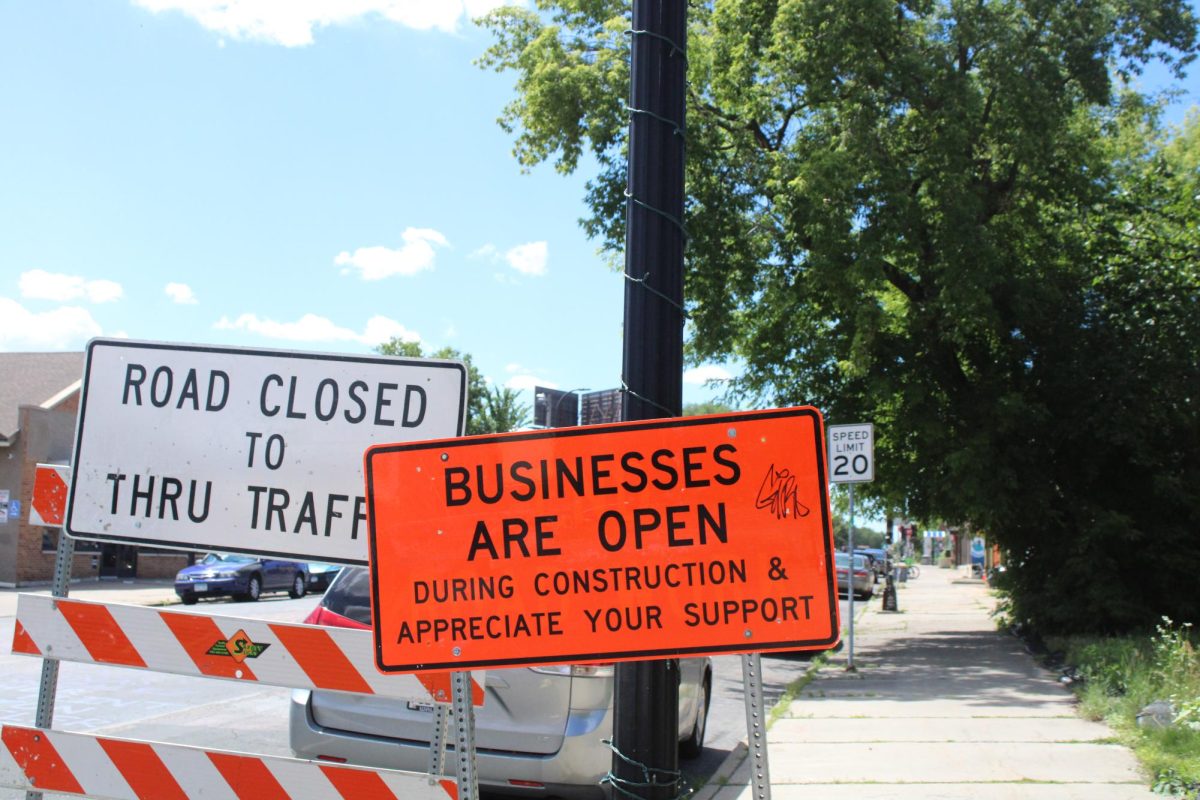
This year, the march has a special significance, Sheng said. Lake Street, which has many immigrant-owned businesses, had an estimated $30 million loss in a month due to immigration enforcement, the Minnesota Reformer reported.
Marcia Howard, the president of the Minneapolis Federation of Educators, said the last year showed the United States the importance of workers coming together.
“There has been a change in Minnesota. In the way in which we relate to each other as neighbors and in the way in which we relate to each other as workers,” Howard said. “You need to start making decisions about whether or not that anybody, regardless of the zip code or country of origin, whether or not you see them as your neighbor, as your coworker, as your people. We are not going back to 2025.”
Brian Vats-Fournier, an English teacher at Camden High School, said he wanted to come out to support the immigrant community.
“I think that the challenges that the teachers faced were nothing compared to the challenges that [immigrant] families were facing,” Vats-Fournier said.
For Sophia Rivera and Mia Rivera, the march was a way to bring awareness to how workers in Minnesota are still recovering from Operation Metro Surge.
“You hear a lot of the big stories and stuff like that, but people kind of forget about all the people that are like making this all happen,” Sophia Rivera said.
They both live with their parents in Woodbury and said they still feel uneasy after Operation Metro Surge.
“We were still scared to go out, even in Woodbury. I didn’t want my parents to go out. I wanted them to stay home because there were just so many people. I was kind of scared to go to work because I felt like there were ICE agents stationed outside of my work,” Mia Rivera said.
Vats-Fournier hopes the protest shows the world that, despite what happened in January, workers are supporting the community.
“They let people who may see this from the media, that things that are terrifying, know that there are people still fighting it,” Vats-Fournier.