Very little in life is as important as our health. Finding ways to keep our bodies functioning in a safe and sustainable way is how we can live the lives we want.
As such, you’d think the people put in charge of maintaining other people’s health and well-being would be excessively credentialed experts with plenty of experience keeping humans in tip-top shape.
In the United States, however, that notion was shattered with the appointment of Robert F. Kennedy Jr., a lawyer with no formal medical training, as Secretary of Health and Human Services.
From attempts to implement new food restrictions to decisions on vaccines that are unsupported by medical professionals, Kennedy’s “Make America Healthy Again” efforts are controversial at best.
Associate professor in the University of Minnesota’s Hubbard School of Journalism and Mass Communication, Rebekah Nagler, said Kennedy’s following, which can be compared to a cult of personality, largely stems from his ability to tap into people’s legitimate grievances and frustrations against institutions like the pharmaceutical and food industries.
“I would say the pathway that has been advanced to correct and address those things is pretty thin,” Nagler said.
The medical community has been a consistent critic of Kennedy, with more than 15,000 doctors signing a letter to advocate against his appointment last year and more than 1,000 current and former HHS employees calling for him to resign in September.
Despite endless conflicts with medical experts, the MAHA movement still retains a significant amount of public support, including about 38% of parents, according to a 2025 survey.
University political science professor Paul Goren said while trust in major institutions has been declining for decades, the rise of a social media structure that monetizes engagement and the failure of experts to properly communicate with the public have led to more medical misinformation.
“I think a lot of these influencers, whether they’re like RFK, people on social media or practitioners spreading ideas about alternative medicines or things like that, they have the ability to come across as deeply concerned, authentic and caring about the people they’re communicating with,” Goren said. “It’s a big part of the charisma.”
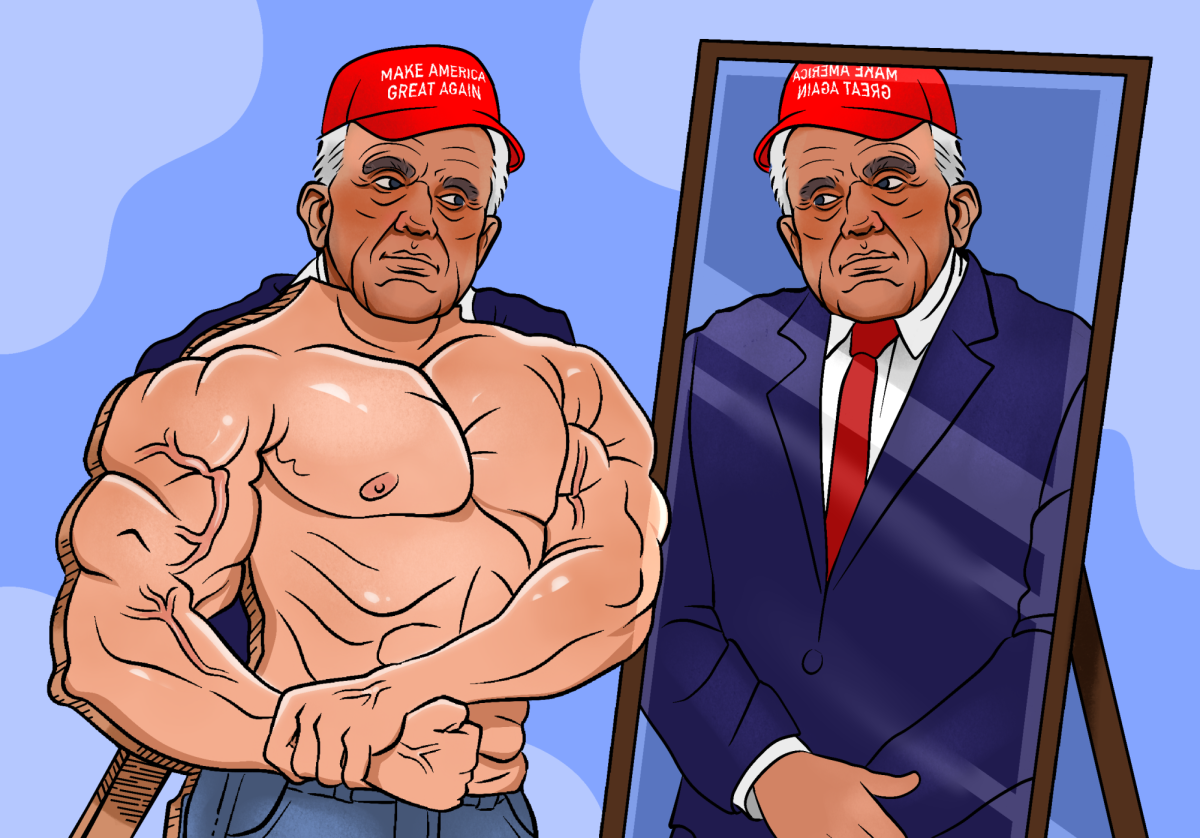
Much of Kennedy’s health focus places a strange emphasis on image instead of health science, a priority recently illustrated by a shirtless promotional video with Kid Rock.
Additionally, Kennedy’s rhetoric about health and nutrition in many cases reflects growing trends on social media, an almost populist approach to health policy.
As the wellness influencer trend against seed oils grew, so did Kennedy’s rhetoric claiming seed oils were poisoning Americans. He infamously praised Steak ‘n Shake for switching to beef tallow despite the fear of seed oils being medically unsupported.
One of the more concerning instances of his health populism, however, is his actions on vaccines.
Since his appointment, Kennedy has fired all 17 members of the Centers for Disease Control and Prevention’s Advisory Committee on Immunization Practices and replaced them with vaccine skeptics. Under his leadership, the CDC also reduced the number of recommended childhood vaccines from 17 to 11, in direct contrast with the guidance from the American Academy of Pediatrics.
Nagler said while it’s harder to tell how the percentage of people who identify as vaccine-hesitant has changed, the resurgence of preventable childhood diseases is a concerning indication of vaccine avoidance.
“We have seen more childhood vaccine-preventable illness outbreaks in the last year than we have previously, measles being the case example, but with whooping cough and others too,” Nagler said. “We’re seeing enough concerning patterns that do suggest that there are shifts in behavior that are happening.”
Minnesota is no exception to the trend, with kindergarten vaccination rates against diseases like measles, polio and varicella dropping consistently since the COVID-19 pandemic. In fact, we are one of the states with the lowest measles vaccination rates among kindergarteners.
Unfortunately, the negative effects of that drop are brewing. Minnesota saw more than a dozen measles cases in 2025 and at least five this year already, all from a disease we had essentially eradicated in the U.S.
Goren said if enough people feel the consequences of bad advice, they may put their trust back in experts rather than image.
“People just react to conditions on the ground,” Goren said. “If a lot of people stop having their children inoculated against measles, and you have these devastating measles outbreaks, then people might say, ‘You know what, maybe we should have listened to the doctors, or epidemiologists, or whoever has expertise in this.’”
Playing around with national health policy without substantiated evidence or the support of medical professionals is akin to playing with a loaded gun.
While the MAHA movement does have legitimate concerns and some decent ideas, so much of what Kennedy implemented over the past year poses significant risks to our public health.
Even more concerning, from his nonsensical claims about Tylenol and autism to his unsupported vaccine rhetoric, Kennedy has demonstrated an unparalleled disregard for actual medical science.
Health policy on the national level should not be based on what trends or conspiracy theories are popular in the moment. It should be made according to the careful and measured advice of experienced medical professionals.
While it may be a bitter pill to swallow, we need someone we can actually trust in charge of national health policy.