

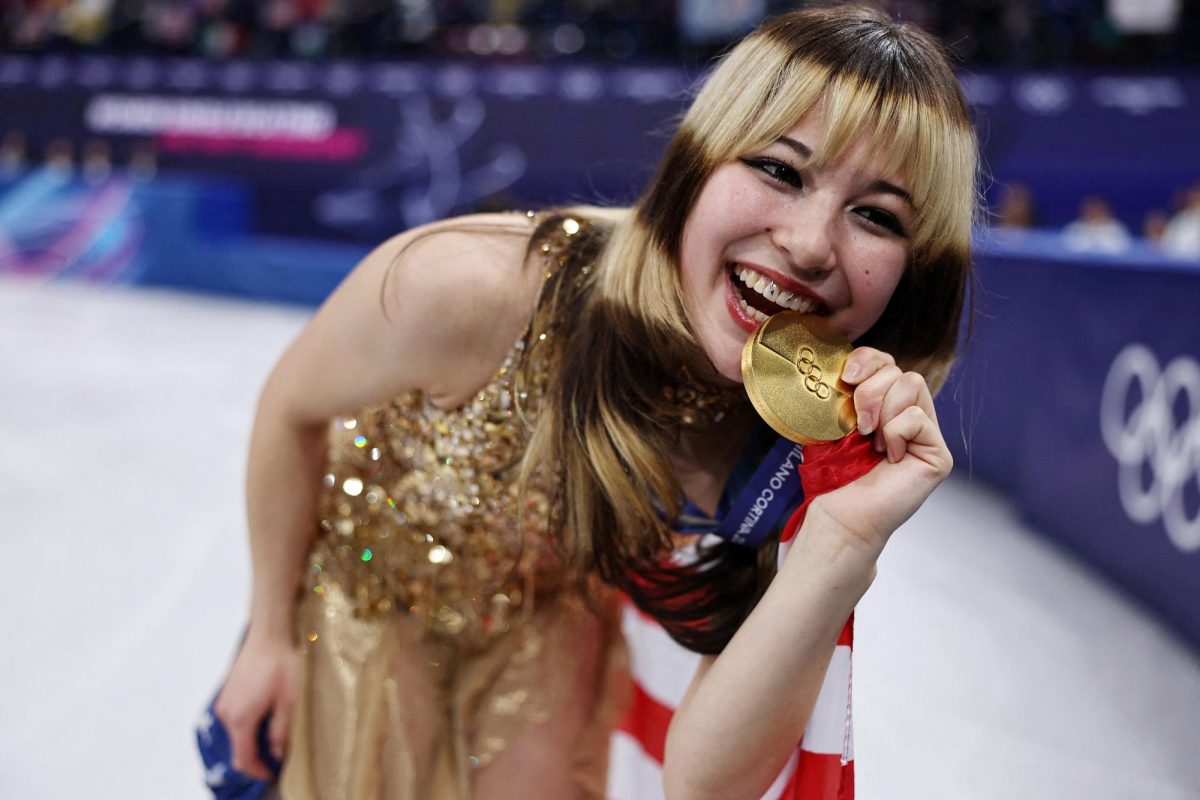
At only 13 years old, figure skater Alysa Liu became the youngest woman to place first in the U.S. Figure Skating Championships. Three years later, she quit the sport entirely.
Liu longed for the freedom that came with leaving the fiercely competitive world of figure skating. As a child, her world revolved around strict routine and discipline. This lifestyle isn’t unusual for young figure skaters.
Infamous Russian figure skating coach Eteri Tutberidze is known for casting aside skaters once they reach around 17 years of age, or the Tutberidze expiration date. Much of the sport revolves around the idea that younger bodies are better at sustaining the physical demands of figure skating. Its culture is also fraught with athletes who suffer from eating disorders and are pushed past their physical limits in the pursuit of achievements.
In January of 2024, one of Tutberidze’s former students, Kamila Valieva, was banned from the Olympics for four years after a failed drug test before the 2022 Winter Olympics. The Court of Arbitration for Sport discovered that she was given 56 medications, nutritional and dietary supplements to improve her athletic performance, though she was still just a child.
Looming at the back of every young athlete’s mind is the fear that without harsh treatment, they can never improve. The pain is supposed to serve as proof that you earned your success.
Leaving a career that was negatively impacting her wasn’t a sign of weakness for Liu. It was a sign of resilience. University of Minnesota psychology professor Patricia Frazier said we are resilient creatures by design. Our culture can push the idea that experiencing hardship or tragedy devastates you for the rest of your life, but Frazier said this isn’t always true.
Viewing setbacks as personal failures and punishing yourself when you don’t meet expectations is counterintuitive to making progress, no matter the area of your life or the skill you’re trying to accomplish.
Liu’s comeback signaled a shift in this culture. Coming out of retirement, Liu was the one making demands. She declared she was going to pick her own music, decide how much she pushed herself and not let anyone starve her in the name of athletic success.
At the 2026 Winter Olympics, 20-year-old Liu took home the gold medal in women’s singles. Watching Liu’s triumph, despite the rigid standards set for figure skaters, gave me a sense of optimism for how we can positively change the way we motivate ourselves and define achievement.
Before Milano Cortina, Liu talked about how she views struggling as something to appreciate rather than as an obstacle or something to fear. Her focus on sharing her artistry triumphs over a need for perfection.
In a sports culture dominated by extreme comparison, University athletes are also changing the relationship they have with their athletics. First-year rugby player Olivia Spencer said that although rugby is a physically demanding sport, there’s space for everyone to play.
“The beautiful thing about rugby is that there’s a place for everybody all the time,” Spencer said. “You don’t have to be super fast or super strong, or you can be a combination of the two or neither at all.”
Motivation in the sport isn’t fueled by negative attitudes. For Spencer, the most important aspect of motivation for improving in her sport comes from her connection with her teammates.
“I think a big part of it is just really taking the time to get to know each other outside of rugby,” Spencer said. “We do so much together, and I think that’s like, a big part of motivation is just showing up to a group of people who want to see you all the time and want to be there with you.”
The mindset with which you treat yourself can impact your overall well-being, both positively and negatively, so why do we view suffering as the best path to improvement? Frazier said that while self-criticism acts as a coping mechanism, there are more positive methods of motivation.
“The way you think about situations has a really strong impact on how you feel about them and what you’re going to do about them,” Frazier said.
Liu won gold by prioritizing being kind to herself and viewing her struggle as something to be celebrated rather than shunned.
We should learn from these athletes who are changing how they perceive their own success and motivation, and begin to understand the benefits of looking at our personal progress through a more compassionate lens.










Laura N. Kirk
Mar 18, 2026 at 2:53 pm
Well written and inspiring!