


Chances are, we’ve all been in a situation where a friend or family member gave their take on a social or political issue that we didn’t agree with, and it made us take a step back. While our first instinct may be to flee or deflect, we need to stop trying to keep the peace.
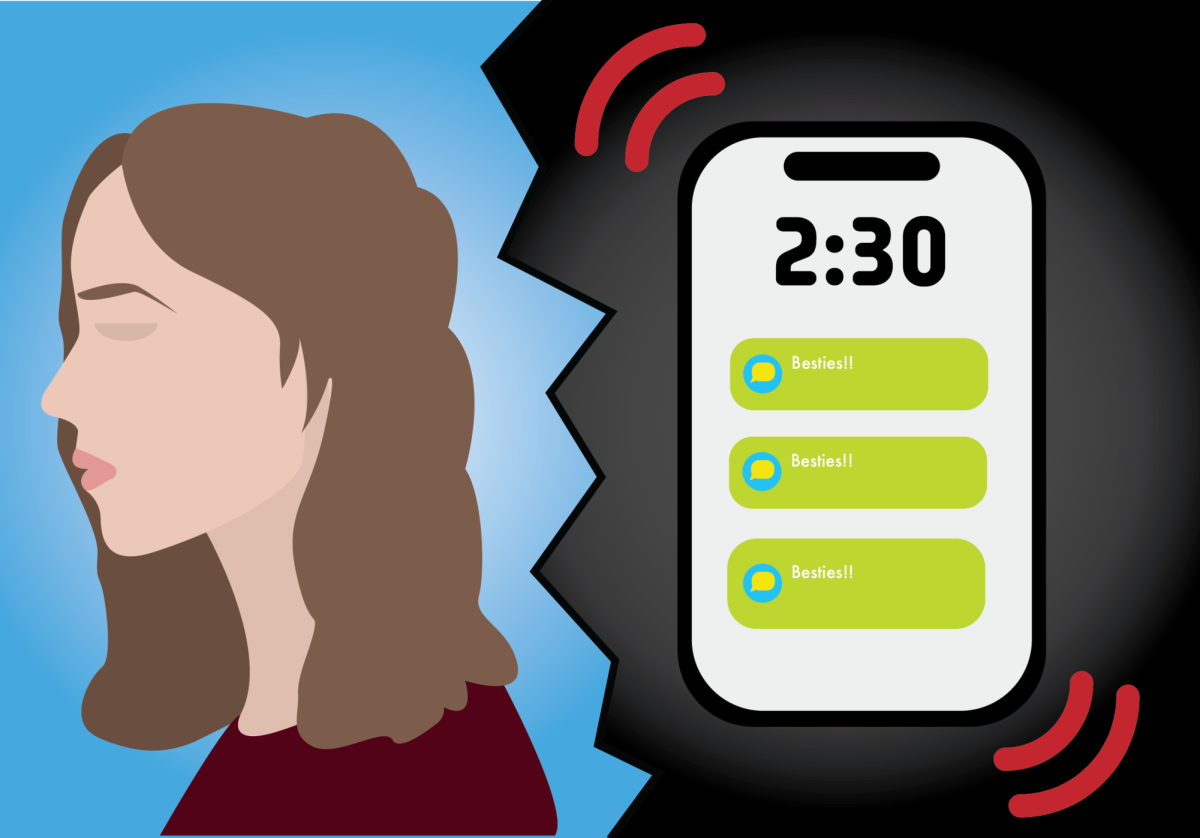
In talking to my Generation Z peers, a common denominator always seems to be a distaste for confrontation and a need to be liked by everyone, even if it’s someone they fundamentally disagree with.
This fear of ostracization from those who disagree, or even from friends who want us to stay silent, encourages a bad habit of not speaking our minds even when we know we should.
University of Minnesota sociology professor Claire Kamp Dush said Gen Z might be afraid of losing connections with friends in a world where it’s already hard to make them. She said it can help to talk to people individually and explain why what they said made you uncomfortable, and we can try approaching someone with the idea of “How would I want to be told that?”
Kamp Dush said a potential source of misinformation for people could be the kind of content they’re encountering on social media, which can play a large role in their opinions.
“I think it’s hard today given that people are in such echo chambers,” Kamp Dush said.
Gen Z’s connection to social media has been a powerful tool for change, but it’s also led to a dangerous rise in conservatism and a fall into alt-right thinking.
Although in the moment it seems challenging to confront someone we know, it’s actually one of the most significant things we can do to stand with our communities against intolerance and push back against hateful right-wing narratives.
At a time when our state is facing historic levels of violence against marginalized communities, staying silent always has a cost. Studies show exposure to racial and ethnic discrimination correlates with higher positive screening for mental health problems.
University philosophy assistant professor Dwight K. Lewis Jr. said when we stay silent, we’re setting a precedent for the discrimination that is inflicted upon marginalized groups.
“When we don’t stand up, we become another checkmark in allowing people to give harm,” Lewis said.
For a lot of Americans, existence is political. Many people don’t have the luxury of ignoring the news or turning their heads away when it comes to conversations about race, gender and class because the views and decisions of those in power directly influence their everyday freedoms.
Lewis said how you address situations with the people you’re close to has wide-reaching impacts.
“The reason why you’re not silent is because you have a demanding love towards a community, and you’re also trying to implore your smaller community, your family, your friends, to be loving towards the larger community,” Lewis said. “It’s really about not giving the permission to make people feel unsafe and alienated and protecting those people’s dignity.”
Lewis spoke about a class assignment in which he has students read James Baldwin’s “A Letter to My Nephew.” He asks students to choose someone in their lives that they want to write to, whether it’s a younger version of themselves or someone close to them. The letter is meant to convey what it’s like for the student to move through the world based on their class, race, gender or other positions in society.
“We want to demand them to love others more instead of harming others more,” Lewis said. “Speaking is an act of courage.”
A hallmark of Minnesotan social cues has always been our passive-aggressive demeanor. In some scenarios, it’s just easier to put on a cheerful front even when you don’t feel like it.
However, our democracy depends on our ability to tell those closest to us when they sound ignorant. We must understand the significance of using our voices to call out prejudice among our peers and family.







Maddie
Feb 12, 2026 at 12:57 am
“However, our democracy depends on our ability to tell those closest to us when they sound ignorant.” OK, well, I’m not close to you, but: you sound ignorant.
There’s no acknowledgment that progressive echo chambers could also spread misinformation or lead to extremism (Charlie Kirk assassination, anyone?).
What you’ve described isn’t “rocking the boat.” It’s reinforcing the dominant ideological current while congratulating yourself for bravery.
True boat-rocking would include: questioning all orthodoxies, not just conservative ones, and allowing ideological disagreement without assuming malice. That would actually be disruptive to campus/Twin Cities norms, in a good way.
Instead, this piece encourages selective confrontation against one side.
Democracies don’t collapse from too much disagreement. They collapse when disagreement becomes moral treason.
Tom Sheasby
Feb 11, 2026 at 4:50 pm
Hey there, narrative gatekeepers & thought police.
I dare you to publish this:
To all you naive, impressionable, young students out there (and maybe a few ‘useful idiot’, non-students.as well. It’s common knowledge that humanities departments, and sociology departments especially in all but a few pvt colleges countrywide are renowned by/in the real world for their post WW2 era infiltration by Communists, Marxists, Socialists, red sympathizers, ‘destroy traditional American culture’ leftists leaning Anarchists ad nauseam… all with agendas… and all trying to influence young: Americans, & other Democratic countries when they are at an at an impressionable age. They think they are are a mission for justice, equality, peace/love/understanding… the usual Utopian BS that sounds so appealing. (It has universal appeal) But don’t be fooled. Take what they have to say with a serious amnt of salt. Better to use your own powers of observation and reason to size things up than to take ANYONE’S word for what to THINK!! Right or Left! Never swallow, let alone digest another person’s truth as your own. Develop your reasoning skills and power of analysis. Don’t be duped…even by your favorite prof!
JB
Feb 11, 2026 at 10:20 am
“…dangerous rise in conservatism and a fall into alt-right thinking.” I very heavily encourage you to learn about the other side of the aisle. If you’re argument is that everyone that disagrees with you is a horrible person or is ignorant. That isn’t going to solve the issue. “Rocking the boat” leads to violence against people who disagree with you.
Think what you think, and believe what you want to believe. Not all conservatives are monsters like you make it out to me. Not every conservative is a supporter of the president or is a troll online.
Generalizing millions of people is the issue. This articles language isn’t helping, and is just disappointing. Brining people from different viewpoints together to come to a solution is the correct and morally right way.