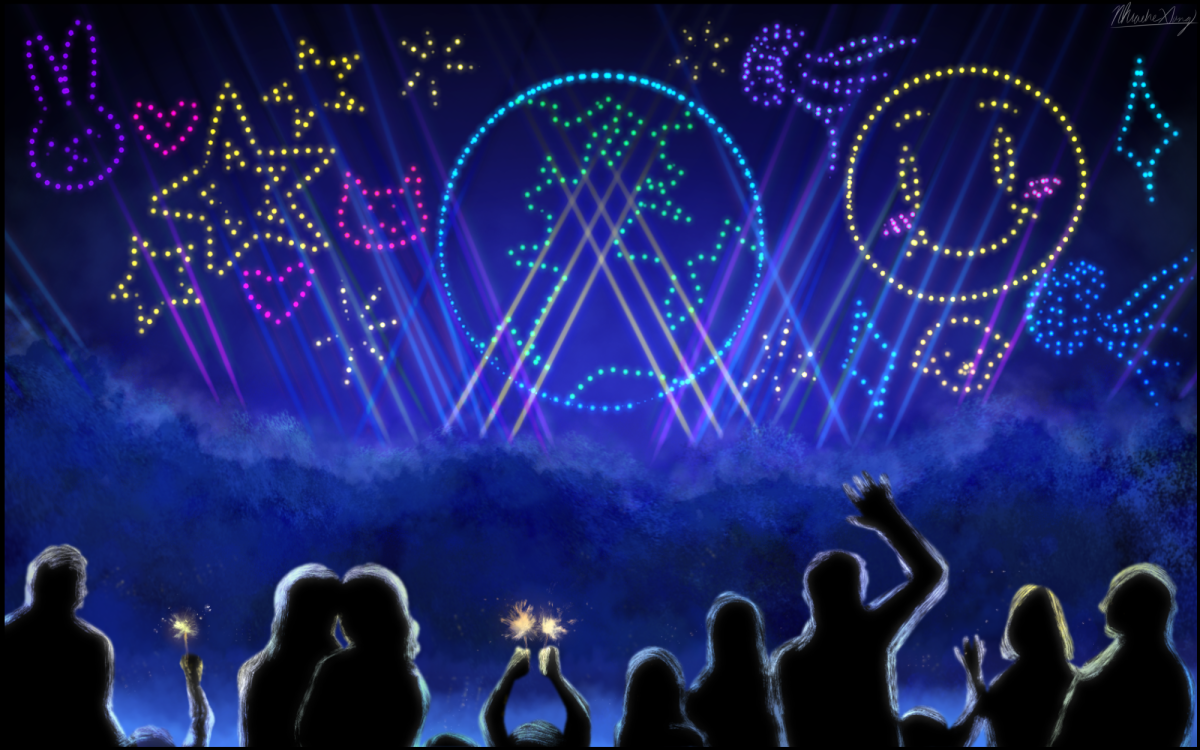
On Feb. 8, several friends and I gathered in a living room with buffalo chicken dip, chocolate-chip cookie bars and a gallon of Arnie Palmer to watch Bad Bunny perform for millions in a true-to-form live TV event.
Oh, I guess there was a football game, too.
Super Bowl LX averaged 124.9 million viewers across platforms. Although there was a slight dip in viewership from last year’s game, the program set a record for peak audience in the second quarter, drawing in 137.8 million viewers.
This also marks the fifth consecutive year that the Super Bowl has averaged more than 100 million viewers.
The halftime show — or if you ask me, the main event — became the fourth most-watched in history, a year after Kendrick Lamar set a new record with 133.5 million viewers. Bad Bunny’s performance also saw the highest Spanish-speaking audience of all time.
This isn’t the only time live TV has made major swings in the past year. Reality series “Dancing with the Stars” made headlines in November after its season finale saw 9.24 million viewers, the most-watched finale since 2015.
Recent discourse on live TV has centered on its decline in relevance, as streaming services have taken over how we consume media.
However, these numbers tell a different story, one where tuning in to live televised events might retain more interest among audiences than expected.
University of Minnesota communications doctoral student Alexa Mayerhofer said nostalgia and a sense of tradition may compel audiences to return to live TV, especially annual events like the Super Bowl.
“I think tradition is a huge part of it,” Mayerhofer said. “It’s an event that happens every year. It’s an event that we’re used to, and so I think that’s one of the reasons that it boils down to.”
Even members of Generation Z, like myself, who grew up with platforms like Netflix, still recall our parents’ Super Bowl Sunday parties, airing live on ESPN.
And after all, my friends and I still watch “Dick Clark’s New Year’s Rockin’ Eve” to see the ball drop, just like we did when we were nine years old and couldn’t believe our parents let us stay up that late.
It’s worth noting that streaming services continue to allocate resources to livestreamed content. The Super Bowl aired live on NBC as well as their streaming platform Peacock, and I watched “Dancing with the Stars” every week through Disney+, making live content accessible to those without cable.
Our political and cultural context can add excitement and urgency to the act of watching live TV.
I remember sitting in my freshman dorm and turning on C-SPAN to watch U.S. Sen. Cory Booker break the record for longest speech on the Senate floor. The opportunity to bear witness to a historic moment as it happened brought me a sense of pride and connection to the rest of my country.
University communications doctoral student Kyra Bowar said the collective nature of live TV provides a sense of camaraderie with others watching, even if you are technically by yourself.
“I think that there’s an element of connection that live television allows for,” Bowar said. “We’re all watching the same thing at the same time.”
With so many streaming platforms and content offered on demand, it feels nice to turn something on knowing that others are right there with you, independently watching the same program, from thousands of different couches across the country.
“I think streaming, sometimes we get really shoehorned or funneled into certain channels,” Bowar said. “But something like live television gives us the chance to come together in this large, highly focused moment.”
In high school, my weekly TV of choice was “Succession,” an HBO drama chronicling the lives of the wealthy Roy siblings as they fight to replace their father as the head of media conglomerate WayStar RoyCo.
Although the show aired on streaming, many others and I tuned in right as it premiered every Sunday, live-tweeting our thoughts on the episode in real time, providing the same sense of shared experience fostered through live TV.
I still remember sitting on my mom’s bed watching “Connor’s Wedding,” frantically scrolling online just to make sure that, yes, what I thought was happening is actually happening — if you know you know.
I would stay up for several hours after watching, debriefing the episode with online friends and preparing for the next “Succession Sunday.” Discussing in real time and sharing the emotional highs and lows with others brought a real sense of community that I sometimes struggled to find as a high school student.
“There’s a desire for connection and common experience,” Bowar said. “That’s a core part of popular culture, for sure, is having that common thing to talk about.”
Mayerhofer said the unity that comes from watching something live can serve as a representation of political resistance.
“This shared sense of community of, like, we’re all watching this together,” Mayerhofer said. “That comes back to this idea of resistance as well, especially when what it is that we are watching is something that is political.”
The announcement that Bad Bunny would be headlining the halftime show met outrage from the right, including prominent figures from President Donald Trump’s administration, like U.S. Secretary of Homeland Security Kristi Noem.
In the context of this backlash and Bad Bunny’s statements in opposition to Immigration and Customs Enforcement operations at the Grammy Awards the week prior, watching him perform almost completely in Spanish to a massive American audience felt like resistance. Defiance from a regime that wants to tell us what America is, defining us by who we hate rather than what we love.
At the end, when he brought out the flags of all the countries from North and South America, shouting out their names with a billboard reading “The only thing more powerful than hate is love,” I felt all 133.5 million people watching with me.
Take that, Kid Rock.