


As Operation Metro Surge comes to an end, University of Minnesota professors say, with the Immigration and Customs Enforcement presence in Minneapolis, educators have been put in a difficult position.
Since the operation began in December, student safety concerns have sat at the forefront of University discussions. According to a brief from the University, ICE officers are allowed within public areas on campus. However, University buildings, such as classrooms and residence halls, require a U Card for access.
“Some areas on University campuses and facilities are open to the public,” the brief read. “Federal law enforcement officers are generally authorized by law to enter public spaces without any special permission from the University.”
Many professors on campus sit in an uncomfortable position, managing classrooms in a time of great tension throughout the University. Especially on the University’s West Bank, professors contend with ICE’s presence just steps away from University buildings.
This presence has left some professors questioning whether they can do more to offer students help and support. Rahsaan Mahadeo, an African American and African studies professor, was one of them.
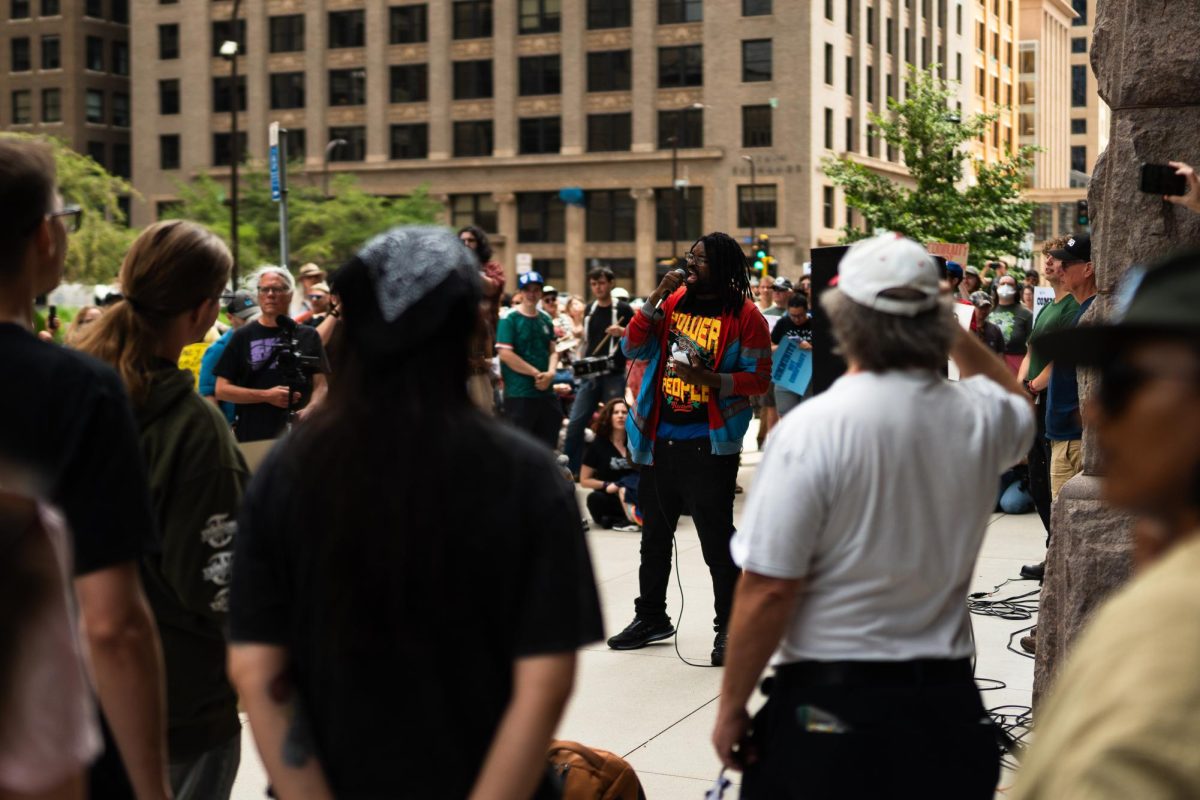
“My last day of class in December, there was a raid in Cedar Riverside, and I was deciding on whether to continue prepping for my class or go try to help,” Mahadeo said. “I know many people in the Twin Cities have witnessed extraordinary levels of violence by ICE agents here and that’s certainly what many of us witnessed on that day as well.”
Mahadeo said he finds it difficult to hope the University will advocate for members of the community, even if they are being harmed.
“It’s hard to have expectations that the University will stand by the community when it’s been complicit in harming the community for decades,” Mahadeo said.
Mahadeo said he cannot see the University potentially standing up for students and faculty, considering how the University of Minnesota Police Department handled protests over the past few weeks.
Art history professor Jane Blocker expressed a similar concern regarding the presence of federal agents in Minneapolis, condemning the ICE crackdown openly following the deaths of Renée Good and Alex Pretti.
“It is unconstitutional,” Blocker said. “It has been dangerous, people have been killed, people have been severely injured and it is an embarrassment to the country.”
Blocker said she is aware that the University’s administration is trying its best to avoid receiving backlash. Regardless, she feels they hold a duty to speak up about the issue, considering how diverse the University community is.
“I understand that they’re trying to reduce, as much as possible, the negative attention that taking a position might entail,” Blocker said. “It seems like an institution that teaches law would have something to say and an institution that has a department of Chicana Latino studies and African American studies might have more to say about this situation.”
Recently, in a systemwide email, Executive Vice President and Provost Gretchen Ritter announced the University’s plans to return to in-person classes Feb. 16. This announcement was met with some backlash from the University community, as many feel there are still risks posed to some students as federal operations continue to wind down.
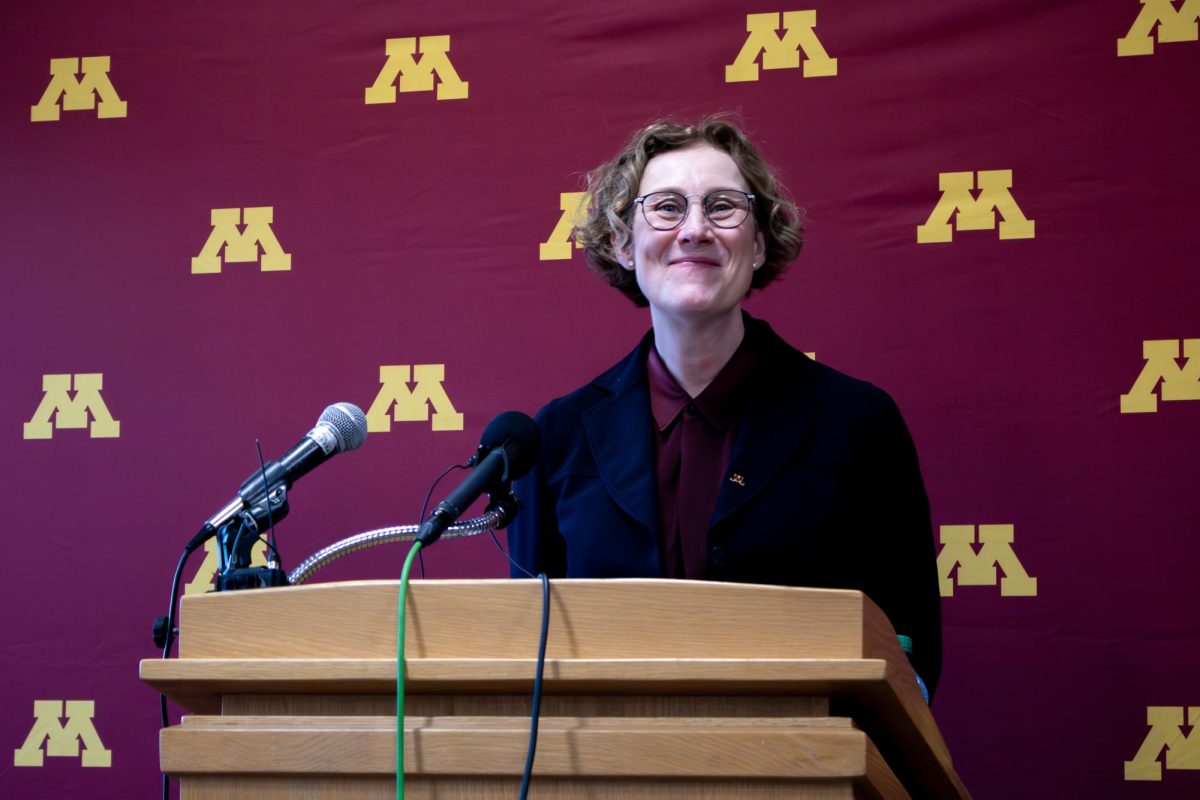
The chair of the University’s art department, Christine Baeumler, said Operation Metro Surge has impacted students far beyond what it should have. For art students specifically, Baeumler worries that the loss of hands-on experience could hamper student development.
“The ICE occupation of Minneapolis has been incredibly disruptive to the education of our students here at the University of Minnesota and particularly in the art department,” Baeumler said.
Baeumler said she supports having the University as a sanctuary campus and hopes the administration will do more to support its community.
“I think we can create a kind of unified front against injustice and against violation of human rights and academic freedom and constitutional rights,” Baeumler said. “A university campus should be a place where we uphold those values, and if that means a sanctuary campus, then I’m all for that.”











@KG
Mar 19, 2026 at 9:02 am
Back off, KG. If you don’t agree with what is going on here on campus or what people say, that’s fine. While, yes, obviously, words matter, you continually use your words to call for bizarre and needless changes that make no sense and only further confirm your disdain for critical thinking and inclusive dialogue. Your words paint you as a very rigid, harsh, unsympathetic individual. I’m grateful no one in a position of power at the U would bother to take you seriously.
KG
Mar 1, 2026 at 11:13 am
Christine Baeumler has shockingly likened ‘s presence in Minneapolis to an “occupation.” This dramatic comparison relies on the same extremist jargon often used to describe the Israeli-Palestinian conflict. Casually borrowing this charged language to exaggerate a domestic law enforcement operation is not only inaccurate but confuses it with a complex international conflict. For instance, accusing the Jewish people—who have maintained a continuous 3,000-year spiritual and physical connection to Israel—of “occupying” their ancestral homeland is fundamentally flawed. Gaza, from which Hamas launched its carefully planned October 7 attack, had no Jewish residents and was not “occupied.”
Unfortunately, Baeumler’s casual use of such language reflects a broader academic milieu at the U. Organizations like Faculty for Justice in Palestine have a significant presence among U leadership in several departments, including CSCL, English, GWSS, and AIS. When departments are heavily influenced by a singular ideology, it naturally shapes hiring, courses, and syllabi. Instead of balanced scholarship, U students are presented with a curriculum that normalizes pejoratives like “genocide,” “apartheid,” and “ethnic cleansing” against Israel. This antizionist ideology goes beyond critiquing specific Israeli policies; it seeks to undermine the very existence of Israel and erase its central role in Jewish belief. Students deserve an education that challenges them to examine all sides of complex international issues, rather than an environment where academic freedom is leveraged to validate one-sided, ideological, antizionist narratives that can promote Jew hatred.
Words matter, and I urge U faculty to choose theirs more carefully. Furthermore, the U administration should seriously consider whether departments like CSCL, English, GWSS, and AIS, as presently constituted, are truly fulfilling the U’s foundational mission of objective scholarship, robust teaching, and comprehensive study. Disbanding them as separate academic units and merging them into CLA would be a step in the right direction.