The University of Minnesota Sudanese Student Union (SSU) joined the Anti-War Committee and other protesters on Nov. 9 near the Minneapolis City Hall to protest the ongoing Sudanese war.
Protesters marched around the block in 20 degrees Fahrenheit and stood in front of the municipal center to call for a defunding of the Rapid Support Forces, boycotting businesses associated with the United Arab Emirates and for the United States government to stop the war in Sudan.
Since 2023, 12 million people have been displaced from Sudan while the Rapid Support Forces and the Sudan Armed Forces fight for control of the country.
The RSF seized the city of El Fasher in North Darfur on Oct. 26, and satellite images show the RSF performing mass killings of the population, according to a report from Yale School of Public Health’s Humanitarian Research Lab. There have also been reports of sexual violence, attacks on humanitarian personnel, large-scale detentions, abductions, forced displacement and looting done by the RSF, according to the United Nations.
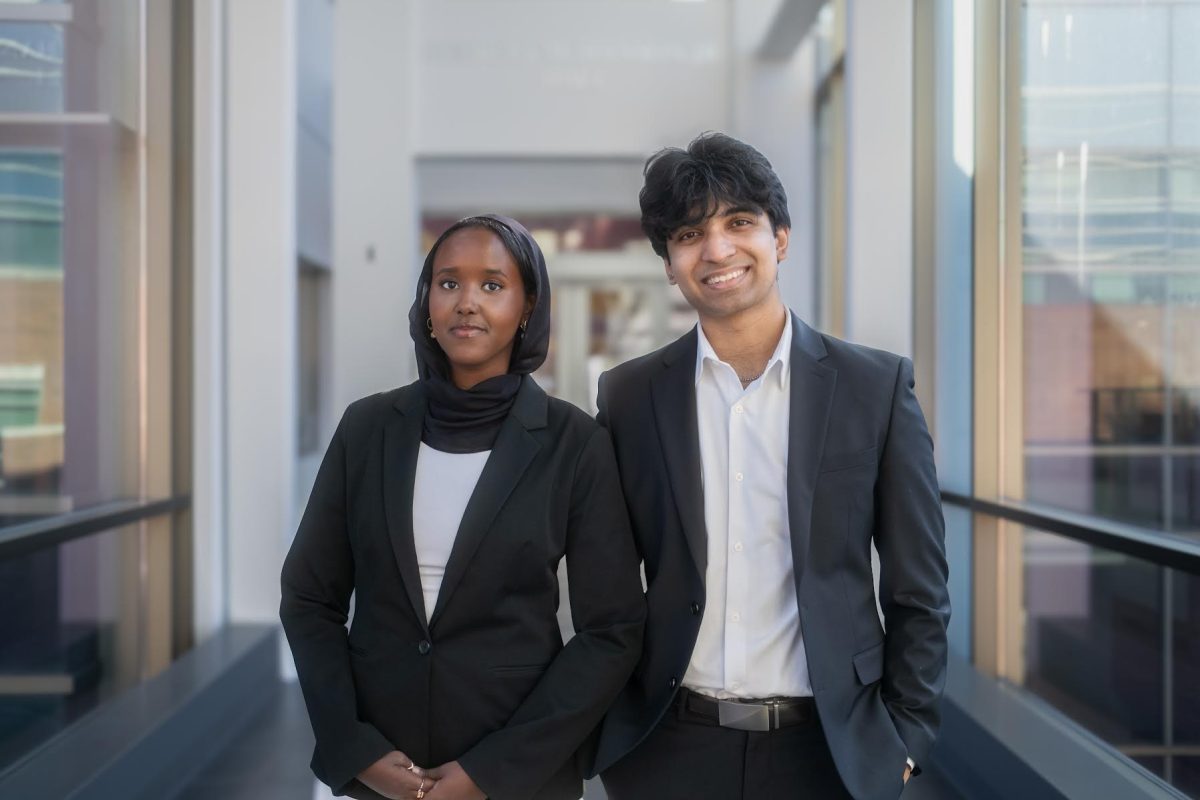
External vice president of the SSU Shahd Hagelsafy said the organization wanted to show support for the people suffering in Sudan.
“We’re here to show our solidarity for our brothers and sisters in Sudan, and we are being their voice, because they’re not able to use theirs,” Hagelsafy said.
The SSU community representative Neamm Artoli said she has relatives who have been killed and displaced from Sudan.
“If you talk to any Sudanese person here, or in any other state, they’ll tell you, ‘I have had family that’s been affected,’” Artoli said. “They don’t deserve that. It’s their homeland.”
Artoli said she hopes the University and staff are understanding of Sudanese students’ struggles, especially when it involves student participation or assignments.
The president of the SSU, Sara Tarig Mohamed, said the organization has been working to educate people about the violence in Sudan and has held fundraisers to send aid.
“Not a lot of people know about what’s going on in Sudan,” Mohamed said. “Having people that know about it and just spreading the word is very important.”
Hagelsafy said she is pleased that she saw a fair amount of non-Sudanese people at the protest.
“It’s important that it’s not just Sudanese people speaking about Sudan, it’s everyone speaking about Sudan,” Hagelsafy said.
Sudan gained independence from Britain in 1956 and has since seen a series of military coups and dictators, according to PBS. In 2019, the RSF and the SAF overthrew Omar Al-Bashir, who had led the country since 1989.
The RSF is led by Mohamed Hamdan Dagalo, or Hemedti. The SAF is led by Abdel Fattah Al-Burhan, who also worked closely with Bashir, and made money from dealing weapons, oil and the gold mines in Darfur, like Hemedti.
After international intervention, a transition council was created, which appointed Abdalla Hamdok as the prime minister. However, Hamdok resigned in January 2022, making Burhan the de facto leader and Hemedti the vice-chair.
The war officially began between the organizations on April 15, 2023, and the two men’s fight for power has since killed millions.
Hagelsafy said she feels many people are ignoring the Sudan crisis because it is an African country, and violence in Africa has been normalized.
“It’s not normal to see children being burned, being buried alive, killed, displaced and women being raped,” Hagelsafy said. “That stuff is not normal and should never be normal.”