

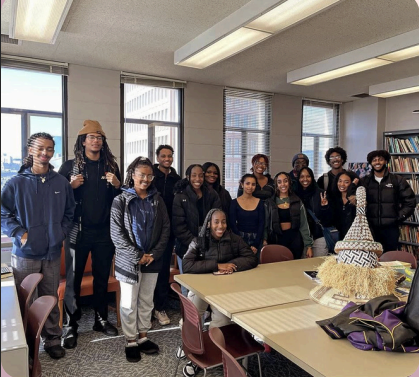
University of Minnesota professors and leaders within the African American and African studies department have been grappling with unease as the potential for federal funding cuts remains uncertain for Universities deemed to have programs that concern diversity, equity and inclusion.
The African American and African studies department, created in 1969, offers majors like African American and African studies and African language courses, including Somali and Swahili.
President Donald Trump’s administration has labeled racial justice efforts as DEI, considering such initiatives discriminatory and potentially liable for funding cuts, according to the ACLU.
The Board of Regents made a 7% cut across programs on June 18, according to the Minnesota Daily. While those cuts are not necessarily linked to federal funding loss, they have left smaller and less-funded programs more vulnerable to disruption — especially with the potential for further cuts on the horizon.
In a letter from the U.S. Department of Education to Harvard University, Craig Trainor, the DOE’s assistant secretary for civil rights, said that in the last few years, universities have used DEI to discriminate against white and Asian students. He added that universities continuing to use DEI could face potential cuts because of this discrimination.
“Institutions that fail to comply with federal civil rights law may, consistent with applicable law, face potential loss of federal funding,” the letter read.
AAAS assistant professor Rahsaan Mahadeo said he has felt faculty members’ concern regarding potential cuts. He added that if the cuts go into effect, it could lead to the loss of some African languages in University studies and potentially much more.
“We had very grave concerns because of the numbers but beyond that, we recognize as the department of African American and African studies that threats to one’s language is in my opinion, like very much in a form of genocide — an attempt of strip people of their culture, of their ways of of being and for people of African descent thats especially pernicious,” Mahadeo said.
Mahadeo said the department is a safe space for African and African American students at the University, and that safe space will be affected if they face cuts.
“I would say that it would have a devastating impact on our enrollments and our overall sense of community,” Mahadeo said. “It would be a significant blow to our department, but our department as a community and as a home and as a very affirming and inviting space for black students and students of African descent.”
Mahadeo is not alone in these fears.
University students in AAAS have also expressed concerns about some language and cultural studies classes potentially being cut. Camara Stevenson, a fourth-year student taking Swahili, said she would be distraught if the funding cuts do take place, especially if the languages classes are cut.
“It’s just really sad and disappointing,” Stevenson said. “I’m in the Kiswahili program, specifically in the AFRO language department, and I just loved that course so much, and I’ve gotten to learn a lot.”
Stevenson said she does not know what the University is planning to do for this issue and hopes it takes action to avoid funding cuts. She added that the University has not openly discussed the funding issue, which causes anxiety for some students.
“It’s kind of in that state of limbo where you’re like, I have no idea what types of conversations are being had or where anybody’s thinking,” Stevenson said.
According to Stevenson, faculty members even asked students if they could create advocacy statements on how the department is important to them.
Third-year journalism student Jiran Omae said if the department faces funding cuts, it could have an impact on students wanting to learn a second language for their future career.
“It would make major changes on students’ careers, especially international students that want to go into law or journalism and communications like myself,” Omae said. “What I learn is that a new skill, like learning a second language, could affect their communication stabilities.”
Omae said the university is likely to focus more on other academic departments than AAAS.
“The UMN is basically a predominantly white institution (PWI), so I believe they would likely favor other departments besides departments of minority that are helping POC students,” Omae said.





Another pandemic?
Nov 27, 2025 at 7:14 pm
Odd that DEI cuts are the primary issue regarding race when the University posts material on their official website that refers to whiteness as a “pandemic.”
Ta
Nov 21, 2025 at 1:33 pm
They should be. This is not a legitimate area of study to say the least.