


From the remote regions of Africa to world-class universities, the U.S. Agency for International Development has impacted the lives of people from all corners of the world.
The advancement of a $9 billion spending cut package and 67,749 federal job layoffs have placed critical programs at risk. These cuts critically threaten the USAID, an agency that has sustained livelihoods, health systems and democratic progress worldwide.
People around the world are losing their jobs, families and access to necessities.
In a recent study, it is estimated that around 14 million people could die by 2030 if steep funding cuts to USAID continue. This number alarms many, including the University of Minnesota’s Mandela Washington Fellows, who came to the University to grow their leadership skills and expand their knowledge.
The Mandela Washington Fellowship for Young African Leaders is a program sponsored by the U.S. Department of State, administered by the International Research Exchanges Board Inc., and hosted by various university institutes. Each institute is awarded a subgrant of up to $235,000 to host fellows, funds that are now in jeopardy due to the USAID cuts.
Despite the grant, institutional partners are required to contribute at least $15,000 to cover expenses such as materials, housing and meals.
The University is one of the institutions that welcomes a diverse group of fellows from across Africa to participate in a six-week leadership symposium where they receive academic and professional training.
Among the 2025 University fellows are Alfred Makotsi from Kenya, Raphael Bukuru from the Democratic Republic of Congo and Mmeli “Bruce” Moyo from Zimbabwe. Their stories reflect the far-reaching consequences of the shutdown.
Alfred Makotsi (Kenya): Jobs gone overnight
Makotsi is finishing a doctoral degree in Diplomacy and International Relations at Masinde Muliro University of Science and Technology. He runs a private consultancy firm and the nonprofit Kakamega County Youth Network, which links youth to entrepreneurship and job opportunities.
The news of budget cuts came during the interview process for the fellows to get accepted to the program, according to Makotsi. He said he worried about what the cut meant for the fellowship opportunity and its implications for his community.
Makotsi said clinics lost test kits, youth centers stopped paying staff and food programs were disrupted.
“We have many stories we could tell, but the matter is the disruption starts from employment down to the programs USAID used to fund,” Makotsi said.
Makotsi said he never saw unemployment as a real issue until he came across a LinkedIn post that asked for a list of people affected by USAID cuts.
“I saw that post, and in thirty minutes the Excel sheet already had thousands of people on it,” Makotsi said. “That is when it hit me, that there are very many jobs being supported by the USAID.”
Raphael Bukuru (Democratic Republic of Congo): “They need help.”
Bukuru comes from the DRC, where he resides in Kivu province, in Uvira. After attending ISP Uvira, where he studied English, Bukuru was appointed English department chair in January 2024.
Bukuru’s passion for teaching led him to open the Uvira Everyday Language Center, a nonprofit that teaches English to community members and provides translation and interpretation services. The Uvira center also partners with the nonprofit Save the Children.
Programs like Save the Children have been impacted by the cuts. Bukuru claims that due to a lack of funding, Save the Children has reduced its staff by 50% and made cuts to projects that provide medicines to local hospitals.
“These projects are simply being canceled because they don’t have the funds to get the medicines, and this is impacting health care access for communities because some of the services in hospitals that were free are now being charged,” Bukuru said.
Bukuru said he had a personal project centered on training teachers for social and emotional learning, a concept he learned through the Access Exchange Program. After months of filling out forms, his grant proposal got accepted.
“I was now waiting for the grants to be issued so I can start implementing the project,” Bukuru said. “Then in February, they called me and told me that the grant would not be issued because of the funding cuts.”
Bukuru said he remembers feeling shocked and disappointed as he had hopes for the program and what it could do for the community.
Program shutdowns have an impact on war-torn regions in the DRC, according to Bukuru. As of early 2024, approximately 2 million people have been internally displaced due to the M23 conflict.
Without funding, his partners at Save the Children cannot provide vital shelter, food and educational access to the displaced people in those regions.
“These vulnerable people have no assistance, they lack food, their children cannot study,” said Bukuru.
The “saving hand” of USAID provided more than just money; it was a home and safe space where people in need could get much-needed help, Bukuru said. He added that with the absence of USAID, the conflict could escalate.
“When people feel that they are not supported, the government is not doing anything, and there is no one caring for them, this pushes more and more young people, for instance, to attempt to join armed groups,” Bukuru said.
Bukuru said almost every tribal group is gaining militia members in the DRC, causing concern among many individuals in the community.
Mmeli “Bruce” Moyo (Zimbabwe): Youth in crisis
Moyo studied at the University of Zimbabwe, where he majored in political science and diplomacy. He currently serves as a ward councillor for Nkulumane Ward 22. He is active in the youth wing of the opposition party led by President Nelson Chamisa. Moyo also founded and directs the Young Leaders Initiative Zimbabwe, where he mentors young people in leadership and teaches entrepreneurial skills.
As of 2024, 8.55% of the population in Zimbabwe is unemployed. USAID attempted to fill that gap by funding scholarship programs that sent young people to school.
“There are so many business ideas that we funded through USAID,” Moyo said. “It created a space for young people to get employment and also to redefine their path.”
USAID provided a creative outlet for young people to build and find business opportunities. With the loss of this program, Moyo said a lot of young people are turning to drugs and dropping out of school.
“In my county, more than 20% of young people are being rehabilitated because of drugs and substance abuse in Kulumane,” Moyo said.
COVID-19 Crisis
With the loss of USAID funds, projects immediately ceased, displaced people no longer had access to food, ARV shots vital to HIV patients were running dry, hospitals were understaffed and community members felt confused and alone.
“People who are living with HIV and AIDS can no longer access ARVs anymore. Companies were closed.” Moyo said. “So it brought more frustrations, and people are not happy.”
During the COVID-19 pandemic, around 500 million vaccine doses were shared worldwide in USAID’s Global VAX program. USAID launched thousands of vaccination sites in regions like sub-Saharan Africa.
Moyo said that without such assistance, the pandemic would have resulted in catastrophic consequences.
“No one was prepared in Africa, but through international relations and friendship, we were able to receive vaccines,” Moyo said. “Imagine if another pandemic is to come, and with the tendency and the level of corruption in our government system, our people will die.”
USAID: past and present
Established in 1961 by former President John F. Kennedy, USAID is an independent executive branch agency responsible for administering foreign aid and supporting economic growth outside of the U.S. Through its global network of implementing partners, USAID has improved global health, expanded education access and delivered life-saving humanitarian aid.
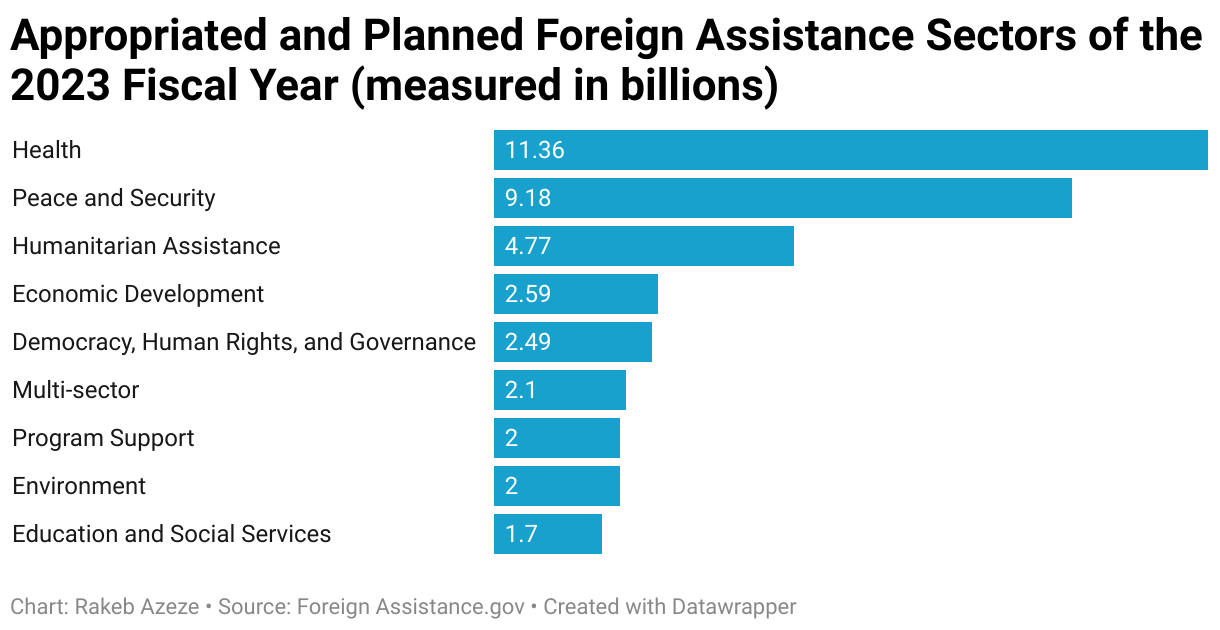
According to the United Nations, the U.S. government is the largest donor of humanitarian aid in the world, accounting for more than 40% of all aid tracked by the UN in 2024.
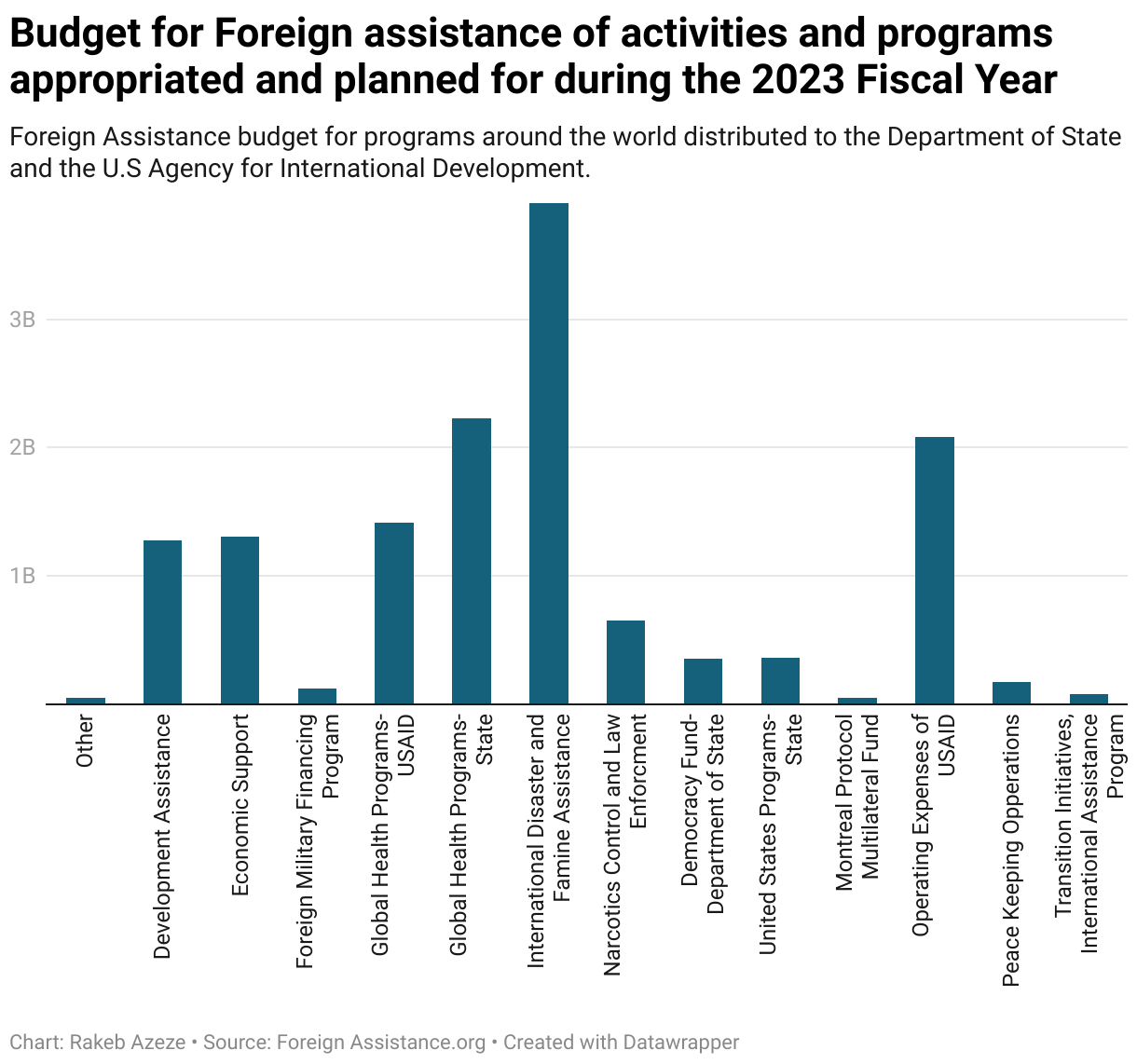
Saving 2.3 to 5.6 million lives annually, USAID serves as a lifeline for many countries. Despite its significant role, the $21.7 billion allocated to international development represents just 0.3% of the total federal spending that year.
University projects left in limbo
In addition to supporting global development, USAID has long funded research and innovation at U.S. academic institutions.
Through the funding of projects like Feed the Future and research on international democracy and education improvement, universities can offer multidisciplinary curricula to their students and staff. The University of Minnesota is one of these beneficiaries, dating back to 1954 with a project known as “The Minnesota Project.”
The Minnesota Project was funded by what was called the International Cooperation Administration, a predecessor to USAID. It supported the reconstruction of Seoul National University and South Korea’s medical and educational infrastructure following the war.
Over 90 University faculty members collaborated on this project and trained 226 health professionals from 1955 to 1957.
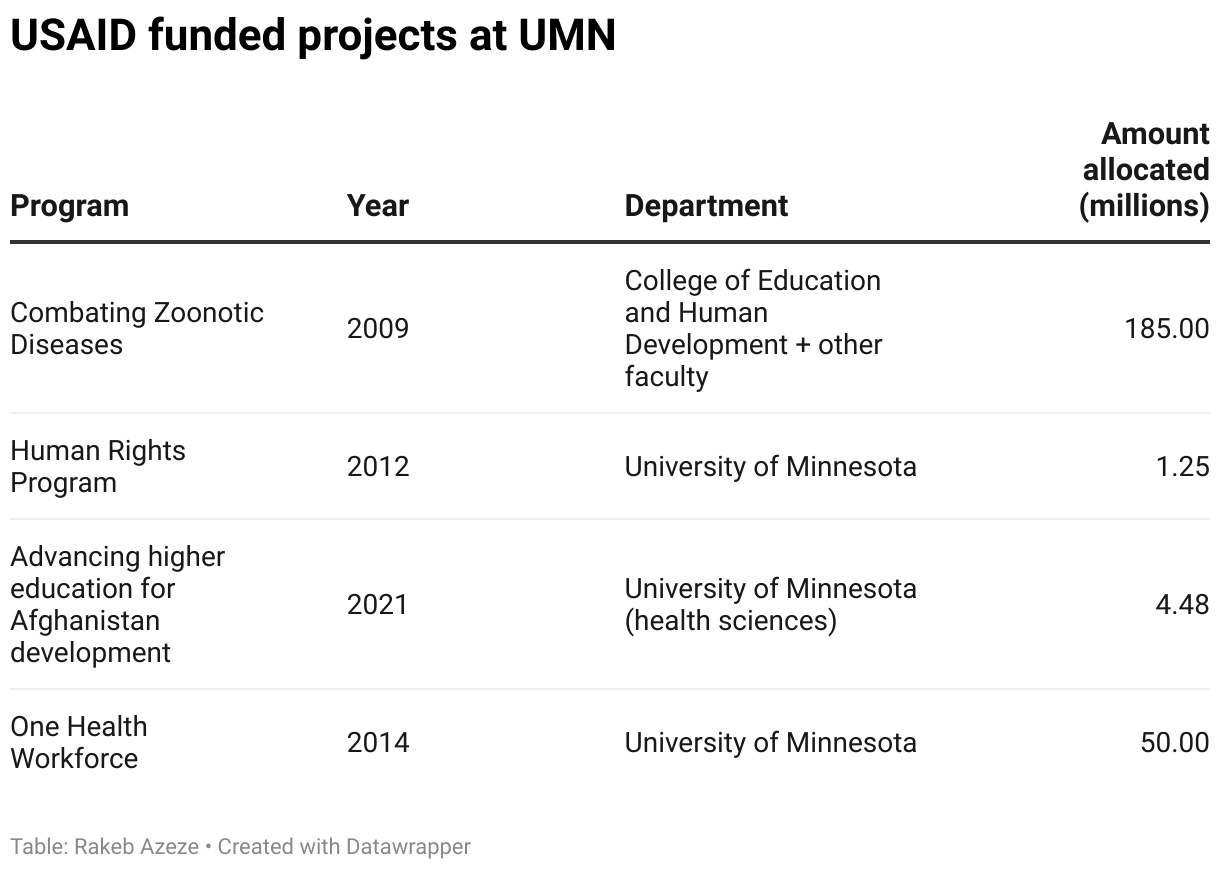
Other projects funded by USAID included RESPOND (2009-2014), whose goal was to improve capacity to respond to zoonotic diseases around the world; One Health Workforce (2014-2020) co-led with Tufts to develop One Health University Networks in Africa and Southeast Asia; Egyptian Pioneers (2024-2025); Youth Excel Program (2020-2025) and Global Health and Environment in Africa (2021-present).
International Solidarity
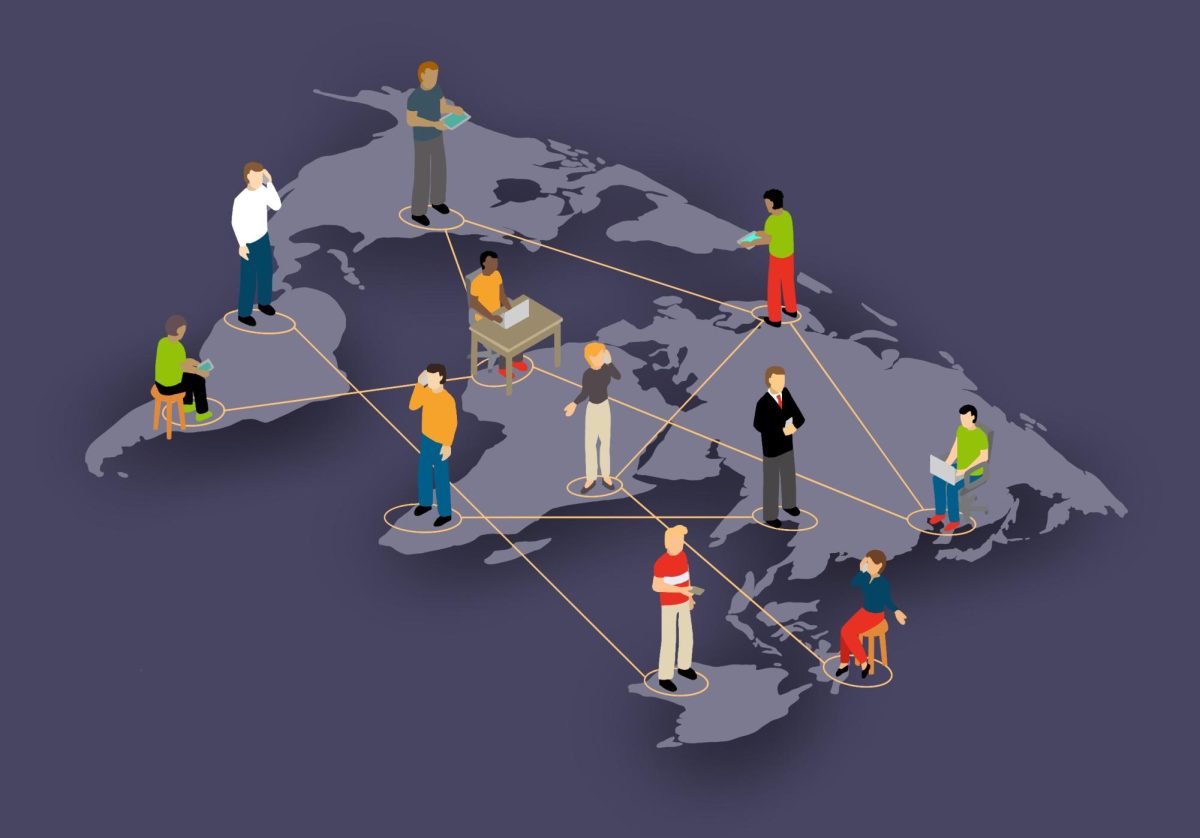
The fellows expressed gratitude for Americans’ support, but they also emphasized the need for continued international solidarity.
Makotsi emphasized how people do not live in an isolated world, meaning there is a need for people to share responsibility.
“The challenges we are experiencing in Africa, some of those challenges are trans border,” Makotsi said. “Things like climate change and infectious disease.”
The fellows encouraged students and Americans to realize that a beneficiary relationship is needed to keep people alive.
Bukuru said the type of relationship the U.S. and DRC had, in terms of resource allocations, necessitates accountability to the people of the DRC.
“Americans also need to be accountable to the people in Africa who are facing these climate change effects, who are also seeing their soil being exploited but not benefiting as much as they could if they were transforming those minerals locally,” Bukuru said.
As their time at the University of Minnesota concludes, the fellows carry home not only leadership training but a sense of global connection.
“We are very much hopeful that in the near future, we will be able to find each other, so that we continue with our beneficial friendship,” said Moyo.












Susan Pastin
Jul 28, 2025 at 1:05 pm
So much for the zTrump regime being “pro-life”! Closing down USAID really was a criminal act!
Bruce Moyo
Jul 25, 2025 at 9:45 am
Insightful thoughts