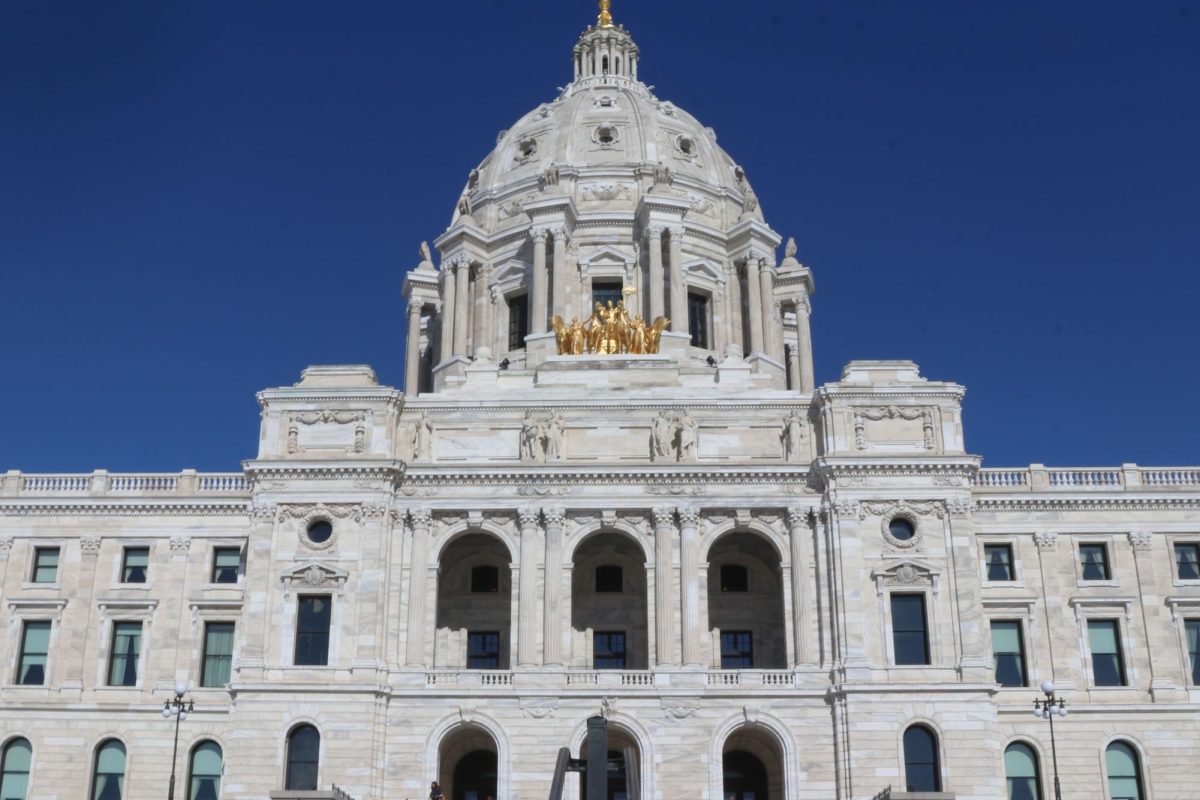
Minnesota’s 2026 legislative session begins in just a few weeks, and legislators are preparing to tackle a wide range of topics.
Last year brought a myriad of challenges for Minnesota — a federal government shutdown, federal funding uncertainty and fraud investigations. In early fall, the state Senate formed the Subcommittee on the Federal Impact on Minnesotans and Economic Stability to better understand how communities around the state were faring.
The committee traveled across Minnesota, releasing nonpartisan reports in January based on community testimonies and research, Chair Sen. Lindsey Port (DFL-Burnsville) said. The reports are intended to help inform legislative action this session.
Port said their focus shifted after the beginning of Operation Metro Surge, which the U.S. Department of Homeland Security said has arrested roughly 3,000 undocumented immigrants in Minnesota as of mid-January.
The operation has been marked by the two fatal shootings of Minneapolis residents by Immigration and Customs Enforcement agents and widespread protests. Many businesses have closed as staff and customers are fearful of coming in. Port worries that the economic impacts could be long-lasting.
Port plans to introduce bills providing rental assistance for both residents and businesses in the first few weeks of the session. If legislative action stalls, Port said she and other lawmakers may look outside government channels to support communities through philanthropy.
Minnesota has also drawn national attention over recent fraud allegations, prompting the launch of federal and state investigations and complicating federal funding. Federal prosecutors claim the estimated fraud in Minnesota may be around $9 billion, reported CBS News.
Following the circulation of a viral video alleging fraud in Minnesota daycare centers run by Somali Americans, the U.S. Department of Health and Human Services announced a freeze on federal childcare funds in late December. A federal judge then halted the freeze until Feb. 6, reported MinnPost.
The U.S. Department of Agriculture directed Minnesota state officials to conduct in-person eligibility checks of all 440,000 Supplemental Nutrition Assistance Program recipients by Jan. 16, or federal funding for the program would be withheld. A federal judge halted the USDA from withholding the funds, reported MPR News.
Sen. Mark Koran (R-Cambridge) said he does not think counties could have met the requirements for checking SNAP eligibility by the USDA deadline. But he does want to see an ongoing conversation and a solid plan for enforcing stricter eligibility.
“I want whatever it is that we’ve declared in state law to be delivered at the highest quality and with accountability that we would all expect,” Koran said.
Amid investigations into Minnesota Medicaid fraud, the federal government has threatened to withhold roughly $2 billion in Medicaid funding. Minnesota officials have appealed the decision, reported the Star Tribune.
Port hopes to work closely with Minnesota’s attorney general to make sure Minnesotans are getting fair access to federal programs.
The goal is for the testimony gathered by the committee to serve as a jumping-off point for lawmakers across both party lines as they decide how best to support their communities this session.
“Every community has folks who are on Medicaid,” Port said. “It has people with disabilities. People who are in affordable housing or supportive housing.”
Sen. Rob Kupec (DFL-Moorhead), the vice chair of the committee, said farmers are also facing tariff-related challenges. Lawmakers must remain mindful of additional financial pressure on farmers as they consider policy decisions, he said.
“There are fees within the Department of Agriculture that haven’t been raised in a long time,” Kupec said. “To adequately fund the program, occasionally fees need to go up. Now is likely not the time to do that.”
Koran, who also represents parts of greater Minnesota, said he is focused on policy that will support job growth and small businesses this session.
“There are just not growing jobs here,” he said. “People are leaving.”
With the Minnesota House evenly split between Democrats and Republicans, bipartisan cooperation will be necessary to pass legislation, Port said.
“Minnesotans are coming together to do this work already,” Port said. “We as the legislature have a responsibility to mirror that with how we show up this session.”