

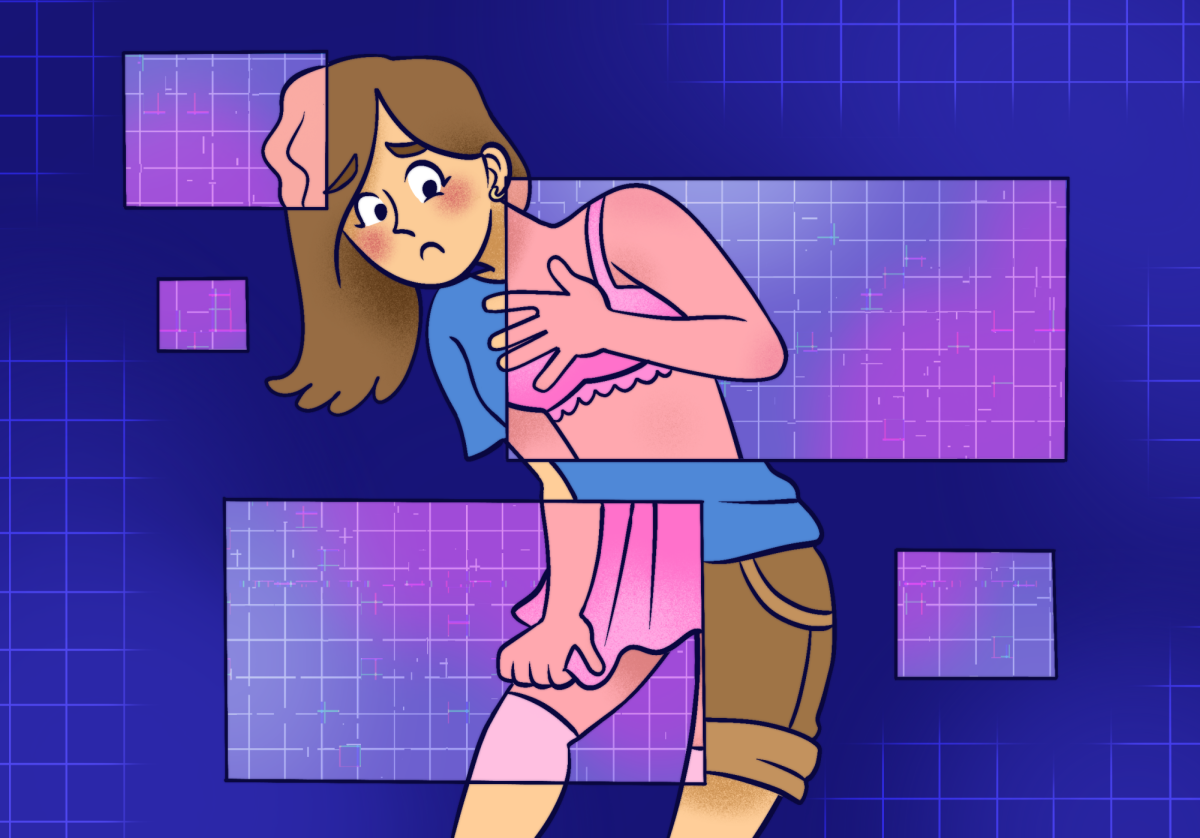
What would you do if you no longer had control of your likeness? This daunting question has become the new reality for any woman not completely off the grid in the 21st century.
If you’ve scrolled through your social media feed recently, you may have noticed an alarming trend emerging: images powered by artificial intelligence, particularly of women, referred to as deepfakes.
Deepfakes often consist of images and videos of real women that have been altered in any way their creators envisioned, forming Frankenstein-esque scenes of women ranging from altering the amount of clothing they’re wearing to putting them in compromising sexual scenarios.
Users on X have found that they can take images and videos of women and feed them into X’s AI bot, Grok, with little to no obstacles. The consequences are a total loss of consent.
University of Minnesota computer science professor Lana Yarosh said there are currently few laws enacted and enforced around distributing deepfake material. This type of content is very easy to make and post, and it is almost impossible to garner consequences for doing so.
“You don’t have to have any kind of a technical background,” Yarosh said. “If you can use an app, or you can use a program on your computer, you can create deepfake content — especially deepfake content of women, because essentially like 98% of these systems are designed to make deepfake content of women.”
At the center of the problem with deepfakes lies our societal oppression of women and our need to control them. Being told “no” carries less weight in online spaces when men decide it’s okay to find ways to bypass that rejection.
The use of AI technology as a means of control will inevitably lead to nightmare scenarios for the women involved. Yarosh said despite people’s assumptions that online content can’t actually hurt real people, its impacts are incredibly significant.

Deepfake content of women with public-facing jobs like teachers and people dealing with custody battles, where content could be used to affect court decisions, are only a couple of ways the internet could bleed into reality, Yarosh added.
University second-year student Natalie Dillon said it’s scary just how easily deepfake images can be spread.
“Things could just get leaked,” Dillon said. “That ruins reputation, that creates shame, it’s just terrible.”
Many men in the United States already have issues understanding consent, and how they are choosing to utilize AI is indicative of that. Coupled with the fact that there’s little precedent for how to handle evolving AI technology, it is clear we need to pressure tech companies to tighten the reins.
There’s only one problem: will they want to?
Dillon said tech companies will not eliminate deepfake technology when profit is involved. If AI-generated nudity can generate revenue, they won’t be interested in getting rid of it.
X already put Grok behind a paywall, which strengthens Dillon’s argument and proves that companies are ready to profit from the control of women’s bodies.
Elon Musk even referred to the British government as fascist, after ministers threatened to block X due to the rise in dangerous deepfake technology being used against women.
Companies have to start caring more about protecting women than placating male users to appropriately manage deepfake content.
Yarosh said companies can refuse to host harmful images and content and could make reporting and removing the content easy. Additionally, the tech teams responsible for creating and managing this kind of content need to be liable.
“The law needs to catch up,” Yarosh said. “And systems advance so quickly that it’s very difficult for the current processes to actually make the kinds of changes that need to be happening, in order to create systems of accountability that would protect women and allow abusers to be held accountable.”
We desperately need to change how we understand consent and our cultural attitudes toward women’s autonomy. A good place to start is rethinking how we handle AI-generated content made to hurt women online and in real life.








RS
Jan 28, 2026 at 3:54 pm
Deeply concerning issue. Not only should it come to an end, it should never have been released to begin with. Thank you for bringing awareness.
pat
Jan 28, 2026 at 9:38 am
Excellent article. Keep the light on this issue.