

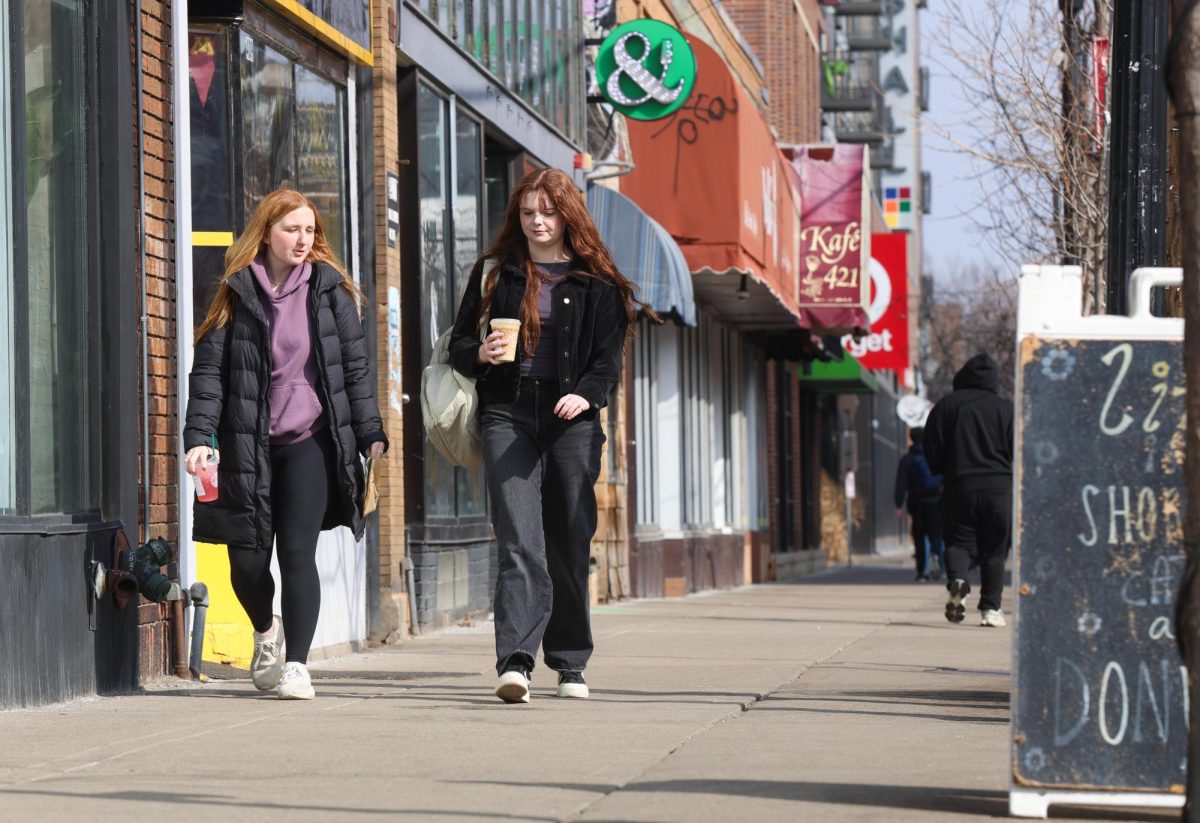
Just before 3 a.m. on Nov. 1, on the corner of 13th Avenue and 5th Street, a shooting left one man dead and two injured, including a University of Minnesota student.
That morning, I had just arrived home to my Dinkytown apartment, having been out late for Halloween, two blocks away from where the shooting occurred. I received no notification from the University. I heard the sound of a gunshot and went to bed afraid.
About three months later, I received a SAFE-U notification regarding an explosion and large fire near campus. I stressed for a moment before realizing the fire took place at the University’s Southeast Steam Plant, a mile away from my off-campus housing.
But the shooting I could hear from my window was reported through the opt-in Dinkytown Alerts, which no one knew existed. Because that makes sense.
Dinkytown Alerts are separate from SAFE-U alerts because, as we all know, the University’s safety notification system is more complicated than you’d expect.
The SAFE-U system provides rapid notifications for emergency situations taking place within the University’s Clery geography. All faculty, students and staff are required to receive these messages, and are automatically emailed when an alert goes out.
Behind this safety mandate is the Clery Act, a federal statute designed to ensure transparency regarding on-campus crime. The statute requires colleges and universities to provide timely notifications for ongoing emergencies to students and faculty occurring anywhere on campus, in University-owned or operated buildings frequented by students and public buildings within and immediately adjacent to campus.
The University’s Clery geography just so happens to include the steamplant, but not the corner of Dinkytown where the shooting transpired.
I’m not alone in finding this to be a massive oversight.
University first-year student Daizie Johnson said she remembers going on Yik Yak and seeing other students upset about the lack of University communications regarding the incident.
“I know just a lot of people were like, ‘What’s going on downtown?’” Johnson said. “Like, ‘Why are we not getting a SAFE-U?’”
This led to confusion about whether Dinkytown is included in University safety systems, Johnson added.
“I personally feel like it does,” Johnson said. “We have a campus bus that literally drops people off in Dinky.”
Though many students call Dinkytown home, the neighborhood is technically not within the University Police Department’s jurisdiction. The Como and Marcy Holmes neighborhoods, which include Dinkytown and Stadium Village, are under the jurisdiction of the Minneapolis Police Department’s 2nd Precinct.
This can be confusing for students, especially since UMPD does work with MPD to respond to emergency situations in Dinkytown, and University security patrols the neighborhood from 5 p.m. to 1 a.m., Wednesday through Sunday.
Notably, Dinkytown is not within the bounds of the Clery Act, meaning students are not automatically notified of crime in the area.
Messages about the incident were instead sent through Dinkytown Alerts in the minutes following the shooting. The system, a joint effort between the University Department of Public Safety and the City of Minneapolis, provides emergency notifications regarding crime in Dinkytown.
Unlike SAFE-U notifications, students must opt in to receive Dinkytown Alerts. When the shooting occurred, many students did not know of the separate alert system.
Earlier that night, Johnson said she experienced an assault from an unknown man while out with her friends in Dinkytown. She said she was waiting with her friends to enter a frat house when a man on the sidewalk came up and started screaming at the men outside near where she was standing. When she asked him to back away, he struck her, causing her glasses to fall off.
“I calmly said, ‘Back up,’” Johnson said. “And after that, he punched me in the face or slapped me. I wasn’t exactly sure which one it was. He ran off on other people. I didn’t see it because my glasses had flew off.”
Johnson said others told her the man had flashed a gun before walking away, though she could not see without her glasses.
In the weeks following the incident, Johnson said she dealt with crippling fear.
“I remember I was shaking horribly, like, I had to stop at points,” Johnson said. “I didn’t go to classes. I couldn’t go out. It was actually like the most debilitating time of my life.”
Eventually, Johnson was able to move past the incident, but only after coming to terms with not relying on the University’s safety mechanisms to protect her.
“I feel almost kind of better just knowing, OK, I only have myself to rely on at this point,” Johnson said. “I’m not relying on anybody else.”
In the months since the shooting, I have heard countless stories from my peers about where they were that night. Many of them were outside and in the area at the time the shooting took place, left in the dark about what was going on, having failed to opt in to a separate security system that they never knew existed in the first place.
When you have a neighborhood as integrated into the University community as Dinkytown, when campus buses drop you off there, when UMPD patrols the area and when the University leases out an off-campus safety center right in the neighborhood, there is an expectation of clarity regarding safety concerns in that area.
For me, the opportunity to live in the heart of Minneapolis was a major factor in my decision to attend the University. I love that I have been able to fully immerse myself in the community of a large metropolitan area and the beautiful culture, experiences and excitement that come with it.
However, living in an urban area means crime is also a real concern, and the University has a responsibility to its students to ensure they feel safe living on and around campus.
And Dinkytown Alerts simply don’t cut it.





SGEagan
Mar 8, 2026 at 5:35 pm
Well, as long as we’re talking about this, can we talk about the U’s choice to not identify the race of a perceived perp? We’re trying harder to not offend than we are to identify and apprehend the perp. Feelings are NOT more important than results.