

Three weeks ago, after posting a highly glamorized Instagram story detailing my love affair with public transportation, I left my phone on the 3 bus line, where it was promptly picked up by an unknowing stranger and whisked away to a random apartment building in South St. Paul, never to be seen again.
Talk about pictures taken before a disaster.
Over the next few days, I was forced into a phone-less lifestyle reminiscent of centuries of 19-year-olds who came before me. Until my new phone came in the mail.
Regrettably, I learned a lot. Here are my three major points, outlined for your convenience.
Number one: I did not miss social media nearly as much as I expected.
Considering how much social media dominates my free time, I was genuinely surprised by how easy it was to adjust to life without it.
University of Minnesota second-year student Noah Leventhal said he started challenging himself to see how much time he could save going off social media after noticing how little value the content brought to his life.
“I realized I was just spending so much time on Twitter and Instagram and social media in general,” Leventhal said. “It was just taking up so much of my time that I wasn’t getting any benefits from it. I was like, ‘Wow, I just don’t need to be doing this.’”
Leventhal set a stopwatch to track the time spent off social media and has felt a cascade of improvements throughout his life.
“I’m going for about 1,000 hours now, which is like a month,” Leventhal said. “I feel a lot more productive. I’m getting a lot more done, and I don’t feel the need to go on my phone every two seconds and watch a bunch of reels that don’t give me any benefits.”
I often use the communicative aspects of social media to justify the time I spend online. Since the COVID-19 pandemic, I have relied on platforms like Instagram to keep in contact with my friends.
This is obviously disingenuous. For all the time I spend speaking with my long-distance friends online, I spend twice as much scrolling mindlessly on Instagram reels.
Without a phone, I was more mindful of when I used social media since I had to log on through my computer. Though I did occasionally check my messages, I really did not miss the shallow content on social media.
It’s simple. I use Instagram because it’s there. When it’s not, I fill the time in other ways.
“There’s so much fluff and blubber that you just do not need to be getting,” Leventhal said. “I think I do gain.”
Number two: I missed everything that wasn’t social media way more than I expected.
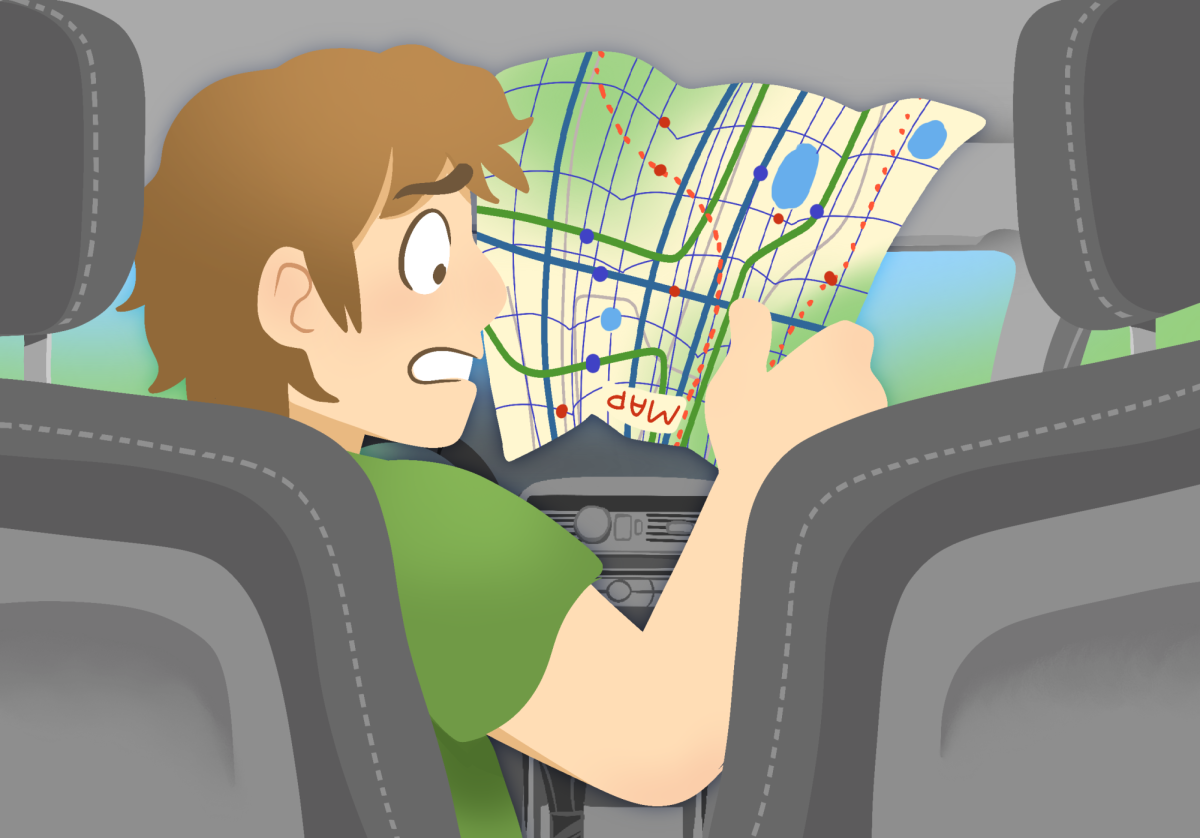
On my last day without my phone, I had to drive to work from the University’s West Bank, a different spot than usual. In preparation, I looked up the directions on my computer to make sure I would not get lost.
I immediately got lost.
One wrong turn and suddenly I was in a residential neighborhood far from the University, my apartment and 35W South. I felt helpless without Google Maps narrating my path as I went. Without technology, I couldn’t even call in to let my manager know I would be late — 75 minutes late, by the way. A personal record.
University second-year student Eliana Scheele said she went an entire year of high school using a flip-phone, leading to similar challenges.
“My flip phone didn’t have Google Maps,” Scheele said. “So, one time I got lost because I couldn’t find where I was supposed to be going, and I had to ask for directions.”
Scheele said without the shortcuts of a smartphone, she had to complete tasks all the way through — leading her to appreciate her effort more.
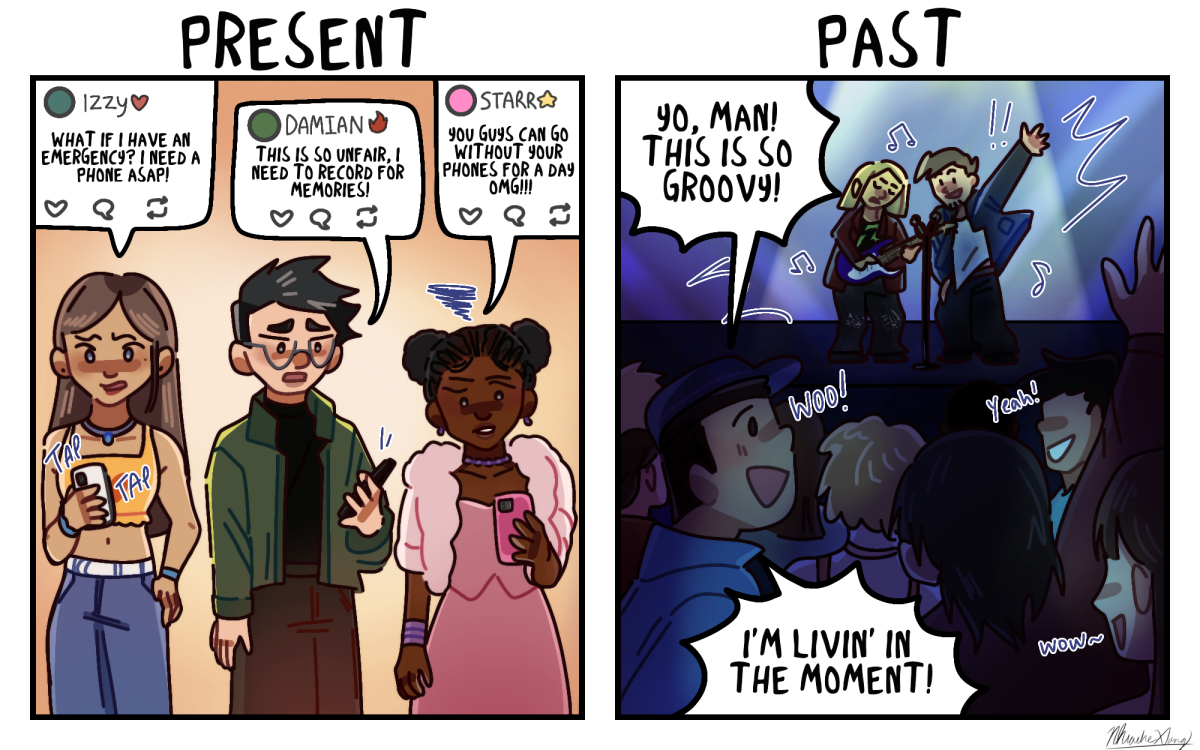
“When I would listen to music, it was such a procedure because I had to bring my CD player everywhere,” Scheele said. “So I was paying more attention to the music than I would have if I just pressed play on the phone.”
Losing your phone puts into perspective just how reliant we have become on technology. When everything from listening to music and taking directions to setting an alarm can be done with one device, it’s easy to forget that people went centuries without such capabilities. And believe it or not, you can too.
Number three: You gain a lot more by looking out at other people than by looking down at a glass screen.
When asked what she enjoyed most from her time without a smartphone, Scheele’s answer surprised me in its simplicity.
“I miss looking at people’s faces on public transportation,” Scheele said. “That was mostly what I did to entertain myself on the train to school. I would just look at people.”
I was surprised by how much I got to look at people on the bus, walking across the bridge or studying in the library. I found a quiet comfort in remembering just how many people I share my day with.
Of course, most of them had their eyes down, glued to their screens, or headphones in, staring out the window.
A few times, someone would glance up at me and we’d hold eye contact, just for a second, and it felt more real than almost any interaction I’ve had online.
It’s uncanny how a brief moment of sustained, face-to-face interaction with a stranger can beget stronger feelings of human connection than my phone, which can link me to anyone in the world.
But I felt it, that quiet crush of humanity. And it was real.
I wish I could say this experience taught me I was ready to trade in my technological existence for a life of people-watching and asking others for directions. But I’d be lying.
I’m not setting a screentime limit, I’m not deleting Instagram and I’m definitely not getting a flip phone.
However, I want to continue being mindful of how I use my phone, when I really need to or when I should consider trying something analog. Maybe that means using scratch paper to calculate my tip-out, reading a physical book before bed or taking a moment to look at the people around me while taking the Metro Green Line to class.
And I did buy a physical map for my car. Just in case.





jlb
Mar 13, 2026 at 9:43 am
I really enjoyed reading this article. It reminded me of personal interconnections that held me fixated in my teens and twenties. There is surprisingly a lot you can learn by just sitting and watching people around you. I forget that sometimes. I am happy for those of you that have made the time to detach from your screens. Good for you! By the way, the best place to watch people is still probably MOA here in MN.
SGEagan
Feb 27, 2026 at 10:37 am
The map probably won’t do you much good, because, likely, you don’t know how to read it.