


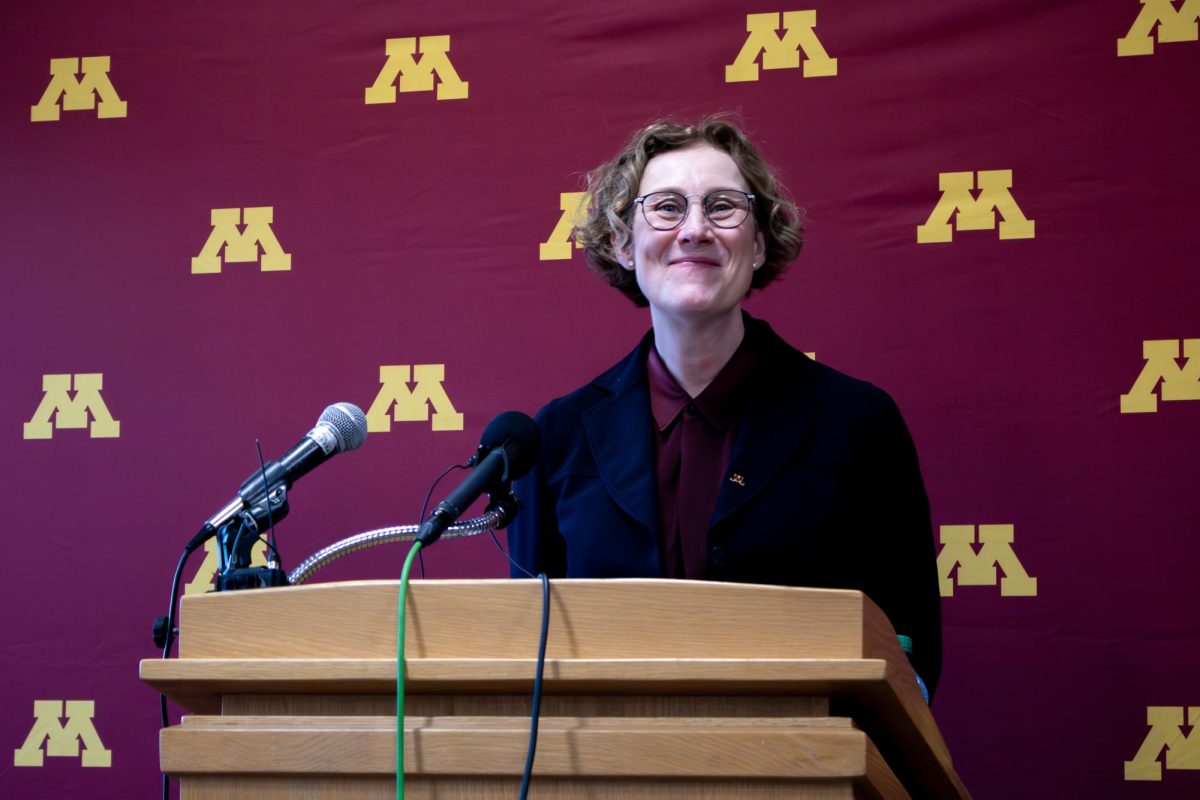
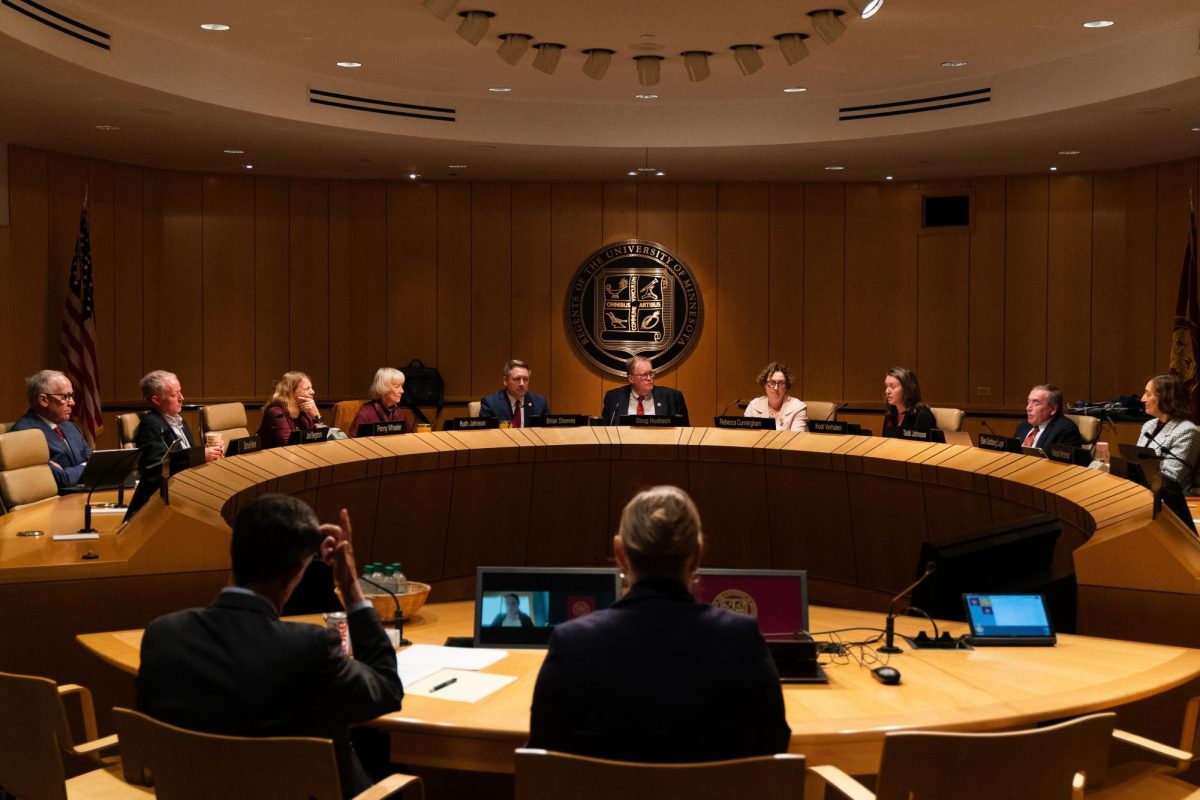
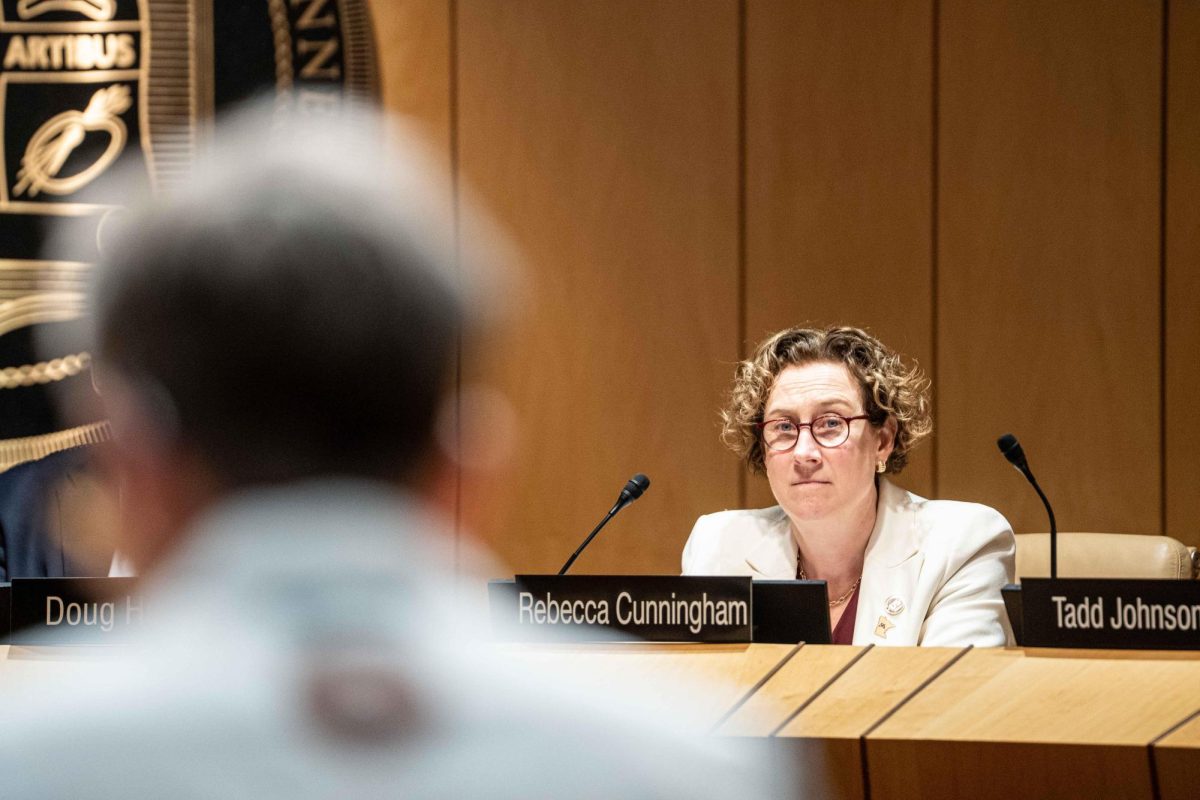
University of Minnesota President Rebecca Cunningham and the Board of Regents discussed the intercollegiate athletic budget and solutions for system optimization at a board meeting Wednesday, amidst what Cunningham called a “higher education crisis.”
In the meeting, Cunningham said this crisis has created pressures that will force University members and administrators to grapple with possible setbacks.
“We will have to bring courage, resilience and our best ideas to this complex web of risks,” Cunningham said.
Cunningham did not elaborate further on what she believes this crisis is or what may be causing it.
Regent James T. Farnsworth said the crisis in higher education Cunningham is referring to largely concerns funding and recent antisemitism investigations.
“I think there’s a lot of uncertainty right now from the Department of Education,” Farnsworth said. “We’re dealing with the same challenges that a lot of other universities are dealing with when it comes to federal funding, research funding, investigations around antisemitism on campus and protesting climate.”
Additionally, Cunningham addressed the controversial private search in which the newly appointed Provost and executive vice president, Gretchen Ritter, was selected.
The search, scrutinized by faculty and students for the University’s lack of transparency during the selection process, concluded in May when Ritter’s selection was announced.
“By maintaining confidentiality of our candidates, we were able to attract and engage with an outstanding pool,” Cunningham said. “This is consistent with the approach of our peer institutions and an important reason we were able to reach this outcome.”
Vacant seats
As of July 1, the board is left with eight active regents. Four former regents, Janie Mayeron, Mary Davenport, Mike Kenyaya and Bo Thao-Urabe, have finished their 6-year terms and will be leaving their seats empty for the time being.
One regent is selected from each congressional district, and four are selected from the state at large. The empty seats are to be filled by Minnesota Governor Tim Walz, according to the University Board of Regents’ website.
The Regent Candidate Advisory Council, which advises the state legislature on the election of University regents, voted on January 10 to recommend 14 candidates to the Regent Nomination Joint Legislative Committee, according to a press release from the RCAC.
“We are confident the University will be well served by whomever the Legislature selects from this list of well-qualified candidates,” RCAC Chair Senator Greg Clausen said in the press release.
But a selection has yet to be made. Farnsworth said the lack of communication on the part of Minnesota legislature members about the vacancies leaves the board in the dark.
“We really don’t know what’s going on,” Farnsworth said.
GOP Representative and Co-Chair of Higher Education Finance and Policy Marion Rarick credits the delay to Democratic House party members.
“That’s what my frustration is. The Democrats in the House refuse to agree to hold the joint Convention, where we have the House and Senate come together with one as one body, essentially, to elect the four regents,” Rarick said. “I tried for months to get them to do it.”
System Optimization Strategies
Rochester campus Chancellor Lori Carrell, Crookston campus Chancellor Mary Holz-Clause and Vice Provost Raj Singh led a discussion about the System Optimization Working Group, which focused on improving the University experience for all members of the community.
The System Optimization Working Group collects feedback from University leaders, alumni and the state to promote systemness and accessibility, according to Carrel.
The working group proposed a plethora of recommendations to enhance the student experience while recognizing and respecting the distinctiveness of each campus, according to the July meeting docket.
The discussion’s theme outlined assimilating campus policies and tools for students across campuses.
In the assimilation, the strategic communication includes combining the different University campuses’ email domains into one.
Farnsworth said he was optimistic about the recommendations made by the group.
“There was different time frames laid out in the report, and there was funding for strategic investments to help pay for items in the upcoming strategic plan,” Farnsworth said. “I’m very confident that because it has the full backing, we’ll see tangible action on it moving forward.”
Cunningham said each recommendation the System Optimization Group presented will require a task force.
“We need real people doing the work,” Cunningham said. “Some of them will require budget lifts.”
Athletics updates
The Intercollegiate Athletics annual report states that budgeted expenses for 2026 will be $174 million. Despite this budget, the University expects to make nearly $10 million less than it plans to spend, with an expected revenue of $165 million, according to Board of Regents Docket Material.
Outside of the budget, the Board of Regents has extended the employment contract of Head football coach PJ Fleck. This extension will keep Fleck’s base salary at $6 million, but includes an annual retention bonus that grows yearly.
This retention bonus will reach its peak at $1.6 million in 2030, the year Flecks’ contract expires.
University athletic director Mark Coyle said the athletic department will ensure it supports its student athletes with the recent financial fluctuations at the University.
“We will still provide a world-class education and tremendous athletic opportunities for our student athletes as we navigate this changing landscape,” Coyle said.
Coyle also mentioned the many accomplishments of the student athletes, including 140 student athletes being named Big Ten distinguished scholars. Many student athletes received Big Ten titles, among other achievements.











Jim McCormack
Aug 13, 2025 at 9:40 pm
It will be interesting to see where the 10 million dollar deficit cuts will be made.