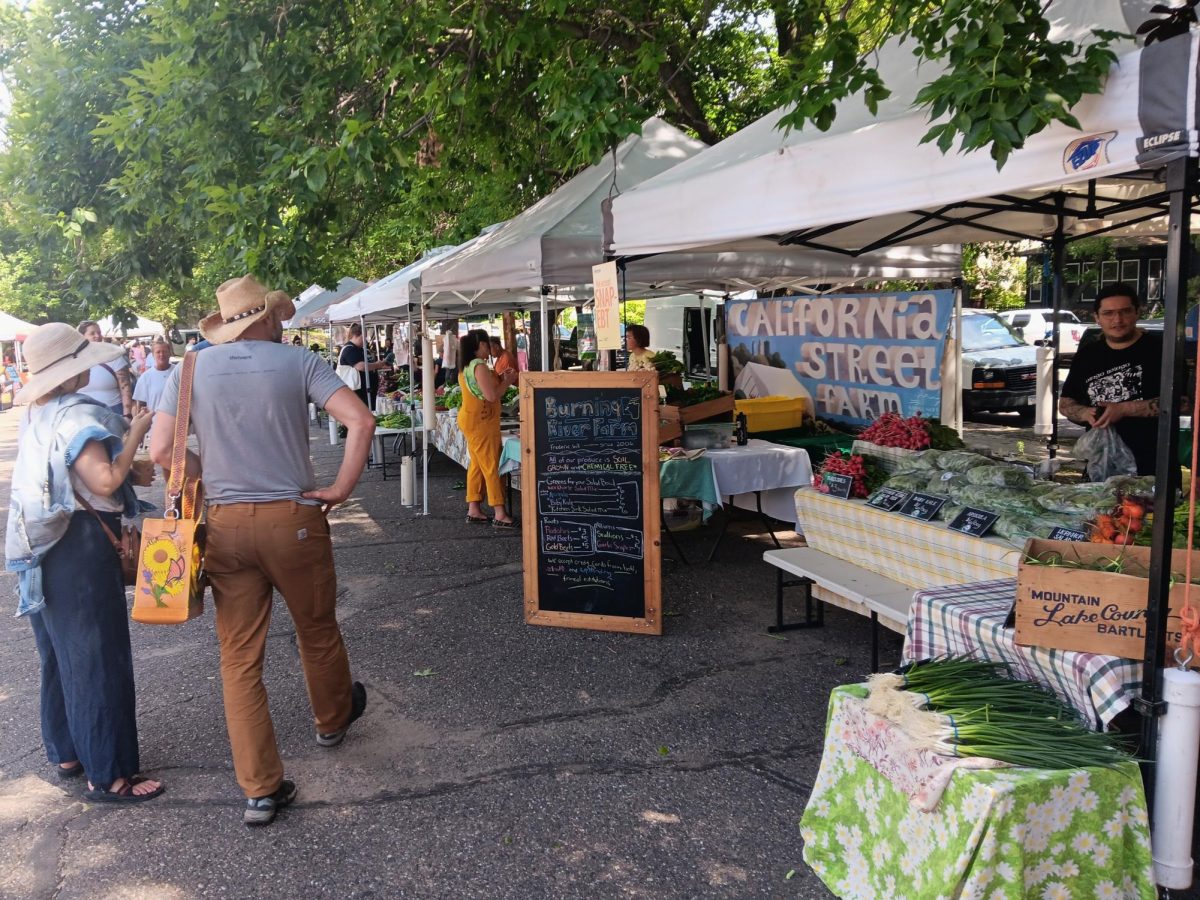
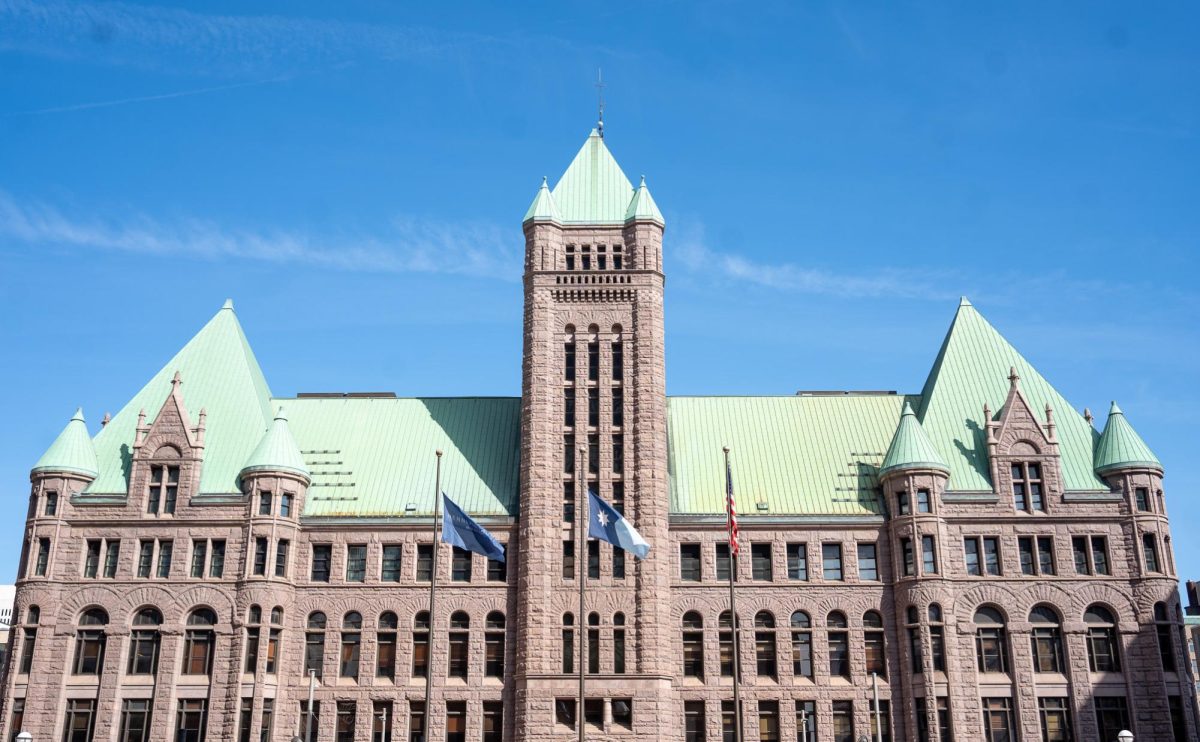
On the wildflower-filled Rusnak family farm in Wanamingo Township, Minnesota, fields of fresh produce are harvested and sent to Minneapolis Public Schools through the Farm to School program.
MPS has purchased produce, meat proteins, grains and beans from small to mid-sized farmers across the state since 2013, MPS Farm to School Coordinator Madison Taylor said. This October, schools across the country are celebrating National Farm to School Month.
For nearly ten years, MPS has hosted a locally sourced barbecue to celebrate the month, Taylor said. This year, over 10 farmers and 600 community members attended.
The program focuses on scratch cooking and implementing new recipes that highlight seasonal crops year-round, Taylor said. She added the Farm to School program has grown every year and is built into the MPS budget.
“We are really thankful for our farm partners,” Taylor said. “We love focusing on the students and making sure they’re receiving really good quality food.”
Buying local produce creates a connection between farmers and kids, she said. Farmers visit classrooms, and MPS has created trading cards featuring local farmers, she said.
Minnesota Farmer and Farm to School contributor Rae Rusnak said when she visits classrooms, she brings maple syrup from the forests of her farm along with vegetables and eggs.At first, she said she doubted kids would want to hear someone talk about vegetables, but they love it.
“You know, they say ‘Farmer Rae, Farmer Rae,’ and, boy, when they have a question, they’re just about jumping out of their seat, raising their hand, so you call on them,” Rusnak said. “And, boy, afterwards they’ll come up and give me hugs.”
After classroom visits, Rusnak said kids and farmers all sit and eat lunch together.
“They all rush to try to get to my table,” Rusnak said. “It’s very rewarding. It’s really nice to see the people who are eating your food and enjoying it.”
The Farm To School program helps kids learn about nutritious food and how to implement it into their meals, Rusnak said.
“They not only try to give them healthy food, but they help them learn how to like it, how to prefer it and how to grow it,” Rusnak said.
Kids also visited the Rusnak family’s farm in early summer, and loved seeing the chickens, exploring the forest where maple syrup is made and walking through the fields, Rusnak said.
“I can point to a field and I can say, ‘You know what, this whole field is all for you, this is Minneapolis schools right here in this field,’” Rusnak said.
It gives kids a deeper understanding of food, Rusnak said, because they do not just see the potato field, they see the flowers blossoming from the potato as it grows. She said even the lunch staff has visited the farm.
“I tell them, I don’t necessarily get to see the kids that you’re serving my food to, but you are the face of my farm and my food,” Rusnak said.
Everybody in the chain, from the seed to the eater, has to be involved and care about the food, Rusnak said.
While MPS has built the program into its budget, not all schools have the same budget or resources, Taylor said.
The state will provide about $1.5 million in grants for farm-to-school and early care programs starting in 2028, said Erin VanSlooten, who is the community food systems director at the Institute for Agriculture and Trade Policy, a nonprofit supporting local food programs.
However, VanSlooten added that federal funding is essential to meet the growing demand from schools.
In March, the U.S. Department of Agriculture cancelled the Local Food for Schools program, which provided funding for schools and child care programs to purchase from local farmers. The USDA also cancelled the Local Food Purchase Assistance program, which distributed locally produced food to food banks.
The programs would have provided Minnesota with $17.9 million total over the next three years and been game-changing for schools, Vanslooten said. More schools want to participate than there is money to support, she said.
Food shelves, farmers’ markets and smaller school districts were concerned about the cuts, Rusnak said. Some smaller school districts that had previously purchased local food bought less or did not purchase locally at all this year.
“To me, a program like that is really a win-win, and it doesn’t make sense to cut that,” Rusnak said.
For every $1 spent on farm-to-school programs, about $1 is generated in the local economy, said VanSlooten, who co-authored an IATP economic analysis report. Many schools ultimately purchased more than what the grant covered, according to the report.
Bjorn Solberg, who owns Hugh’s Gardens and distributes potatoes to school districts across the state, said that it is hard to gauge the impact of funding cuts as schools are still receiving money through contracts signed last year. He added that cuts will begin to affect farm-to-school programs across Minnesota in the coming years.
Rusnak said people often ask her about the program, and only have positive things to say.
“I haven’t heard anybody say, ‘Oh, that’s a waste of money,’ ” Rusnak said. “They think it’s great. They’re very interested.”
Rusnak said she sources her seeds locally, because big change comes from the ground up.
“I try to get everything here because I need them and they need me,” Rusnak said. “It’s really what you do in your little place in the world that is really important; this farm-to-school program brings everybody together.”
Correction: There was a miscapitalization in the first sentence of Minneapolis Public Schools. There was also a previous misnaming of what the program purchased; they purchase produce, meat proteins, grains and beans.