The Big Ten Conference is mulling over a $2 billion deal that would vest, in totality, all media rights into a separate entity.
Part of the new deal would enlist all 18 schools as financial contributors. The Big Ten league itself would also be a shareholder.
Over a year ago, the Conference rallied to implement a fiduciary motion they hoped would “extend the conference’s legacy of academic and athletic excellence”, according to a public statement on behalf of the Big Ten Conference Council of Presidents and Chancellors Executive Committee.
“The conference has provided an option from a non-profit partner — not private equity — that meets those objectives. Ultimately, it is the decision of the Big Ten member institutions’ presidents and chancellors to decide if it’s the right opportunity and those conversations are ongoing.”
Public scrutiny
Despite the Big Ten’s claim for university autonomy, a decision may be reached without unanimous approval — there has been speculation that the conference will move through with the deal with or without the support of vocal objectors like the University of Michigan and the University of Southern California, according to Sports Business Journal.
The Big Ten Conference only needs 60% of the conference’s cooperation to proceed with rulings. There has been noteworthy negative buzz around the Big Ten’s new proposition.
Michigan’s Board of Regents felt that this was an overkill measure of control. Michigan’s Board publicly ridiculed the deal, comparing it to “opening a new credit card to pay off debt”.
While the University has stayed silent, seemingly in gridlock, there may be more at stake for Minnesota. Minnesota Star Tribune sports reporter Michael Rand said schools like Michigan and Ohio State are at an advantage, because they generate more athletic revenue. It’s easy for schools that receive more funding to speak up, Rand said, but the University is more hesitant.
“I think the U is one of those programs kind of in the middle and trying to figure out, how do we fund all of this?” Rand asked. “How do we participate in this arms race and still be competitive, both financially and on the field?”
Rand said that sports fans made nervous by the $2 billion deal may be clouded by the idea that makes college sports a step down from big leagues. In reality, the monetary value in college athletics isn’t all that different from that of professional sports.
“I just think the reason you like college sports in a lot of ways is because it feels more pure, or because of the love of competition,” Rand said. “So I think when you start talking about billions of dollars, it makes people uncomfortable to think about, well, how is this any different than pro sports?”
Off the record
Big Ten school presidents communicate about sensitive issues like this one via an encrypted messaging system called BoardVantage, which has served as a loophole to dodge public data requests, according to Sportico.
A Sportico reporter filed a public records lawsuit against the University of Illinois to prove messages sent or received by University of Illinois chancellor Robert Jones qualify as public records under the Illinois Freedom of Information Act.
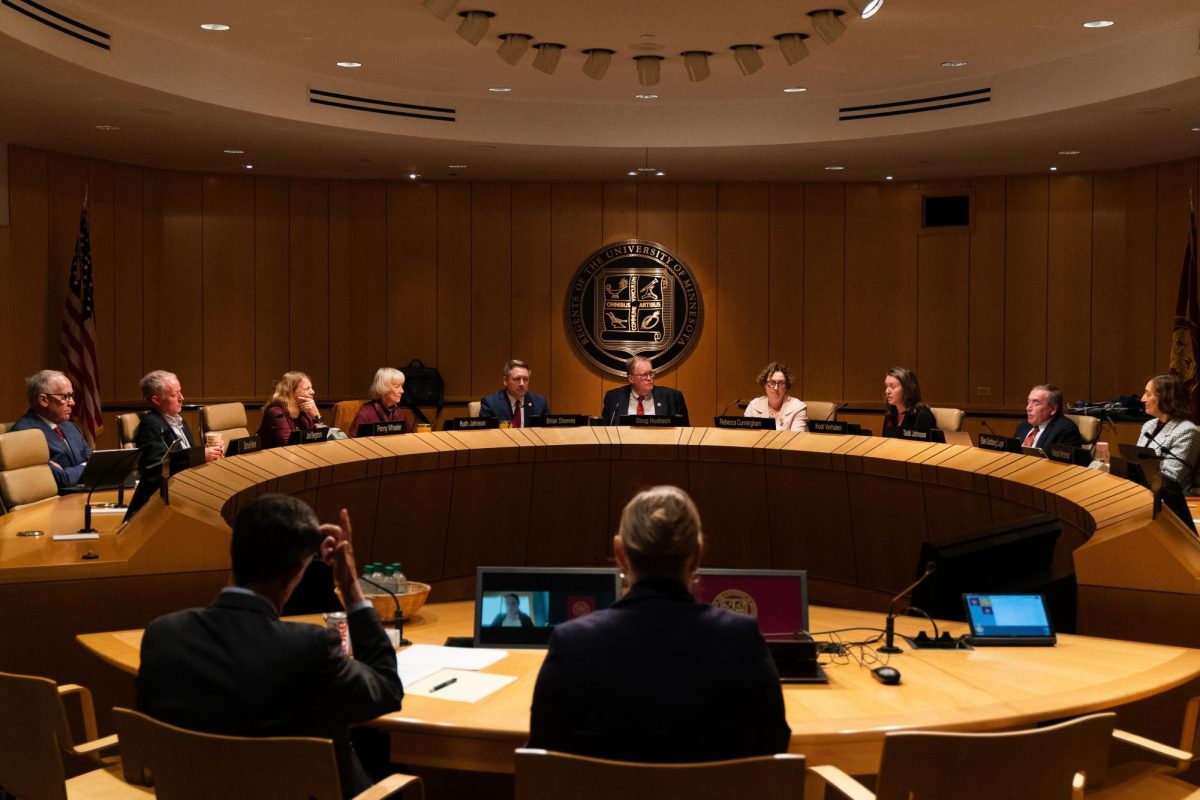
The University’s Board of Regents discussed the Big Ten media rights deal in a closed meeting on Oct. 23. Regent James Farnsworth said though the topic was discussed, they have not reached any public conclusions.
The meeting was said to be closed because the regents “determined that there is a need for absolute confidentiality to discuss litigation strategy in particular matters involving the University of Minnesota,” according to the meeting’s docket.
Rand didn’t blame administrators for wanting this behemoth-level issue under wraps.
“Let’s just face it. When you’re talking about this level of money, this direction of financing, I’m not surprised they’re trying to keep it private, because I don’t know how popular this is gonna be,” Rand said. “I think there’s gonna be a lot more questions raised than can be answered immediately.”
In Minnesota, Open Meeting Law requires public groups — including universities — to meet in open session unless otherwise permitted, according to Minnesota Statutes, but there are some exceptions to this rule at a board level.
“We have not had any official conversations about this topic in a public board meeting on our board policy,” Farnsworth said. “Now I, of course, would say the board does, from a compliant-standpoint, has oversight over athletics and should be involved in those conversations.”
Farnsworth said the president of the University has traditionally been able to make these decisions themselves, but the University Reservation and Delegation of Authority policy does not address matters regarding the president reserving the right to make major financial or athletic decisions on behalf of the Board.
The Residential Delegation of Authority is a University document regulating administrative power distribution. It provides insight into how the president can and cannot make decisions, as well as the Board.
Farnsworth voiced that this weighty decision should be made democratically, though longstanding tradition has had the president take on an absolutist role.
“How the president votes at the Big Ten conferences has always been delegated by practice to the president,” Farnsworth said. “But I think this is an area that’s in great interest to the University and is a fiduciary duty as board members.”
Correction: A version of the article incorrectly stated the President does not have explicit authority over college athletics. This is incorrect, the president has authority over day-to-day operations. Additionally, a version of the article incorrectly referred to the University Reservation and Delegation of Authority policy as the Residential Delegation of Authority Policy. Other edits have been made for clarity and accuracy.