Minneapolis property owner Hamoudi Sabri — who had an encampment on his Lake Street property — and the city are still negotiating a deal after a stalled enclosures, according to a judge’s letter.
The judge ruled on a temporary restraining order Tuesday after the city and Hamoudi Sabri were not able to come to an agreement.
The city alleged the encampment had insufficient waste management, a lack of water and unsafe living conditions. The city issued 11 public health citations, totaling around $15,000 in fines.
On Wednesday, Sabri agreed to a temporary restraining order on building encampments on his property, according to court records. Judge Thomas Conely instructed the city and Sabri to reach an agreement by Monday.
Assistant City Attorney Sharada Enslin said the city and Sabri were unable to come to a deal on the number of days for the pause, because it would give more time for deliberation on a resolution.
The letter states that Sabri’s team requested a 30-day pause, while the city sought a 90-day extension. Sabri claimed that the timing of the 90 days matched up with his campaign time as the mayor.
“I can’t accept 90 days because people and neighborhoods are suffering now,” Sabri said.
Sabri said he would agree to the pause if the city implemented different policies for homelessness, such as a special committee for homelessness prevention and a coordinated effort for a “transient system” — with a medical team on-site on 28th and Hiawatha.
Sabri said this would get homeless people into one place, so they get medical services and connections with case managers. Sabri added if he did not see results in a “timely manner,” he would appeal the motion.
The lawsuit was authorized by the Minneapolis City Council last Thursday. Mayor Jacob Frey said in a statement his administration was seeking legal action because the owner would not comply with the law.
“The City has approached this situation with both compassion and safety in mind, with homeless response teams on site nearly every day offering support. However, many have declined help, and the encampment’s location on private property next to homes, businesses and a school poses a growing health and safety risk,” Frey said.
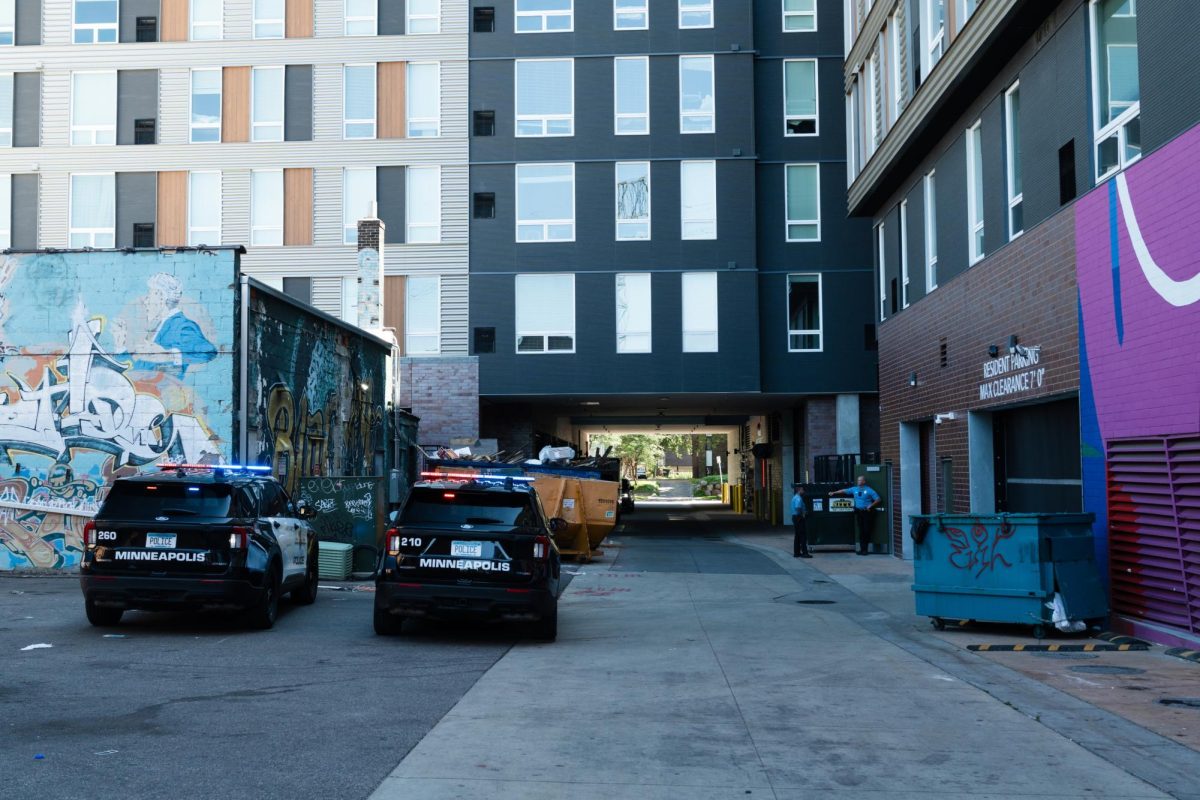
The encampment rapidly closed after a mass shooting that injured five people and killed two on Sept. 15, reported CBS News. Enrique Velázquez, the director of regulatory services, said in a conference that the encampment was unacceptable.
“Encampments are not safe. They’re not humane, they’re not compassionate. Our neighbors deserve better,” Velázquez said.
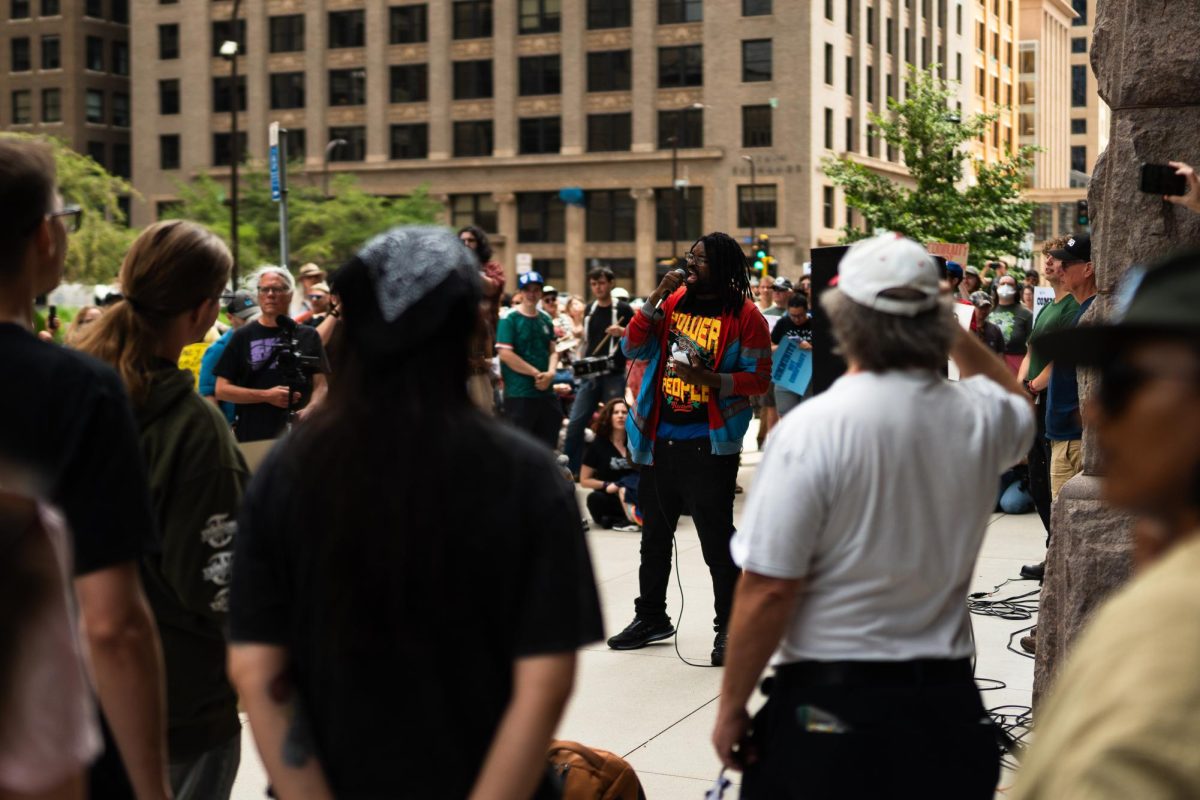
While the authorization of the lawsuit passed in the city council, many of the council members had reservations about the lawsuit. In the meeting, Council Member Aurin Chowdhury (Ward 12) said the lawsuit would not help solve the larger issues of encampments in Minneapolis.
“Quite frankly, there has not been a time and place for this conversation that has been given. The conversation about addressing unsheltered homelessness in the city of Minneapolis is constantly avoided until we come into emergency situations,” Chowdhury said.
Encampments in Minneapolis:
This is not the first time the issue of encampments has come up in Minneapolis. Homelessness in Minneapolis has decreased by 33.5% since 2020, according to Hennepin County Point and Time data.
Even with the decrease in homelessness, city leaders and homelessness experts have criticized the Mayor’s methods of removing encampments in the area, according to the Minnesota Daily.
Danielle Werder, the senior department administrator of the Office of Housing Stability,, said encampments can become their own environments.
“Encampments itself are kind of living organisms, and it attracts many different folks from many different walks of life, and only some are experiencing unsheltered homelessness, but it can be, it can get very dangerous,” Werder said.
Werder said the case managers from the county helped people find shelter after the encampment closed. Werder said it could be difficult to get housing for everyone if people refuse.
“So the reality is that some people are going to choose not to come into shelter and some people are not experiencing a crisis of homelessness,” Weder said.
City Council Member Jason Chavez (Ward 9) said he went over to the encampment on Saturday after the shooting and helped with the cleanup, but it’s been difficult for people to find shelter.
“I would love to help neighbors help find housing, but there is none. There’s just a lack of housing for neighbors,” Chavez said. “People have to wait on waiting lists to get permanent housing to get into coordinated entry.”
He added another solution for closing down encampments would be putting up navigation centers, which are government-sponsored centers with social services and beds.
Chavez said he would like to see a more detailed plan from the mayor regarding encampments and homelessness overall.
“People have been killed. People have been injured. And people’s lives were impacted. And all this could have been prevented if there would have been a plan to address homelessness to begin with,” Chavez said. “And today, I do not believe that the city of Minneapolis has any plan to address homelessness.”